Do You Know Shikoku? Discover Japan’s Hidden Charms
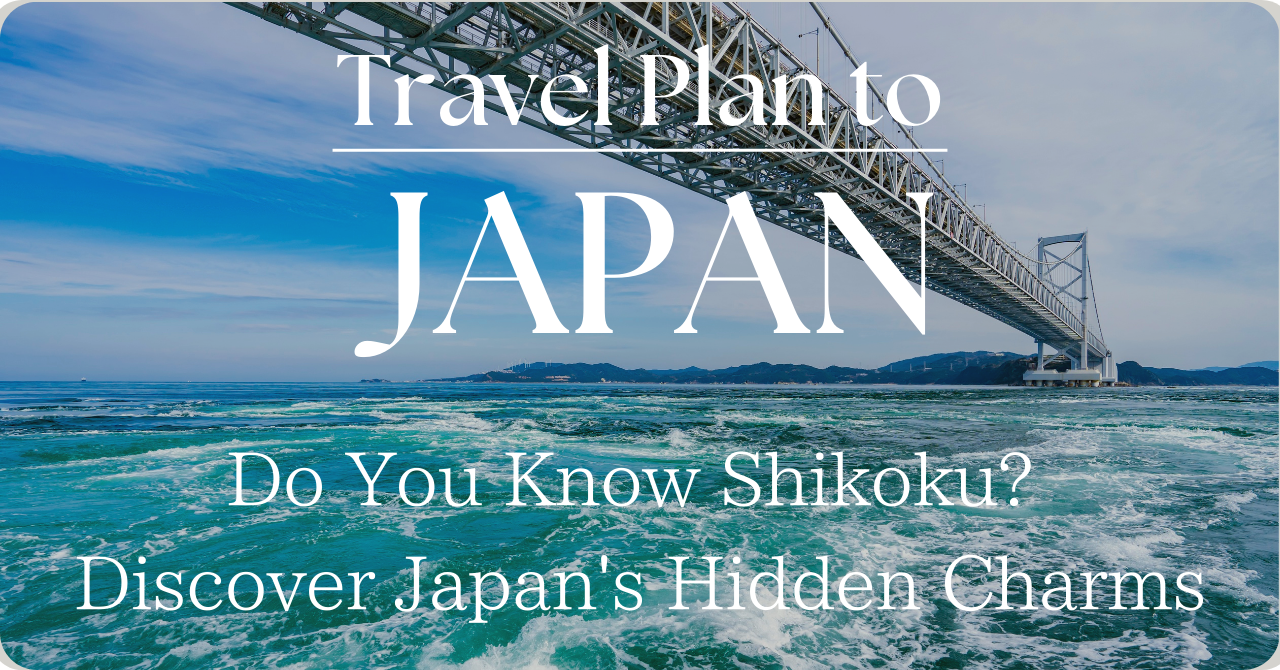
Discover Shikoku, a less-known but mesmerizing region in Japan!
When most people think of tourist destinations in Japan, Tokyo and Kyoto are usually the first cities to come to mind.
Shibuya’s Scramble Crossing, Akihabara, the mecca of anime, and Kyoto, with its beautiful cityscape and history, are just some of the attractions these cities offer, hence nowadays, they are often crowded with many tourists.
But aren’t you tired of the crowds and busyness at such tourist spots? Even though Tokyo is also known for its numerous skyscrapers, Japan is actually a country rich in nature. Did you know that there are sightseeing spots in Japan where you can enjoy beautiful seas, valleys, waterfalls, and even hot springs all at once? For outdoor enthusiasts who want to relax and enjoy delicious food in a lush green area, we would like to recommend the Shikoku region!
Shikoku, where Nature, Culture, and Art Are Fused Together
The Shikoku region consists of four prefectures (Tokushima, Kagawa, Ehime, and Kochi) and is a group of islands sandwiched between the Seto Inland Sea and the Pacific Ocean.
It is a fascinating land surrounded by abundant nature and the sea, where you can experience such classic spots as Shodo Island and Dogo Hot Springs, historic castles and shrines, and activities such as whale watching.
Shikoku is also famous for the “Ohenro,” or pilgrimage of 88 temples, a perfect journey for such a region known for having many of the most beautiful shrines in Japan.
Shikoku is also known for its abundance of fresh and delicious seafood, thanks to its geographical location: also, different regional cuisines have flourished in each prefecture, so you can try many unique meals! Sanuki udon and Tosa nimono are some well-known examples.
Living in a country with such a rich culinary culture, Japanese people often decide their travel destinations based on the type of food they want to eat. In particular, we recommend you try the characteristic udon from Shikoku.
Shikoku is also characterized by hot summers and mild winters. For this reason, it can host many events even in colder months. And because of its rich culture, there are many historical buildings, art galleries, and museums where visitors can have amazing experiences!
Finally, Shikoku has played an important role in Japanese history: Ryoma Sakamoto, one of Japan’s most famous historical figures, was born in Kochi, hence there are memorial museums that trace his footsteps, making Shikoku a recommended spot for Japanese history buffs.
Let’s explore some of the recommended sightseeing spots in Shikoku!
A Modern Pilgrimage: Ohenro
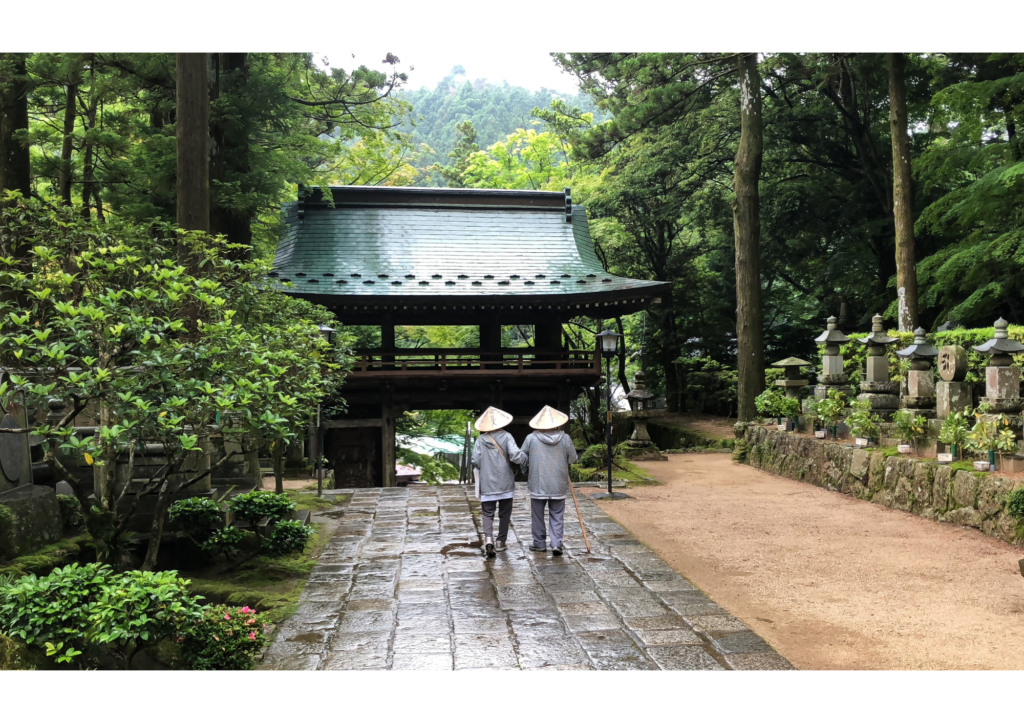
Let us first introduce one of the first things that would come to your mind when you think about Shikoku. You might think it would be too difficult for foreigners to visit, but actually Shikoku was ranked 6th in the world by Lonely Planet in their annual “Best in Travel 2022” regional category, attracting attention from all over the world.
Ohenro is a pilgrimage that follows 88 sacred sites associated with the Buddhist monk Kukai, also known as Kobo Daishi, who lived about 1,200 years ago. People who make this pilgrimage are called “ohenro-san”.
The pilgrimage begins in Tokushima, followed by Kochi, Ehime, and Kagawa, and is characterized by a circular route of worship, which is less common than the usual linear route.
It is said that by visiting all of the 88 temples, or fudasho, your wishes will be fulfilled and you will obtain the merits of Kobo Daishi.
Although the journey to a pilgrimage is often rooted in religious beliefs, customs, and culture, these days the purpose of ohenro has become more diverse. Many pilgrims do it for health, self-discovery, or sightseeing, as the pilgrimage is liberal in all religions and ethnic groups.
Another Japanese cultural tradition unique to the pilgrimage is the custom of osettai.
This is the practice of local people offering warm hospitality and comfort to pilgrims and embodies good old-fashioned Japanese culture. The locals are accustomed to welcoming foreign tourists, and if you do not know your way around or where to stay, they will be happy to help you. Even if you don’t understand Japanese, the charm of this pilgrimage is that you can still slowly interact with the locals.
There is no rule that says you have to visit all 88 sacred sites at once. You are also free to decide which route you want to take and how you want to go through it. Even the physically challenged can take sightseeing tour buses or cabs, and recently, bicycles and electric bicycles are also available for those who enjoy cycling. So feel free to choose the route that best suits your style.
You may also be concerned about rest stops and accommodations during the pilgrimage, but there are sightseeing guides for foreigners available in many places. Although there are not many hotels in Japan that offer only bed-and-breakfasts, there are many hotels and rest areas for pilgrims on the ohenro: you can easily find accommodations by referring to sightseeing books.
Also, don’t forget to enjoy walking through the rich natural environment while interacting with the locals and eating the local specialties! Remember that you will have to walk through steep mountains at times, so be careful what you wear. You need to be prepared for the seasonal climate and you have to wear comfortable walking shoes. If you aim to become an advanced practitioner, we recommend carrying traditional items such as a kasa (hat), a hakui (white robe), and a wagesa (Buddhist monk’s stole), along with a kongo-zue (a pilgrim’s staff). Each of these items has its own cultural meaning and will make your pilgrimage more meaningful.
Finally, the Tokushima Tourist Information Station (Tokushima Welcome Center
), located in front of JR Tokushima Station, is specialized in providing tourist information to foreigners. Not only do they have English-speaking staff, but they also produce and distribute an easy-to-understand “Pilgrimage Guide” in English, hence this Information Station has become a hot topic on social networking sites. The Tokushima Welcome Center is located outside on the first floor of Amico’s East Building. If you have any questions, feel free to ask them!
The following websites introduce ohenro plans for the pilgrims:
https://www.japan.travel/en/itineraries/a-pilgrimage-in-shikoku
https://www.japan.travel/en/sports/adventure/report/shikoku
Source: Travel Japan – The Official Japan Guide
For more information on the history and transportation of the pilgrimage, you can also refer to the following website.
https://shikoku-tourism.com/en/shikoku-henro/shikoku-henro
Source: Tourism Shikoku
One of the World’s Three Great Currents: the Magnificent Naruto Whirlpools
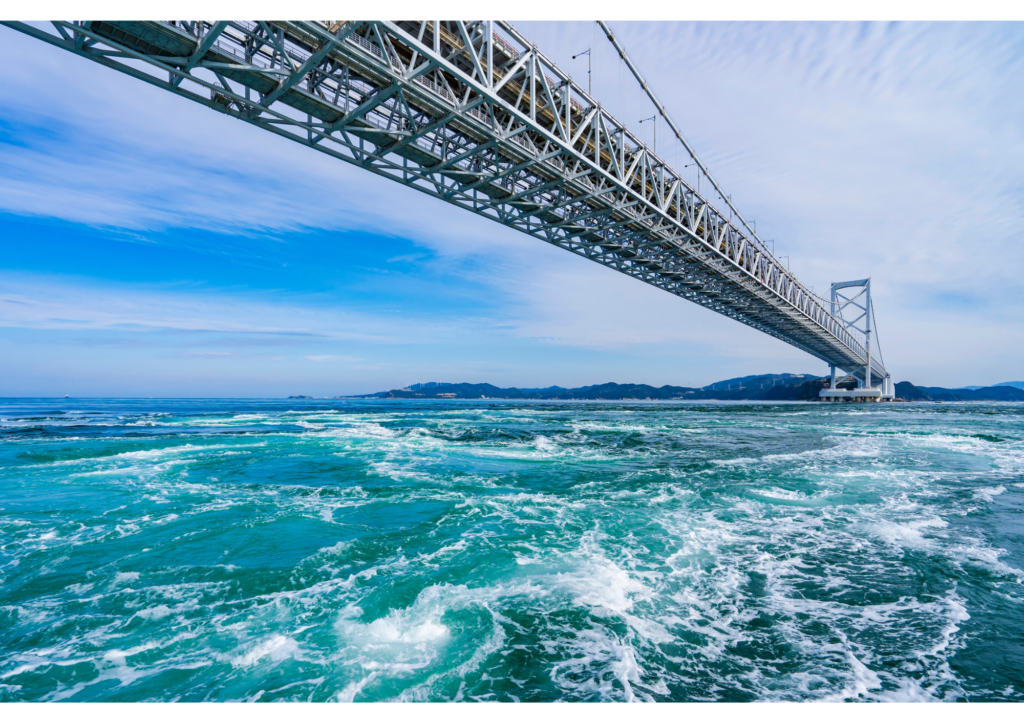
Tokushima Prefecture, famous for its Awaodori dance, has a large pool of tourist attractions: the most important one is undoubtedly the Naruto whirlpools.
Naruto whirlpools are a natural phenomenon formed within the ebb and flow of tidal currents in the Seto Inland Sea and Kii Channel. Below there is a brief explanation of Naruto whirlpools, quoted from the website Uzunomichi:
“The top three fastest tidal currents are those in the Naruto Channel, Italy’s Strait of Messina, and Canada’s Seymour Narrows. During the peak of spring tides, also called “King Tides”, Naruto’s currents can reach speeds of over 20kph, the fastest in Japan.”
There are many spots from Naruto Park where you can view the Naruto whirlpools, so you should definitely consider visiting them during your trip to Japan!
You might be worried that the weather may affect the view of the whirlpools, but this is Japan, after all. You can take a walk on a promenade called the “Whirlpool Way”. The Whirlpool Way is located under the roadway of the Onaruto Bridge so that you can enjoy them even on a rainy day. However, please note that the path is slippery when it rains, and you will need rain gear since the path is fenced off to allow visitors to see the scenery easily, so you can still get wet (rain gear are available for purchase.) If you want to feel the magnificent whirlpools directly on your skin, it might be fun to experience them on a rainy day!
The observation deck, about 450 meters away, has a glass floor from which you can look into the water from a height of about 45 meters. It is an attractive place to see the whirlpools up close.
Since the time of the whirlpools varies every day, it is recommended to check in advance (see the “Tide Chart” on the website of the Whirlpool Path): Naruto’s whirlpools are especially large during spring and fall high tides (called “new moon” and “full moon”).
Now, for the more adventurous, why not get to the sea by boat? Both large tidal
barges and small, high-speed boats are available. For families, the Uzushio Cruise is particularly recommended. It is less likely to cause seasickness on a cruise than in smaller boats, and relax experience. The Uzushio Cruise is also the only one with an underwater observation deck. You can refer to the following website for a detailed schedule and rates:
https://ars-uzushio.triplabo.jp/home?lang=en
Source: Uzushio Cruise
The following website offers both cruises and set plans, with detailed information on tickets and access to the Whirlpool Road.
https://www.uzunomichi.jp/lang_en
Source: Onaruto Bridge Whirlpool Walkway
Now that you have enjoyed the whirlpools, if you are a history buff you should definitely visit the Natsuya Highway (or Musa Kaido). Naruto, which flourished as the gateway to Shikoku, was once called “Musa,” and this is the starting point of the Natsuya Kaido, where people, goods, and information have been actively coming and going since ancient times. Visitors can enjoy the historical buildings and relaxing time here.
Please refer to the following website for detailed information on the Natsuya Highway.
https://discovertokushima.net/en
Source: Tokushima Prefecture Tourism Information Site Awanavi
Tokushima Prefecture is also famous for Awaodori, a world-class traditional performing art with a 400-year history, and the Otsuka Museum of Art, which has a vast collection from ancient murals to modern paintings.
Kagawa’s Unique Islands by Ferry
When it comes to traveling, transportation is one of the most important factors, and Kagawa Prefecture is relatively easy to get around by train. In addition, Kagawa Prefecture is home to 24 islands, the fifth largest number in Japan. All of these islands can be accessed by boat within an hour. Let us introduce you to some of the wonderful islands of Kagawa Prefecture!
Naoshima Island, Famous for its Art
Shodoshima is the second largest island in the Seto Inland Sea after Awaji Island in Hyogo Prefecture.
The “Angel Road” seen on this island is a sand road that appears twice a day around the time of low tide. It is very popular as a sacred place for lovers and a walkway for angels. Shodoshima is known as the “birthplace of olive cultivation in Japan” due to its mild and dry climate. Visitors can also enjoy the Olive Memorial Museum.
https://shodoshima.or.jp/news/detail.php?id=295
Source: Shodoshima Tourist Association
Milky Road in Shodoshima Island
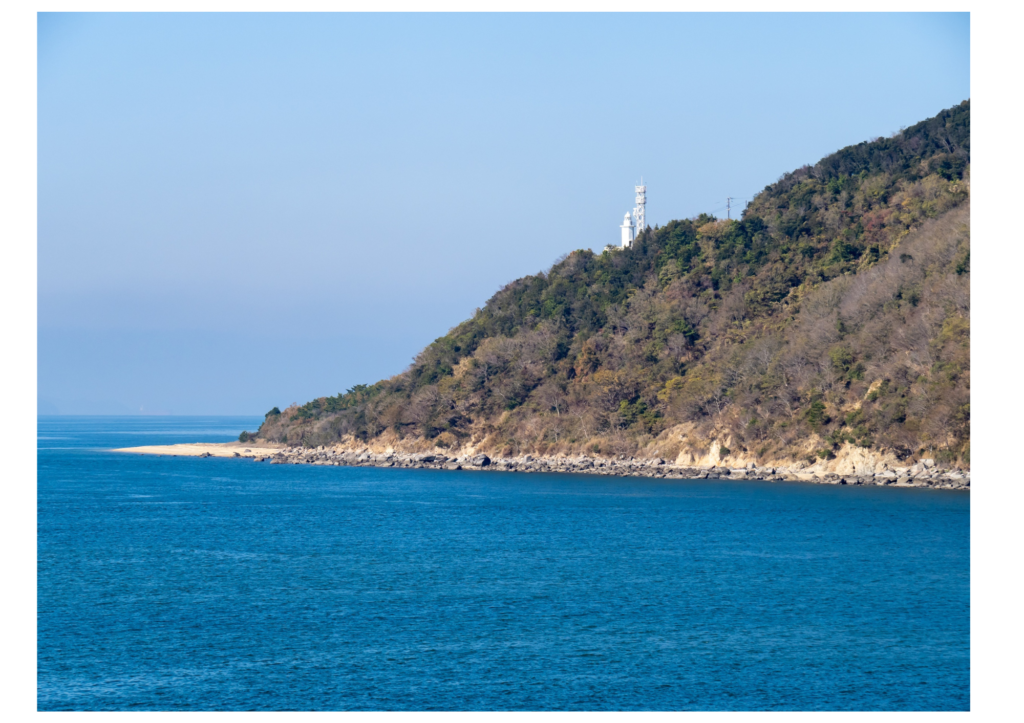
Shodoshima is the second largest island in the Seto Inland Sea after Awaji Island in Hyogo Prefecture.
The “Angel Road” seen on this island is a sand road that appears twice a day around the time of low tide. It is very popular as a sacred place for lovers and a walkway for angels. Shodoshima is known as the “birthplace of olive cultivation in Japan” due to its mild and dry climate. Visitors can also enjoy the Olive Memorial Museum.
https://shodoshima.or.jp/news/detail.php?id=295
Source: Shodoshima Tourist Association
Japanese-style islands, Ogijima and Mekijima
Megijima, accessible in 20 minutes from Takamatsu Port, is an island where the legend of Momotaro, a famous Japanese folktale, is still alive. At the Onigashima Great Cave, visitors can explore the cave, and as the legend goes, they may even meet ogres! In fact, there are dolls of ogres and other objects in the cave.
A tour starting from Takamatsu Port will take you to Ogijima via Megijima.
Ogijima is also an artistic island, characterized by a labyrinth of stone pavements and stone steps that continue uphill. Colorfully painted alley murals can be enjoyed here and there. The best-view spot on the island is Toyotamahime Shrine. It commands a panoramic view of the calm Seto Inland Sea and is also famous as a goddess of childbirth. You can also see cats lounging around everywhere: cat lovers will definitely adore it!
Kagawa is also famous for its long beach, Chichibugahama, which is said to be the Salt Lake Uyuni of Japan, and its udon noodles, so famous that it is called the “Udon Prefecture”.
Matsuyama Castle Towering in the Center of Ehime Prefecture
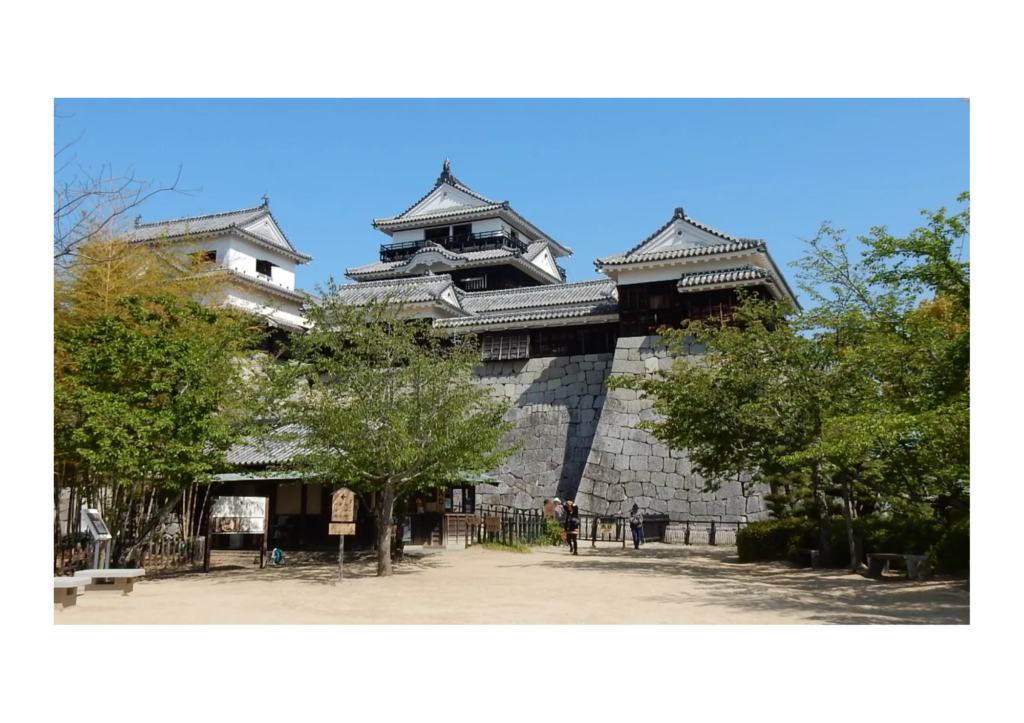
source:https://www.matsuyamajo.jp/
Ehime Prefecture consists of the northwestern part of Shikoku and small islands in the Seto Inland Sea. Named after the god Ehime in the mythology of the Kojiki, Ehime is home to many historical spots, including Dogo Hot Springs, which appears in the famous Japanese literary classic “Botchan” by Soseki Natsume, and Takatora Todo’s Imabari Castle. This month’s article will introduce Matsuya Castle, which stands tall on Katsuyama in Matsuyama City, Ehime Prefecture.
Matsuyama Castle was built on the 132-meter-high summit of Katsuyama, and Yoshiaki Kato, who distinguished himself in the Battle of Sekigahara, served as the first lord of Matsuyama Castle. Matsuyama Castle is in fact a historic building built before the Edo period. The castle is a nationally important cultural property and exhibits armor worn by the feudal lords and Tokugawa warriors, as well as other valuable artifacts.
Matsuyama Castle was known as an “impregnable” place, and it was equipped with many tricks against the enemy, such as a path that was bent to make it impossible for a large number of people to attack at once, or many fake paths. You can also experience all the secret passages in case of a surprise attack, so why don’t you go back in time to the Warring States period and attack a castle? You will be definitely amazed at all the tricks this castle has.
And the view from the top floor of the castle is absolutely breathtaking: a complete, 360° panoramic view of the city. Enjoying the night view from here is also highly recommended! There is also a ropeway, which can be helpful for families.
If you want to know more about Ehime Prefecture, you can refer to this site.
Source: Ehime Prefecture Lifestyle and Health Business Guidance Center
The Shimanto River in Kochi, a Natural Clear River
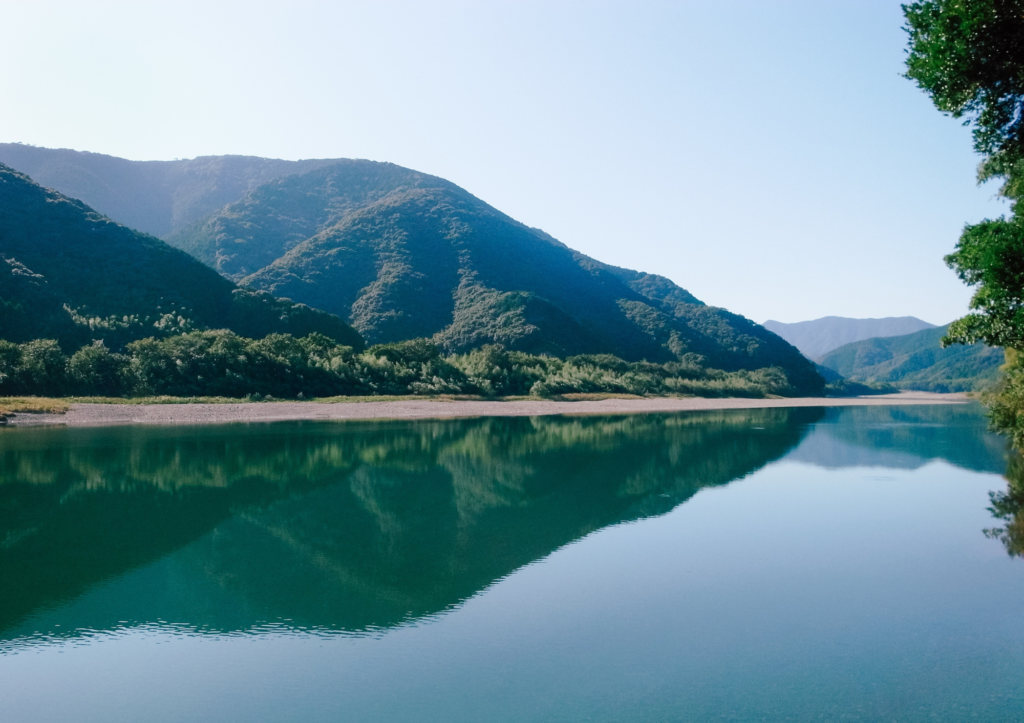
Kochi Prefecture, the birthplace of Ryoma Sakamoto, a samurai in the closing days of the Tokugawa Shogunate, still retains the magnificent natural beauty unique to Shikoku.
The Shimanto River is the longest river in western Japan, with a total length of 196 km. The river flows through a natural setting and retains a typical satoyama landscape, which refers to the border zone or area between mountain foothills and arable flat land. It is highly recommended for those who want to learn about the scenery of Japan’s past. River activities are particularly abundant in the middle and lower reaches of the river.
Now, many “chinkabashi bridges” can be seen from upstream to downstream. These bridges have no handrails and are designed to sink below the surface of the water when the river rises to prevent them from being washed away. It is a typical feature of the Shimanto River, and offers beautiful scenery that is in harmony with the natural surroundings. The Imanari Bridge (also known as Sada chinkabashi), which is close to Shimanto City, is also a famous photo spot.
There are several bicycle rental shops along the Shimanto River, where visitors can enjoy cycling through the magnificent nature. There are also many places to eat along the Shimanto River, so it is a good idea to take a break and relax while cycling.
Souvenir shops sell mainly processed products from the Shimanto River, such as natural eels, river shrimps, ayu (sweetfish), and river seaweed. You can also enjoy local delicacies such as the famous natural eel, grilled natural ayu, and fried river shrimp. Depending on the season, you might be able to enjoy your meal while watching the river flow by on the terrace seats along the edge of the restaurant.
You can also go down the Shimanto River on a sightseeing boat or a houseboat, or even enjoy a meal on a traditional yakatabune.
The following website offers suggestions for cycling and boat trips for foreigners.
Source: Okushimanto Time
Kochi is also famous for its cliffs where you can see the arch of the horizon and directly feel the roundness of the earth, and Katsurahama Beach, which is famous for its beautiful sight of the moon. Nearby is the Sakamoto Ryoma Memorial Museum, where you can follow in the footsteps of this historical figure.
Above all, Kochi Prefecture is the largest consumer of bonito in Japan. There are many ways to eat bonito, but tataki, a dish in which the surface of the bonito is grilled and topped with a variety of condiments such as green onions and myoga, is one of the most representative dishes of Kochi. The condiments and tare sauce differ depending on the restaurant and region, so be sure to try bonito tataki when you visit Kochi!
How was it? If you are looking for a place where you can enjoy the great nature and the original Japanese landscape, Shikoku is a very attractive region to visit. Even within the same country, there are many unique dialects, and the intonation of the Japanese language that is spoken in Tokyo is very different from the ones you will hear in other places in Japan. Please come and see the warm and dynamic national character of Shikoku!