Drugstores in Japan: A Complete Guide for Travelers
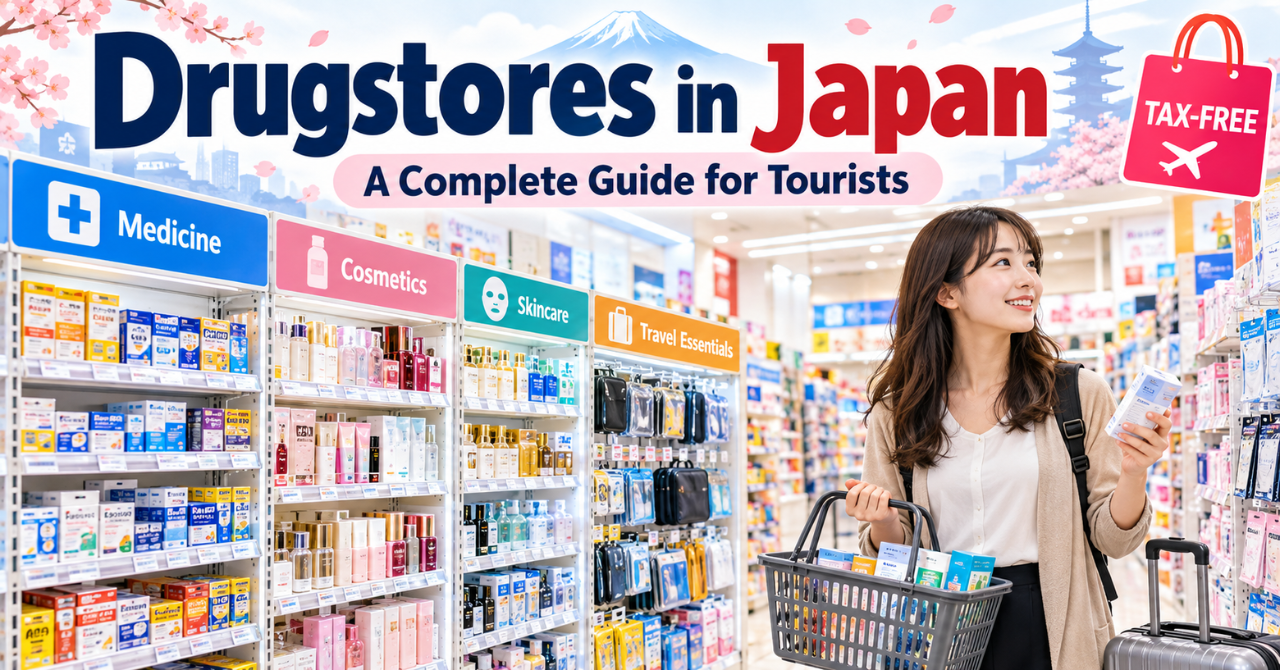
Drugstores in Japan are useful places for much more than buying medicine.
Travelers can find over-the-counter medicines, cosmetics, skincare products, toiletries, health products, snacks, drinks, and many everyday essentials in one place.
Popular drugstore chains can be found in major cities, shopping areas, and many tourist destinations across Japan.
Japanese drugstores are also popular with international visitors because many stores offer tax-free shopping and carry Japanese beauty and healthcare products.
However, buying medicine in Japan can be confusing because some products have different sales rules, and packaging is often written mainly in Japanese.
In this guide, you will learn what you can buy at drugstores in Japan, how to buy medicine safely, how tax-free shopping works, how to pay, and useful tips for first-time visitors.
- What Are Drugstores in Japan?
- What Can You Buy at Drugstores in Japan?
- How to Buy Medicine at a Drugstore in Japan
- Popular Medicines Travelers Look for in Japan
- Tax-Free Shopping at Drugstores in Japan
- How to Pay at Drugstores in Japan
- Popular Drugstore Chains in Japan
- When Are Drugstores Useful for Travelers?
- Common Mistakes at Drugstores in Japan
- Tips for Shopping at Drugstores in Japan
- Final Tips for Drugstores in Japan
What Are Drugstores in Japan?
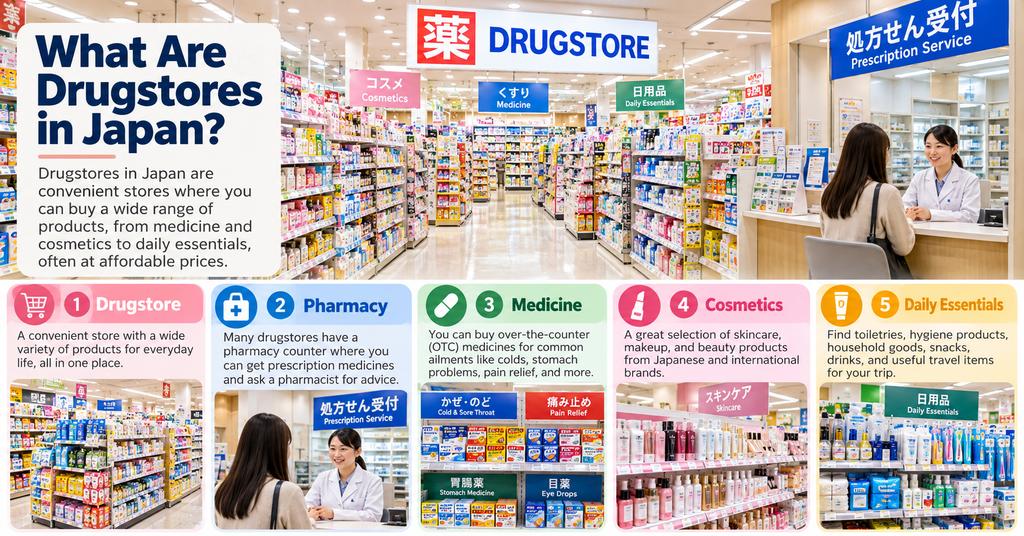
Drugstores in Japan are retail stores that sell medicines, cosmetics, skincare products, toiletries, health products, and everyday essentials.
Many stores also sell snacks, drinks, household items, and travel necessities, so they are useful even if you do not need medicine.
You can find drugstores in shopping streets, train stations, malls, and tourist areas throughout Japan.
Some stores are large and feel more like supermarkets, while others focus mainly on medicine and beauty products.
Drugstores vs Pharmacies in Japan
In Japan, drugstores and pharmacies are not exactly the same.
Drugstores usually sell over-the-counter medicines together with cosmetics, toiletries, food, drinks, and other everyday products.
A pharmacy, often called a “yakkyoku,” may also dispense prescription medicine when you bring a prescription from a medical clinic or hospital.
Some drugstores have a prescription pharmacy counter inside the same store, while others only sell over-the-counter products.
If you need prescription medicine, look for a pharmacy that provides prescription services rather than assuming every drugstore can fill a prescription.
Major Drugstore Chains in Japan
Japan has many large drugstore chains, and you will see different brands depending on the region.
Well-known chains include Matsumoto Kiyoshi, Cocokara Fine, Welcia, Sundrug, Sugi Drug, and Tsuruha Drug.
Large stores in tourist areas may have multilingual signs, tax-free shopping counters, and staff who are used to helping international visitors.
Products, opening hours, payment methods, and available services can vary by store, even within the same chain.
What Can You Buy at Drugstores in Japan?
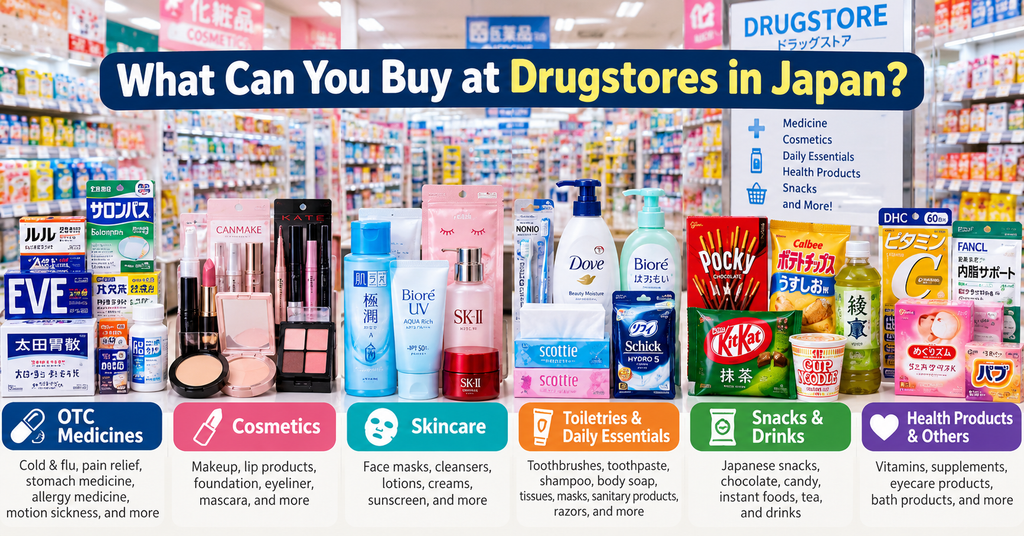
Drugstores in Japan sell a surprisingly wide range of products.
In addition to medicine, you can find cosmetics, skincare products, toiletries, health items, snacks, drinks, and many everyday essentials.
Large drugstores in busy shopping areas often have several floors or large sections dedicated to beauty, healthcare, and daily necessities.
For travelers, drugstores can be useful for both emergency purchases and souvenir shopping.
OTC Medicines
Japanese drugstores sell many over-the-counter medicines for common health problems.
You may find products for colds, headaches, stomach problems, allergies, motion sickness, sore throats, and other minor symptoms.
However, medicine names, ingredients, and dosages may be different from products sold in your home country.
Do not choose medicine only by the package design. Check the ingredients and instructions, and ask a pharmacist or qualified staff member if you are unsure.
Cosmetics and Skincare
Drugstores are popular places to buy Japanese cosmetics and skincare products.
You can find facial cleansers, lotions, moisturizers, sunscreen, face masks, makeup, lip products, and many other beauty items.
Many stores carry both affordable drugstore brands and premium products.
Popular products may also be available in travel sizes, making them easy to pack or try during your trip.
Toiletries and Personal Care
Drugstores are convenient places to buy toiletries and personal-care products.
Common items include toothbrushes, toothpaste, shampoo, conditioner, body wash, razors, deodorant, tissues, masks, and sanitary products.
Compared with convenience stores, drugstores usually offer a wider selection and more sizes or brands.
This makes them useful if you forget something at home or need to replace an item during your trip.
Health and Wellness Products
Many drugstores also have sections for health and wellness products.
You may find vitamins, supplements, cooling sheets, heat patches, eye care products, compression socks, masks, and other everyday healthcare items.
Some products may be unfamiliar to international visitors, so check the label carefully before buying or using them.
If you have allergies, take regular medicine, or have a medical condition, ask a healthcare professional if you are unsure whether a product is suitable for you.
Snacks, Drinks, and Daily Essentials
Many Japanese drugstores also sell snacks, drinks, bottled water, instant food, and household products.
Some large stores offer surprisingly wide food sections with chocolate, candy, tea, coffee, and other items that can also make inexpensive souvenirs.
You may also find batteries, umbrellas, cleaning products, and other daily necessities.
The selection varies by store, but large drugstores can sometimes feel like a combination of a pharmacy, beauty store, and small supermarket.
How to Buy Medicine at a Drugstore in Japan
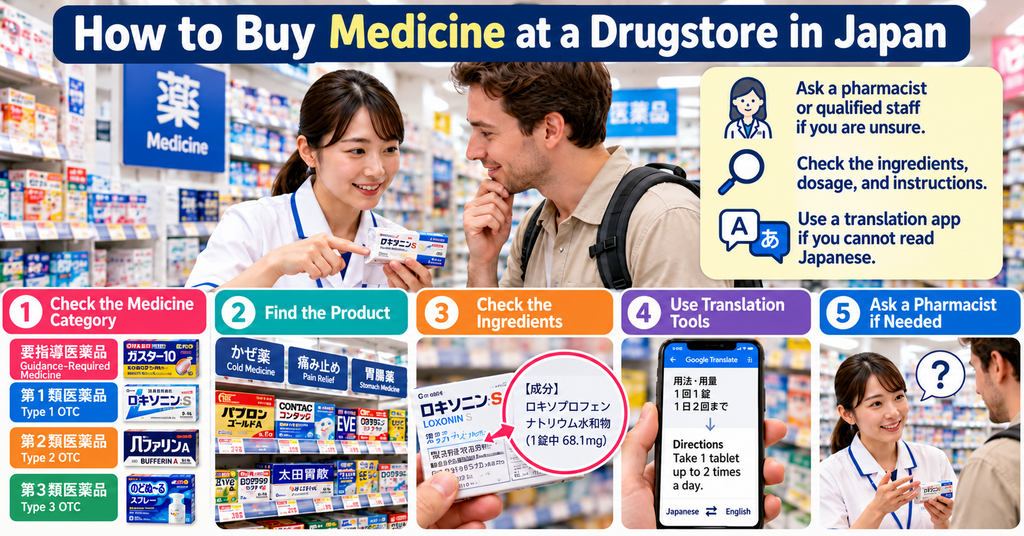
Buying over-the-counter medicine at a Japanese drugstore is usually straightforward, but the rules depend on the type of medicine.
Some medicines can be purchased directly from the shelves, while others require help or information from a pharmacist or qualified drug seller.
Medicine packaging is often mainly in Japanese, so it is important to check the active ingredients, dosage, warnings, and possible interactions before using a product.
If you are unsure which medicine is suitable for you, ask the store staff instead of choosing only by the package or brand name.
OTC Medicine Categories in Japan
Over-the-counter medicines in Japan are divided into different categories based on their level of risk and the information required when they are sold.
General OTC medicines are classified as Type 1, Type 2, or Type 3.
Type 1 medicines require information from a pharmacist before purchase.
Type 2 and Type 3 medicines can generally be sold by either a pharmacist or a qualified drug seller.
Japan also has guidance-required medicines that have stricter sales rules and may require direct consultation with a pharmacist.
You do not need to memorize these categories, but knowing that different medicines have different sales rules can help you understand why some products are kept behind a counter.
For the latest information about OTC medicine categories and sales rules, check the official Ministry of Health, Labour and Welfare guide.
When You Need to Speak to a Pharmacist
Some medicines cannot be purchased without speaking to a pharmacist or qualified staff member.
For example, certain higher-risk OTC medicines require the pharmacist to provide information before the sale.
Staff may ask about your symptoms, age, allergies, medical conditions, other medicines you take, or how long you have had the symptoms.
Since May 2026, Japan has also strengthened the sales rules for certain medicines containing ingredients that may be misused.
Do not be surprised if staff ask additional questions or limit the amount you can purchase.
These checks are part of Japan’s medicine safety rules.
What If You Cannot Read Japanese?
Many medicine packages in Japan are written mainly in Japanese, which can make choosing the correct product difficult for international travelers.
Large drugstores in tourist areas may have multilingual signs, translated product information, or staff who can provide basic assistance in English or other languages.
You can also show the staff a translation of your symptoms or the active ingredient you are looking for.
Do not rely only on the appearance of the package because similar-looking medicines may contain different ingredients or dosages.
If you cannot confirm what a medicine contains or how to use it safely, ask a pharmacist or qualified staff member before buying it.
Bring Information About Your Medicines
If you regularly take medicine, keep information about it with you while traveling in Japan.
It is useful to know the generic or active ingredient name, dosage, and why you take the medicine.
Brand names can be different between countries, so the active ingredient name is often more useful when speaking to a pharmacist.
You should also mention any allergies, medical conditions, or other medicines you are taking when asking for advice.
Keeping this information on your smartphone or in a written note can make communication much easier if you need medicine during your trip.
Popular Medicines Travelers Look for in Japan
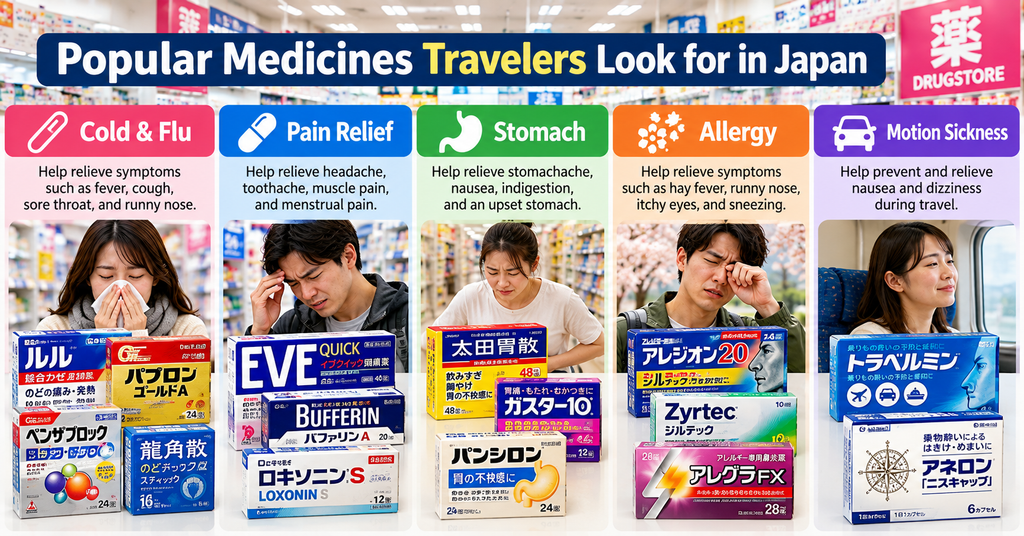
Travelers often visit Japanese drugstores when they need medicine for common problems such as colds, headaches, stomach discomfort, allergies, or motion sickness.
Many different products may be available for the same symptom, and the active ingredients or dosage can differ from medicines sold in your home country.
Check the package instructions carefully and ask a pharmacist or qualified staff member if you are unsure which product is appropriate.
If your symptoms are severe, unusual, or getting worse, consider visiting a medical clinic instead of relying only on over-the-counter medicine.
Cold and Flu Medicine
Japanese drugstores sell many medicines for common cold symptoms.
Some products are designed for several symptoms at once, such as a runny nose, sore throat, cough, fever, or headache.
Others focus on a specific symptom.
Because combination medicines may contain several active ingredients, check the label carefully to avoid taking the same ingredient in more than one product.
Ask a pharmacist or qualified staff member if you already take other medicine or are unsure which product to choose.
Pain Relief Medicine
Pain relievers are commonly available at Japanese drugstores.
They may be used for symptoms such as headaches, toothaches, menstrual pain, or muscle pain.
Different products can contain different active ingredients, so do not assume that a familiar-looking package is the same as the medicine you use at home.
Check the ingredients, dosage, warnings, and instructions before taking any pain relief medicine.
Stomach Medicine
Drugstores in Japan offer many products for stomach and digestive problems.
You may find medicines for indigestion, heartburn, stomach discomfort, diarrhea, constipation, or other minor digestive symptoms.
The correct product depends on the type of symptoms you have, so it is helpful to explain your symptoms clearly to the staff.
If you have severe abdominal pain, persistent vomiting, blood in your stool, or other serious symptoms, seek medical care instead of self-treating.
Allergy Medicine
Allergy medicines are also widely available at Japanese drugstores.
Travelers may look for products for seasonal pollen allergies, runny noses, sneezing, itchy eyes, or other mild allergy symptoms.
Some medicines can cause drowsiness, so check the warnings before driving or doing activities that require concentration.
If you have a serious allergic reaction or difficulty breathing, seek emergency medical help immediately.
Motion Sickness Medicine
Motion sickness medicine can be useful when traveling by bus, boat, car, or other transportation in Japan.
Drugstores may sell tablets, chewable medicines, or other products designed to help prevent nausea and dizziness caused by motion sickness.
Some products may cause drowsiness, so check the instructions before taking them.
If you are driving a rental car, pay particular attention to any warning about sleepiness or reduced concentration.
Tax-Free Shopping at Drugstores in Japan
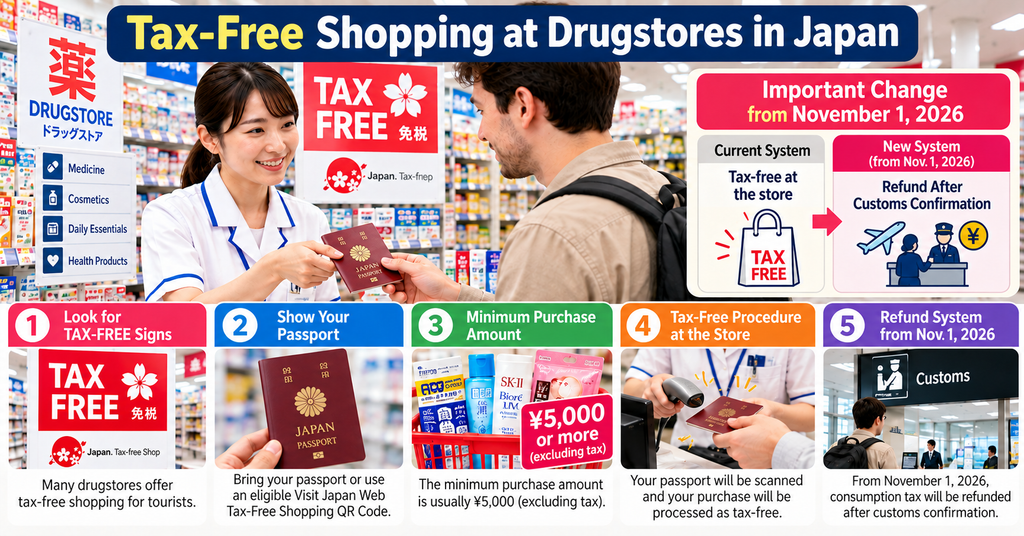
Many drugstores in Japan offer tax-free shopping for eligible international visitors.
This can be useful when buying cosmetics, skincare products, medicines, toiletries, and other items to take home.
However, not every drugstore or every branch offers tax-free shopping.
Look for a TAX-FREE sign at the entrance or checkout counter, and check the requirements before making your purchase.
Japan’s tax-free shopping system will change significantly on November 1, 2026, so the procedure depends on when you visit.
For a complete explanation of Japan’s tax-free system and the new refund method, see our guide to tax-free shopping in Japan.
Which Drugstores Offer Tax-Free Shopping?
Many large drugstore chains have tax-free locations, especially in major cities, shopping districts, and popular tourist areas.
However, tax-free service is offered by individual participating stores, so you should not assume that every branch provides it.
Look for a TAX-FREE sign or ask the staff before shopping.
Some stores also have dedicated tax-free checkout counters or multilingual information for international visitors.
What You Need for Tax-Free Shopping
To use tax-free shopping, you must meet Japan’s eligibility requirements and complete the required procedure at a participating store.
Bring your passport when shopping because the store may need to confirm your identity and visitor status.
Some stores may also support digital procedures using Visit Japan Web.
Under the current system, tax-free purchases generally require a minimum purchase of 5,000 yen excluding tax at the same store on the same day.
Medicines, cosmetics, food, and drinks are treated as consumable products under the current rules and have additional conditions.
Always check the latest requirements before making a large tax-free purchase.
If you plan to use the Tax-Free Shopping QR Code, see our complete Visit Japan Web guide.
New Tax-Free Refund System from November 1, 2026
Japan will introduce a new tax-free refund system on November 1, 2026.
Under the new system, travelers will first pay the tax-included price when purchasing eligible goods.
When leaving Japan, you will need to have the tax-free goods confirmed by customs before departure.
The goods must be taken out of Japan within 90 days of the purchase date.
After customs confirms that the goods are leaving Japan, the equivalent amount of consumption tax will be refunded.
The exact refund method may vary depending on the store or service provider.
The new system will also remove the distinction between general goods and consumable goods, the 500,000-yen maximum for consumable products, and the special packaging requirement.
The minimum tax-free purchase amount will remain 5,000 yen excluding tax.
Because the system is changing, check the latest official information before using tax-free shopping in Japan.
For the latest official details about Japan’s new tax-free refund system, check the National Tax Agency guide.
How to Pay at Drugstores in Japan
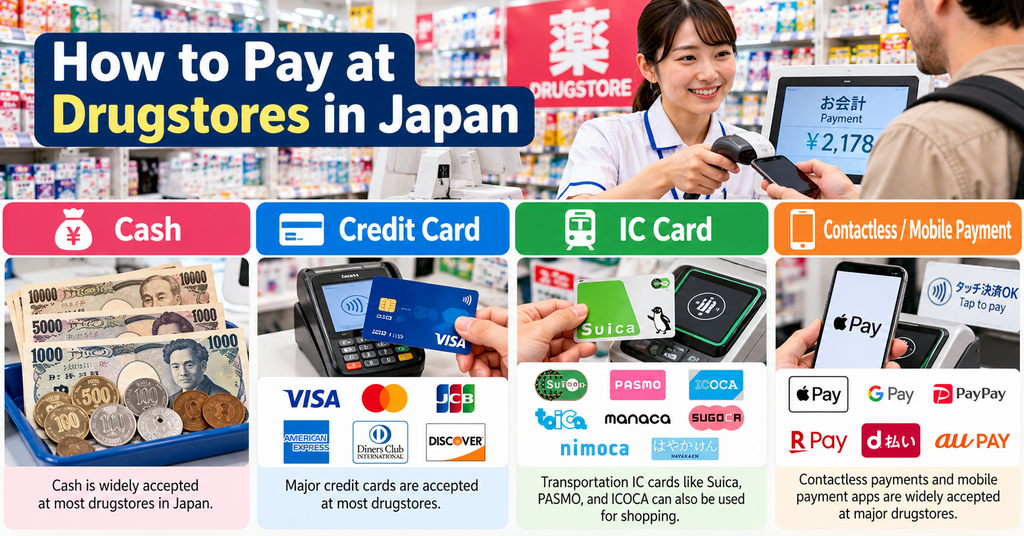
Drugstores in Japan usually accept several payment methods.
Cash is widely accepted, and many major drugstore chains also accept credit cards, transportation IC cards, and contactless payments.
However, available payment methods can vary by store and location.
It is a good idea to keep some Japanese yen with you as a backup, especially at smaller stores.
For a complete overview of cash, credit cards, ATMs, IC cards, and mobile payments, see our guide to money and payments in Japan.
Cash
Cash is accepted at almost all drugstores in Japan.
You can use Japanese yen for medicine, cosmetics, toiletries, snacks, and other regular purchases.
Cash can be useful if your overseas card is declined or if a smaller store does not support your preferred cashless payment method.
Keeping some small bills and coins can make checkout easier.
Credit and Debit Cards
Major drugstore chains commonly accept credit and debit cards.
Visa, Mastercard, JCB, American Express, and other major international card brands are accepted at many locations.
However, acceptance may vary by store, and an overseas-issued card may occasionally be declined.
If possible, carry a second payment method as a backup.
IC Cards and Contactless Payments
Many drugstores also accept transportation IC cards and other contactless payment methods.
Depending on the store, you may be able to pay with Suica, PASMO, ICOCA, Apple Pay, iD, QUICPay, or supported QR code payment services.
Transportation IC cards can be especially convenient for small purchases because you can use the same card for trains, buses, and shopping.
Not every store supports every payment service, so check the payment logos near the register before paying.
For more information about Suica, PASMO, ICOCA, and other transportation cards, see our complete guide to IC cards in Japan.
Popular Drugstore Chains in Japan
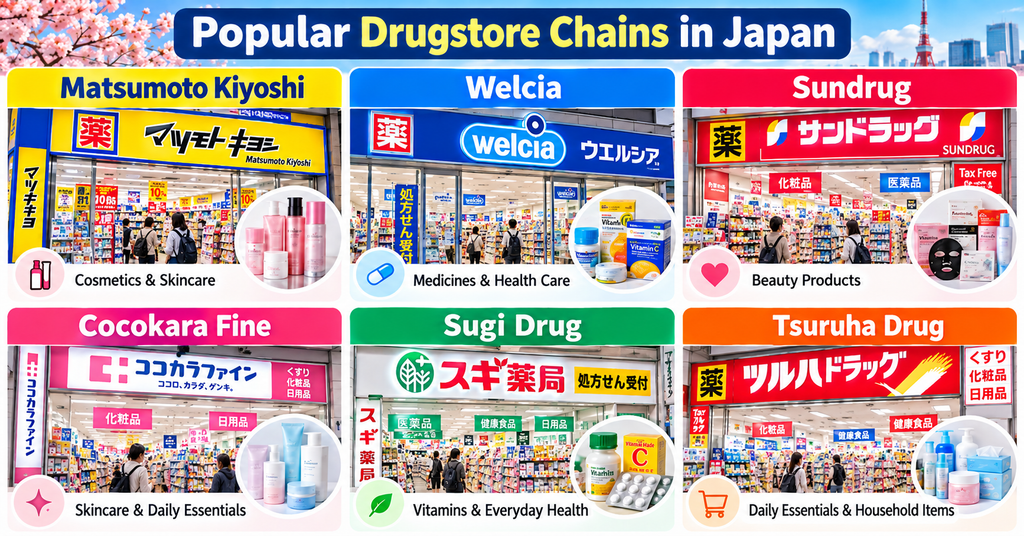
Japan has many large drugstore chains, and the brands you see can vary depending on the region.
Major chains sell medicines, cosmetics, skincare products, toiletries, food, and everyday essentials.
Stores in large cities and tourist areas may also offer tax-free shopping, multilingual information, and a wider selection of beauty products.
Prices, opening hours, payment methods, and available services can vary by location, even within the same chain.
If you need medical care instead of over-the-counter medicine, use the official JNTO medical guide to find medical institutions in Japan.
You can search for nearby Matsumoto Kiyoshi and Cocokara Fine stores using the official store locator.
Matsumoto Kiyoshi
Matsumoto Kiyoshi is one of the most recognizable drugstore brands in Japan.
Its stores sell medicines, cosmetics, skincare products, toiletries, health products, snacks, and other daily necessities.
Travelers can often find Matsumoto Kiyoshi stores in major shopping districts, train station areas, and city centers.
Some locations in popular tourist areas also provide tax-free shopping and multilingual information.
Welcia
Welcia is another major drugstore chain in Japan.
Many stores carry medicines, cosmetics, toiletries, healthcare products, food, drinks, and household items.
Some locations also have prescription pharmacy services.
Welcia stores can be especially useful in residential and suburban areas, although the available services and opening hours vary by location.
Sundrug
Sundrug is a large Japanese drugstore chain with stores in many parts of the country.
You can find medicines, cosmetics, skincare products, toiletries, health products, food, and household essentials.
Some stores also provide prescription pharmacy services.
The size and product selection vary by location, so larger branches may offer more choices than smaller stores.
Cocokara Fine
Cocokara Fine is another well-known drugstore brand in Japan.
Stores sell medicines, cosmetics, skincare products, toiletries, healthcare items, and everyday necessities.
You may find Cocokara Fine stores in shopping areas, train stations, malls, and residential neighborhoods.
Matsumoto Kiyoshi and Cocokara Fine are part of the same corporate group, although they continue to operate under their own store brands.
Other Major Drugstore Chains
You may also see other major drugstore chains such as Sugi Drug and Tsuruha Drug during your trip.
Some chains are more common in certain regions, so the stores you see in Tokyo may be different from those in Hokkaido, Kansai, or other parts of Japan.
Most major chains sell a similar range of medicines, cosmetics, toiletries, health products, and daily essentials.
There is usually no need to search for one specific chain unless you are looking for a particular product or service.
When Are Drugstores Useful for Travelers?
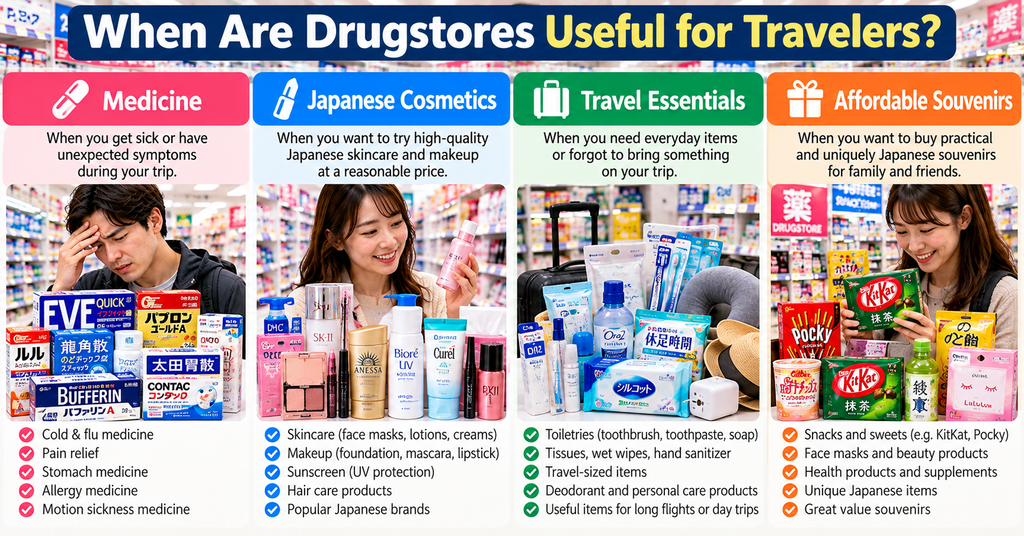
Drugstores can be useful at many different points during a trip to Japan.
You may visit one when you need medicine, toiletries, skincare products, travel essentials, or inexpensive souvenirs.
Because many drugstores are located near train stations, shopping streets, and tourist areas, they can be easy to find when you need something quickly.
Large stores are especially useful because you can buy healthcare products, beauty items, snacks, and daily necessities in one place.
Buying Medicine During Your Trip
Drugstores are useful if you develop a minor health problem during your trip.
You may be able to find over-the-counter medicine for headaches, colds, stomach problems, allergies, or motion sickness.
If you are not sure which product is suitable, explain your symptoms to a pharmacist or qualified staff member.
For serious, unusual, or worsening symptoms, consider visiting a medical clinic instead of relying only on over-the-counter medicine.
Shopping for Japanese Cosmetics
Japanese drugstores are popular places to shop for cosmetics and skincare products.
You can find sunscreen, face masks, cleansers, lotions, makeup, lip products, and many other beauty items.
Drugstores often carry a wide range of affordable Japanese brands as well as more premium products.
This makes them a convenient place to discover Japanese beauty products without visiting a department store.
Buying Forgotten Travel Essentials
Drugstores are also useful when you forget an everyday travel item.
You can often find toothbrushes, shampoo, razors, masks, tissues, sanitary products, batteries, umbrellas, and other essentials.
Compared with convenience stores, drugstores usually have more brands, sizes, and product choices.
They can be especially useful when you need several personal-care items at the same time.
If you only need a few basic items, convenience stores can also be useful. See our complete guide to convenience stores in Japan.
Finding Affordable Souvenirs
Drugstores can also be a good place to find affordable souvenirs.
Popular choices include Japanese skincare products, face masks, cosmetics, bath products, snacks, tea, and small healthcare items.
Many products are compact and easy to pack in your suitcase.
If you plan to buy several items, compare prices because promotions and discounts can vary between stores.
Common Mistakes at Drugstores in Japan
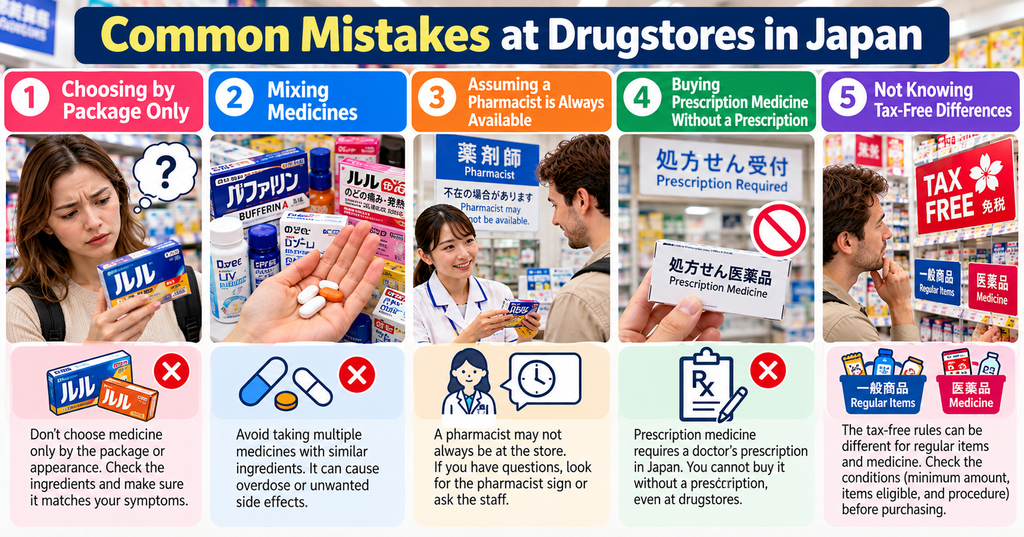
Drugstores in Japan are easy to use, but travelers can make a few common mistakes.
Do not choose medicine only by the package design or brand name. Ingredients, dosages, and warnings may be different from medicines sold in your home country.
Avoid taking several medicines with similar active ingredients at the same time unless you have confirmed that they can be used together.
Do not assume that every drugstore has a pharmacist available at all times. Some medicines may not be sold if the required qualified staff member is not available.
Also, not every drugstore can fill prescriptions, even if it sells over-the-counter medicine.
Do not assume that every branch offers tax-free shopping or accepts the same payment methods.
When buying medicine, cosmetics, or other health products, check the instructions carefully and ask the staff if anything is unclear.
If your symptoms are severe or getting worse, visit a medical clinic instead of continuing to self-treat with over-the-counter medicine.
Tips for Shopping at Drugstores in Japan
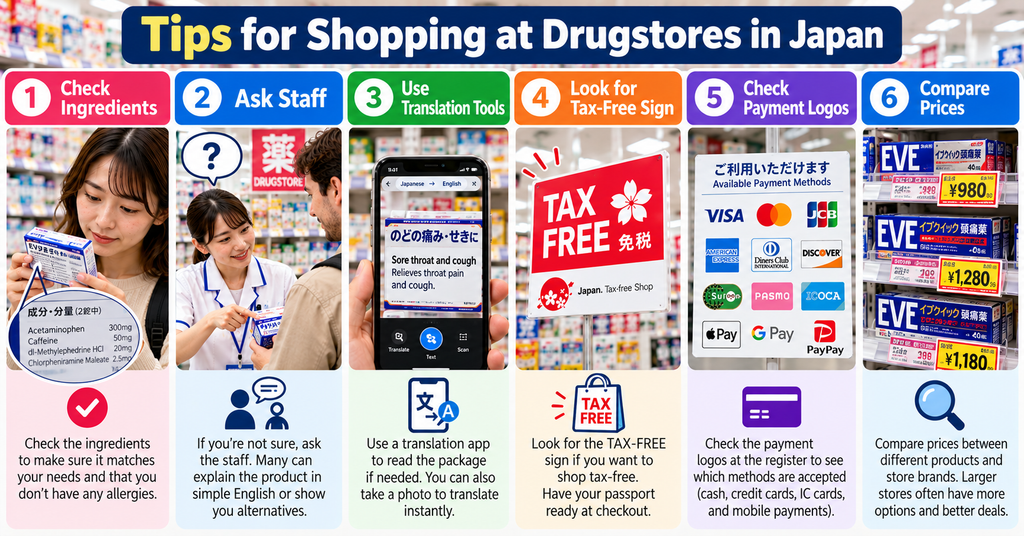
Check the ingredients and dosage carefully when buying medicine, especially if the product is unfamiliar.
If you cannot read Japanese, use translation tools or ask a pharmacist or qualified staff member for help.
Keep the generic or active ingredient names of any medicines you regularly take on your smartphone.
Look for TAX-FREE signs before shopping if you plan to use tax-free service, because not every store or branch participates.
Check the payment logos near the register because accepted cards, IC cards, and contactless payment methods can vary by location.
Compare prices if you are buying cosmetics, skincare products, or souvenirs, as promotions and discounts may differ between stores.
Large drugstores in busy shopping areas often have a wider selection and may provide multilingual information for international visitors.
If you are buying medicine, do not rush the process. Take time to confirm the product, dosage, warnings, and possible interactions before using it.
You can also check official medicine information and package inserts using the PMDA OTC medicine database.
Final Tips for Drugstores in Japan
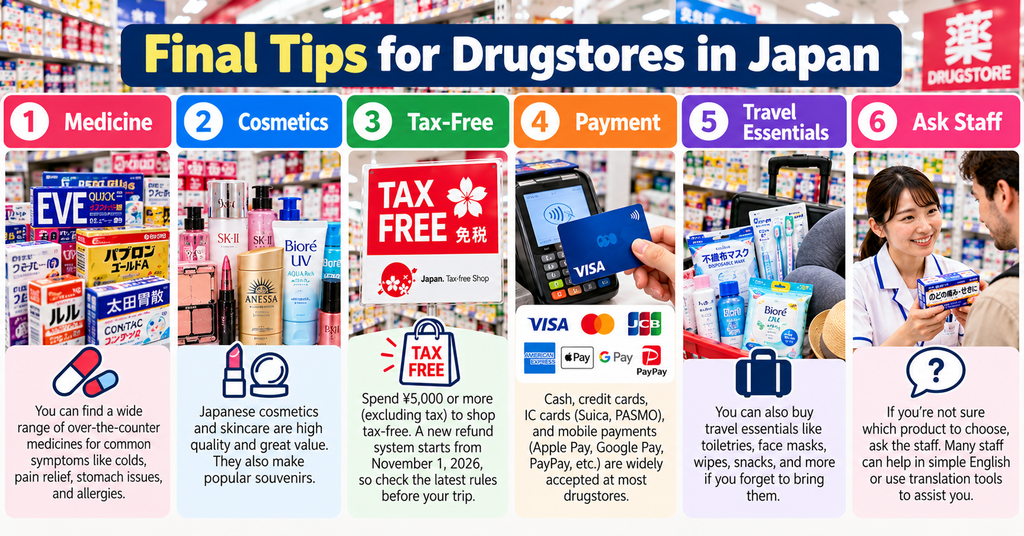
Drugstores in Japan are useful places for medicine, cosmetics, skincare products, toiletries, snacks, and everyday travel essentials.
Major chains are easy to find in many cities, shopping areas, and tourist destinations, but available products and services can vary by location.
When buying medicine, check the active ingredients, dosage, warnings, and instructions carefully instead of choosing only by the package design.
If you are unsure which medicine is suitable, ask a pharmacist or qualified staff member for help.
Look for TAX-FREE signs if you want to use tax-free shopping, and remember that Japan’s tax-free system will change on November 1, 2026.
Keep some Japanese yen as a backup, check accepted payment methods, and compare prices if you are buying cosmetics or souvenirs.
Drugstores can be especially helpful when you feel unwell, forget a travel item, or want to shop for Japanese beauty and healthcare products.
With a little preparation, you can use Japanese drugstores confidently and safely during your trip.
If this is your first trip to Japan, you may also find our guide to essential things to know before visiting Japan helpful.