What Is Washoku? A Guide to Traditional Japanese Food Culture
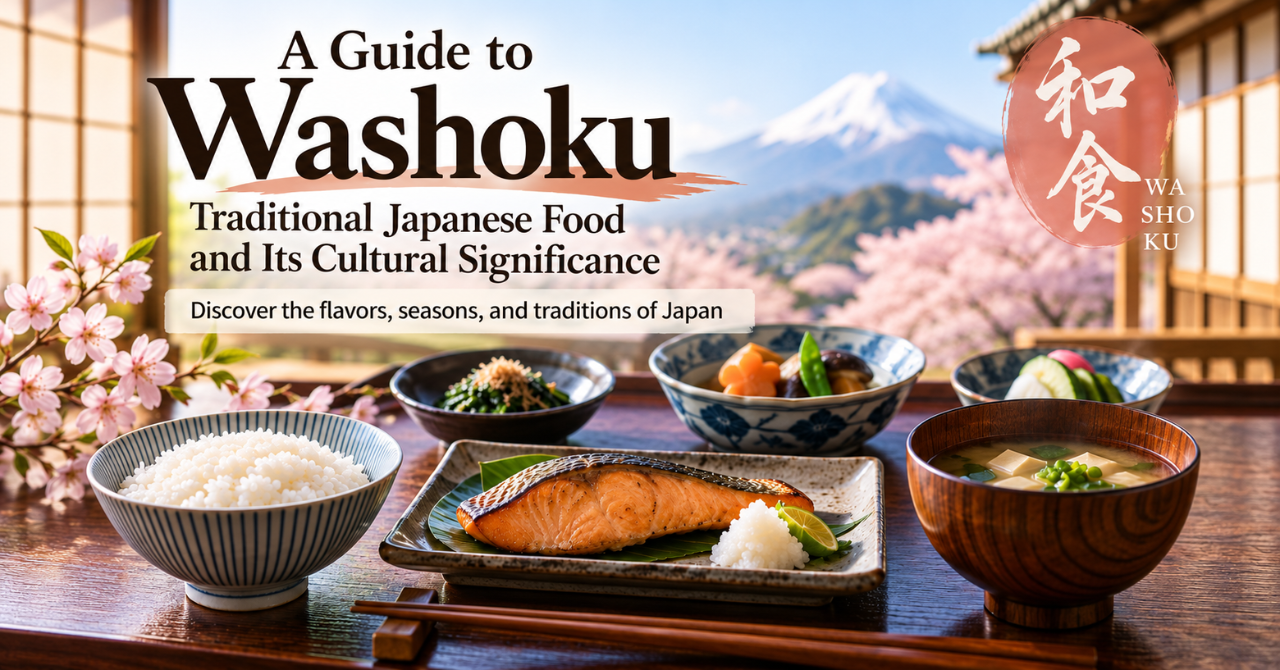
Washoku is much more than sushi, tempura, or ramen.
The word “washoku” refers to traditional Japanese food culture, including the ingredients, cooking methods, presentation, seasonal customs, and the way meals are enjoyed.
One of the most distinctive features of washoku is its close connection to Japan’s four seasons. Ingredients often change throughout the year, and even the colors, dishes, and presentation may reflect the season.
For travelers, understanding washoku can make eating in Japan much more interesting. A simple meal of rice, miso soup, grilled fish, and vegetables can reveal a lot about Japanese culture and everyday life.
In this guide, you will learn what washoku means, its main characteristics, traditional meal styles, seasonal foods, dining customs, and where you can experience authentic washoku during your trip to Japan.
From a Local Perspective: Washoku is easiest to understand through an ordinary set meal, not only through expensive kaiseki. Rice, soup, a main dish, side dishes, pickles, and seasonal ingredients show many of the basic ideas behind everyday Japanese food culture.
- What Is Washoku?
- Why Washoku Is Important in Japanese Culture
- 4 Main Characteristics of Washoku
- Ichiju Sansai: The Traditional Washoku Meal Style
- Traditional Japanese Foods Used in Washoku
- Washoku and Japan’s Four Seasons
- Washoku and Traditional Japanese Events
- Washoku vs. Yoshoku: What Is the Difference?
- Japanese Dining Customs When Eating Washoku
- Where Can Travelers Experience Washoku in Japan?
- Final Thoughts on Washoku
What Is Washoku?
Washoku means traditional Japanese food culture.
The word is written as 和食 in Japanese. “Wa” refers to Japan or Japanese style, while “shoku” means food or eating.
However, washoku is not simply a list of Japanese dishes. It also includes the ideas behind the meal, such as using seasonal ingredients, respecting nature, balancing different foods, and presenting dishes in a way that reflects the season.
This is why washoku can include everyday meals such as rice, miso soup, grilled fish, and vegetables, as well as special dishes served during traditional events and celebrations.
For travelers, understanding washoku helps explain why Japanese meals often look carefully arranged and why certain foods appear only at particular times of the year.
Washoku was inscribed on UNESCO’s Representative List of the Intangible Cultural Heritage of Humanity in 2013 as “traditional dietary cultures of the Japanese.”
Why Washoku Is Important in Japanese Culture
Washoku is important in Japanese culture because food is closely connected to nature, the seasons, family life, and traditional events.
Many Japanese dishes are prepared with ingredients that are at their best during a particular season. This idea of eating seasonal food is called “shun” in Japanese.
Washoku also plays an important role in annual events and family traditions. For example, special foods are prepared for New Year, seasonal festivals, and other celebrations.
Another important idea is respect for nature and the people involved in preparing the food. Expressions such as “itadakimasu” before a meal and “gochisousama deshita” after eating reflect this sense of appreciation.
For travelers, washoku offers more than just a chance to try Japanese food. It is also a way to experience Japanese traditions, values, and everyday culture through a meal.
4 Main Characteristics of Washoku
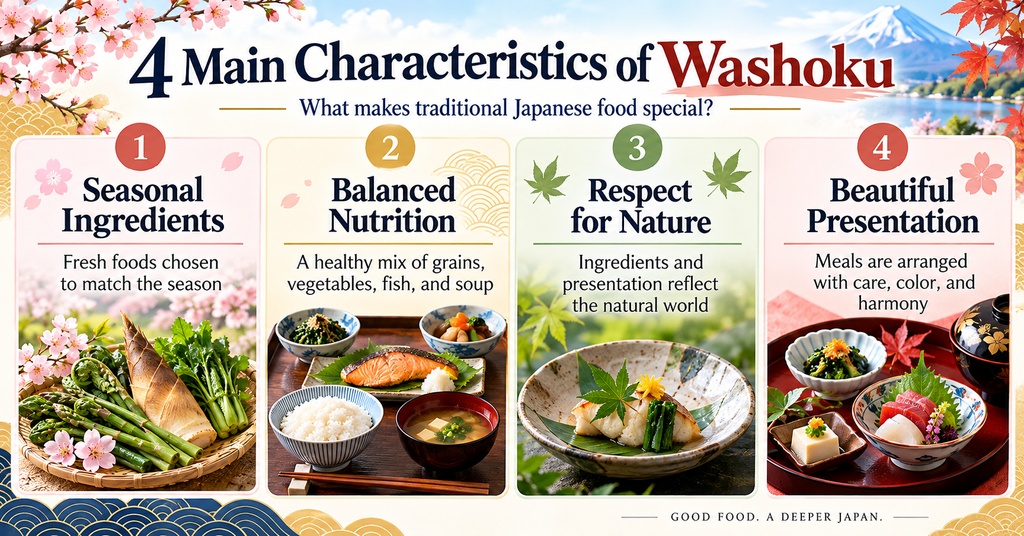
Washoku has several characteristics that make it different from many other food cultures.
These features are not only about taste. They also reflect the Japanese appreciation of nature, balance, seasonality, and presentation.
Here are four important characteristics that help explain the basic idea of washoku.
Japan’s Ministry of Agriculture, Forestry and Fisheries also explains four key characteristics of washoku, including seasonal ingredients, balanced meals, respect for nature, and beautiful presentation.
1. Seasonal Ingredients
Seasonal ingredients are one of the most important parts of washoku.
In Japan, people often enjoy foods when they are considered to be at their best. This seasonal idea is known as “shun.”
For example, spring meals may include bamboo shoots and mountain vegetables, while summer brings foods such as ayu (sweetfish) and refreshing cold noodles.
Autumn is known for ingredients such as mushrooms, chestnuts, and Pacific saury, while winter meals often feature hot pot dishes, root vegetables, and seasonal seafood.
For travelers, this means that the food you find in Japan can change depending on when you visit.
Seasonal menus at restaurants, ryokan, and local food markets are a great way to experience this part of Japanese food culture.
2. Balance of Flavors and Nutrition
Washoku often focuses on creating a balanced meal using several different ingredients and dishes.
A typical Japanese meal may include rice, soup, a main dish, and small side dishes made with vegetables, tofu, fish, or other ingredients.
This variety allows different flavors, textures, and colors to be enjoyed together in one meal.
Instead of relying on one heavy dish, washoku often combines several smaller dishes to create a more balanced eating experience.
For travelers, this is one reason a traditional Japanese set meal can look very different from a typical Western-style meal.
You may be served several small plates at once, each with a different flavor, ingredient, or cooking method.
3. Respect for Nature
Respect for nature is another important idea in washoku.
Traditional Japanese food culture often emphasizes using ingredients in ways that highlight their natural flavors rather than covering them with heavy seasoning.
Seasonal vegetables, seafood, and other local ingredients are often prepared simply so that their original taste, color, and texture can be enjoyed.
This connection with nature also appears in the way meals reflect the seasons. Ingredients, tableware, and presentation may change throughout the year to match the time of season.
For travelers, this is one reason even a simple Japanese meal can feel closely connected to the place and season in which it is served.
4. Beautiful Presentation
Presentation is an important part of washoku.
Japanese meals are often arranged carefully so that the colors, shapes, and spacing of the food look balanced and attractive.
The tableware can also change depending on the season. For example, lighter colors and glass dishes may be used in summer, while warmer colors and heavier ceramics may appear in autumn and winter.
Small seasonal decorations, leaves, or flowers may also be used to reflect the time of year.
For travelers, this means that part of enjoying washoku is visual. Before taking the first bite, you may already notice how much attention has been given to the appearance of the meal.
Ichiju Sansai: The Traditional Washoku Meal Style
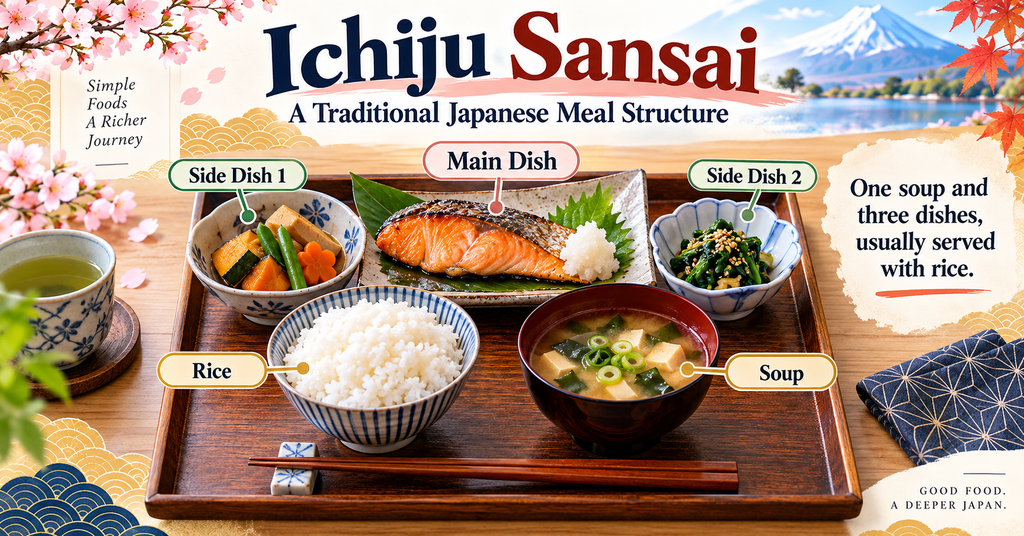
One of the best-known traditional meal styles in washoku is called “ichiju sansai.”
The phrase means “one soup and three dishes,” and a typical meal is built around rice, soup, one main dish, and two side dishes.
Rather than focusing on one large plate, ichiju sansai combines several smaller dishes with different ingredients, flavors, and cooking methods.
This style is commonly associated with traditional Japanese home cooking and helps create a balanced and varied meal.
Rice
Rice is the foundation of a traditional Japanese meal.
Plain steamed rice is commonly served alongside soup and other dishes rather than being treated as just a side dish.
Because many Japanese dishes are seasoned to be eaten together with rice, it plays an important role in balancing the flavors of the meal.
For travelers, a bowl of white rice may look simple, but it is often the center of the overall meal structure.
Soup
Soup is another important part of ichiju sansai.
Miso soup is one of the most common examples, but other clear soups or seasonal soups may also be served depending on the meal.
The soup helps bring the different parts of the meal together and often includes ingredients such as tofu, seaweed, mushrooms, vegetables, or seafood.
For travelers, the type of soup can change depending on the restaurant, region, and season, so even a simple set meal can offer something different each time.
One Main Dish and Two Side Dishes
The “three dishes” in ichiju sansai usually include one main dish and two smaller side dishes.
The main dish is often fish, meat, tofu, or another protein, while the side dishes may include vegetables, seaweed, pickles, or other seasonal ingredients.
Each dish usually has a different flavor, texture, or cooking method, which helps make the meal feel varied without relying on one large portion.
For travelers, this is why a traditional Japanese set meal often arrives with several small plates instead of one main plate.
Together with rice and soup, these dishes create the basic structure of ichiju sansai.
Traditional Japanese Foods Used in Washoku
Washoku includes many familiar Japanese foods, but these ingredients and dishes are often enjoyed as part of a balanced meal rather than on their own.
Rice, soup, fish, vegetables, tofu, and fermented foods are especially common in traditional Japanese meals.
The exact dishes can vary by region, season, and occasion, but these foods appear frequently in everyday washoku.
Rice
Rice is one of the most important foods in Japanese cuisine.
Plain steamed rice is commonly served with soup, a main dish, and several side dishes.
It has a mild flavor, which makes it easy to pair with grilled fish, simmered vegetables, pickles, miso soup, and many other foods.
For travelers, rice may seem simple, but it plays a central role in many traditional Japanese meals and is often the foundation of the entire meal.
Miso Soup
Miso soup is one of the most common soups served in traditional Japanese meals.
It is made with dashi broth and miso paste, and the ingredients can vary depending on the region, season, and household.
Common ingredients include tofu, wakame seaweed, mushrooms, green onions, and seasonal vegetables.
For travelers, miso soup is a simple but important part of washoku and is often served with breakfast, set meals, and traditional Japanese dishes.
Fish and Seafood
Fish and seafood are important parts of traditional Japanese food culture.
Because Japan is surrounded by the sea, many regional meals include fresh fish, shellfish, seaweed, and other seafood.
Common cooking methods include grilling, simmering, steaming, and serving fish raw as sashimi.
The type of seafood can also change depending on the season and region.
For travelers, trying local fish or seafood is a good way to experience how washoku reflects both geography and seasonality.
Vegetables and Tofu
Vegetables and tofu are common ingredients in washoku and appear in many everyday Japanese meals.
Seasonal vegetables may be simmered, steamed, grilled, pickled, or served in small side dishes.
Tofu is also widely used because of its mild flavor and versatility. It can be served chilled, added to miso soup, simmered with vegetables, or used in hot pot dishes.
For travelers, these dishes are a good example of how washoku often focuses on simple ingredients prepared in different ways.
Regional and seasonal differences can also make even basic vegetable and tofu dishes feel unique from place to place.
Fermented Foods
Fermented foods are an important part of washoku and add deep flavor to many Japanese dishes.
Common examples include miso, soy sauce, natto, and katsuobushi (dried bonito flakes).
These ingredients are used in many different ways, from soups and sauces to side dishes and seasonings.
Natto may be unfamiliar to some travelers because of its strong smell and sticky texture, while miso and soy sauce are often easier to recognize.
For travelers, trying fermented foods is a good way to experience flavors that are closely connected to everyday Japanese food culture.
Washoku and Japan’s Four Seasons
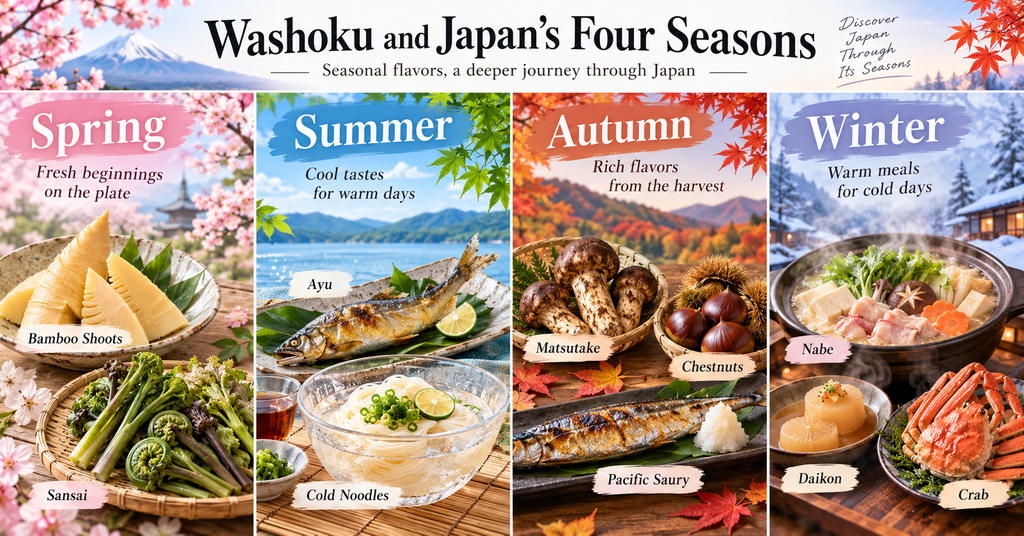
Seasonality is one of the most distinctive features of washoku.
In Japan, ingredients and dishes often change throughout the year to reflect what is fresh and available during each season.
This means that the same restaurant or ryokan may serve completely different dishes in spring, summer, autumn, and winter.
For travelers, eating seasonal food is one of the best ways to experience how closely washoku is connected to Japan’s climate, nature, and local traditions.
Spring Foods
Spring in Japan is associated with fresh vegetables, mountain plants, and delicate seasonal flavors.
Common spring ingredients include bamboo shoots, nanohana (rapeseed blossoms), and sansai, which are edible mountain vegetables.
Cherry blossom season also brings seasonal sweets and dishes inspired by sakura.
For travelers visiting Japan in spring, seasonal menus are a great way to experience the feeling of the season through food.
Summer Foods
Summer in Japan is hot and humid, so many seasonal dishes are light, refreshing, and easy to eat.
Cold noodles such as somen and hiyashi chuka are popular during the warmer months, while ayu (sweetfish) is a well-known seasonal fish.
Summer vegetables such as eggplant, cucumber, and tomatoes are also commonly used in Japanese meals.
For travelers, summer food in Japan often feels lighter and more refreshing than winter cuisine, making it a good way to experience how washoku changes with the season.
Autumn Foods
Autumn is one of the best seasons for enjoying seasonal food in Japan.
Popular autumn ingredients include matsutake mushrooms, chestnuts, sweet potatoes, and Pacific saury.
This season is often associated with rich flavors and ingredients harvested from both the mountains and the sea.
Rice harvested in autumn is also highly valued, and many seasonal dishes are designed to highlight the freshness of the new crop.
For travelers, autumn is a great time to experience some of the most distinctive seasonal flavors in washoku.
Winter Foods
Winter in Japan is the season for warm, comforting dishes.
Hot pot meals such as nabe are especially popular and often include vegetables, tofu, mushrooms, meat, or seafood cooked together in a shared pot.
Winter is also a good season for ingredients such as daikon radish, napa cabbage, oysters, crab, and other seasonal seafood.
These foods are often served hot and are well suited to Japan’s colder weather.
For travelers visiting Japan in winter, enjoying a hot pot meal is a great way to experience seasonal washoku while warming up at the same time.
Washoku and Traditional Japanese Events
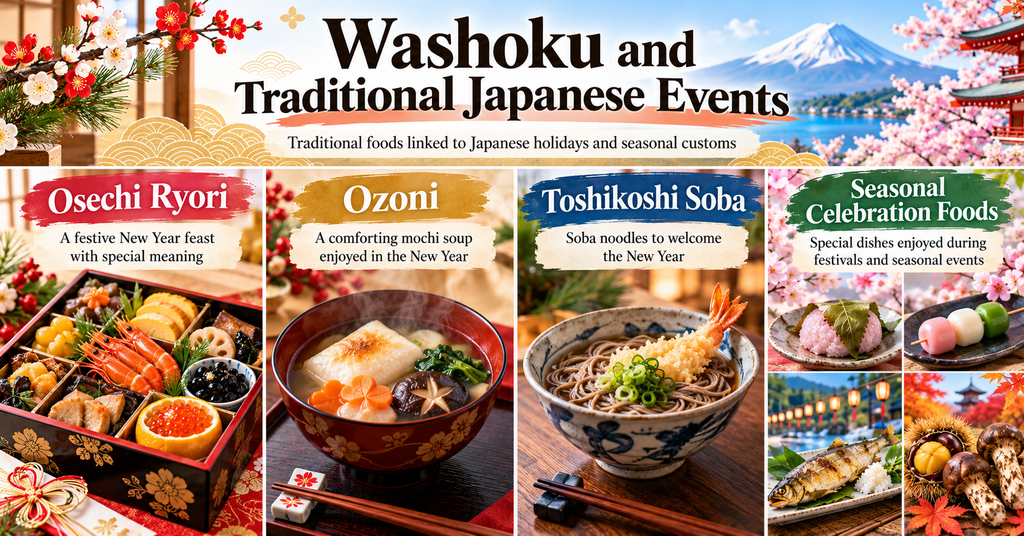
Washoku is closely connected to traditional Japanese events and celebrations.
Certain foods are prepared for specific times of the year, and many of these dishes carry symbolic meanings related to health, happiness, prosperity, or long life.
For travelers, these seasonal and ceremonial foods are a good way to experience the cultural side of washoku beyond everyday meals.
Osechi Ryori for New Year
Osechi ryori is a traditional Japanese New Year meal served in special boxes called jubako.
The meal usually includes many small dishes, and each one has a symbolic meaning.
For example, some foods are associated with good health, long life, family prosperity, or success in the coming year.
Because osechi is strongly connected to New Year traditions, it is one of the best examples of how washoku combines food with culture and seasonal customs.
For travelers visiting Japan around New Year, seeing or trying osechi can be a memorable way to experience traditional Japanese food culture.
Ozoni
Ozoni is a traditional Japanese soup eaten during the New Year holiday.
It usually contains mochi rice cakes along with vegetables, seafood, chicken, or other ingredients.
One interesting thing about ozoni is that the recipe can vary greatly depending on the region and family.
Some areas use a clear soup, while others use miso, and even the shape of the mochi can be different.
For travelers, ozoni is a good example of how washoku can reflect local traditions and regional differences within Japan.
Toshikoshi Soba
Toshikoshi soba is a traditional noodle dish eaten on New Year’s Eve in Japan.
The long noodles are associated with wishes for a long and healthy life, and eating them before the new year begins is a common custom.
The exact toppings and style can vary depending on the region and household, but soba noodles are the main feature.
For travelers visiting Japan at the end of December, trying toshikoshi soba is a simple way to experience a traditional Japanese New Year custom through food.
Other Seasonal and Celebration Foods
Japan has many other foods connected to seasonal events and celebrations.
For example, chirashizushi is often eaten during Hinamatsuri, or Girls’ Day, while special sweets such as sakura mochi are associated with spring.
During festivals, local regions may also have their own traditional dishes, snacks, and seasonal specialties.
These foods are not always eaten every day, but they are an important part of Japanese food culture because they connect meals with family traditions, festivals, and the changing seasons.
For travelers, trying these seasonal foods can make a visit feel more connected to the time of year and the local culture.
Washoku vs. Yoshoku: What Is the Difference?
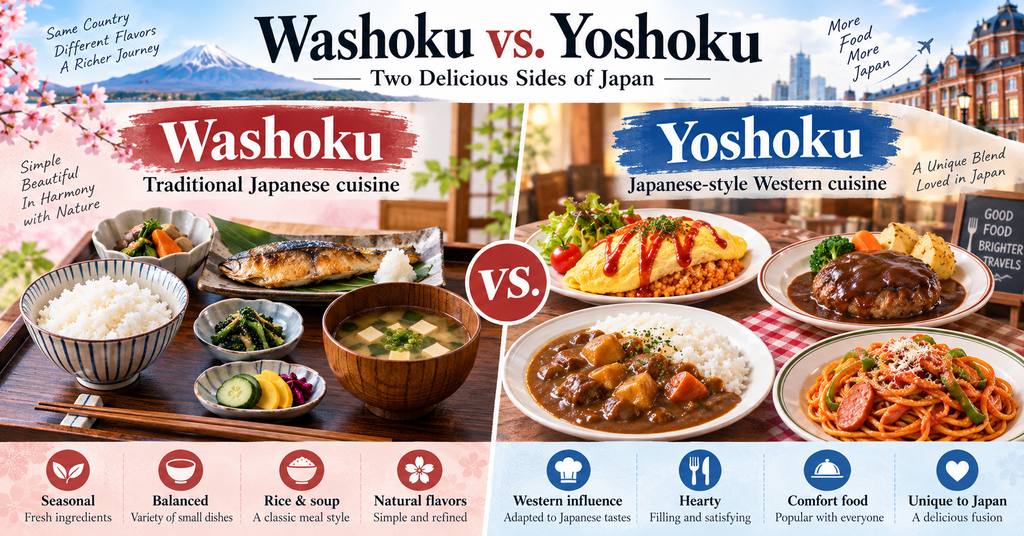
Washoku and yoshoku are both common parts of Japanese food culture, but they are not the same.
Washoku generally refers to traditional Japanese food culture and dishes that developed from Japanese culinary traditions.
Yoshoku, on the other hand, refers to Western-style dishes that were adapted in Japan and developed into their own Japanese versions.
Common examples of yoshoku include curry rice, omurice, hamburger steak, and naporitan spaghetti.
These dishes may feel very Japanese today, but they are usually classified as yoshoku rather than traditional washoku.
For travelers, understanding this difference can make Japanese menus easier to understand and shows how Japan has adapted foreign influences into its own food culture.
Japanese Dining Customs When Eating Washoku
Washoku is not only about the food itself. Dining customs and small expressions of gratitude are also an important part of the experience.
In Japan, people often use certain phrases before and after eating to show appreciation for the food and for the people involved in preparing it.
For travelers, learning a few of these customs can make eating washoku feel more natural and respectful.
For more cultural tips, read our guide to Japanese etiquette for tourists.
For more information about dining customs in Japan, see the Japan National Tourism Organization’s guide to Japanese food etiquette.
https://www.japan.travel/en/guide/japanese-food-etiquette
Itadakimasu Before Eating
“Itadakimasu” is commonly said before starting a meal in Japan.
It is often translated as “let’s eat,” but the feeling is closer to expressing gratitude for the food and for everything involved in bringing the meal to the table.
You may hear people say it before eating at home, at a restaurant, or during a traditional meal at a ryokan.
For travelers, saying “itadakimasu” before eating is a simple way to take part in Japanese dining culture.
Gochisousama Deshita After Eating
“Gochisousama deshita” is a phrase commonly said after finishing a meal in Japan.
It is used to show appreciation for the food and for the people who prepared or served it.
You may hear it at restaurants, ryokan, family homes, and other places where meals are served.
For travelers, saying “gochisousama deshita” after eating is a simple and polite way to show respect for Japanese dining culture.
If you want to learn more expressions such as “gochisousama deshita,” see our guide to saying thank you in Japanese.

Basic Japanese Dining Manners
A few simple dining manners can help travelers enjoy washoku more comfortably.
When using chopsticks, avoid sticking them upright in a bowl of rice or passing food directly from one pair of chopsticks to another, as these actions are associated with Japanese funeral customs.
It is also polite to avoid making loud phone calls at the table and to treat shared dishes carefully when eating with others.
You do not need to know every rule perfectly. Showing basic respect and following the people around you is usually enough.
For travelers, learning a few simple dining manners can make the experience of eating washoku feel more natural and enjoyable.
Want to learn more about table manners in Japan? Check out our complete guide to Japanese dining manners.
Where Can Travelers Experience Washoku in Japan?
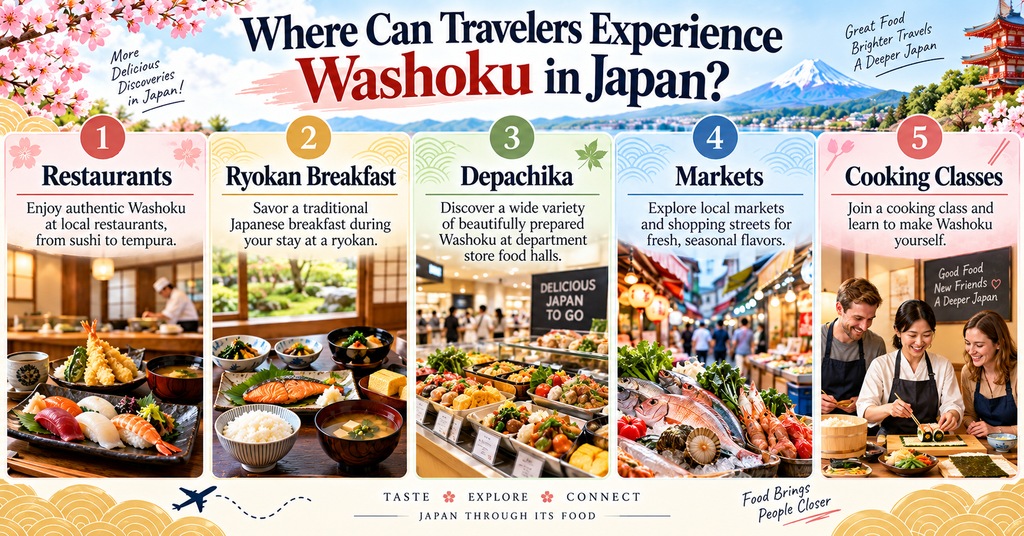
For travelers, one of the best ways to understand washoku is to experience it in different places around Japan.
Washoku can be found everywhere from traditional restaurants and ryokan to casual set-meal shops and regional specialty restaurants.
The style, ingredients, and atmosphere can vary greatly depending on where you eat, which makes trying washoku in different parts of Japan especially interesting.
Traditional Japanese Restaurants
Traditional Japanese restaurants are one of the most obvious places to experience washoku.
These restaurants may serve set meals, seasonal courses, grilled fish, simmered dishes, sashimi, tempura, and other traditional foods.
Some restaurants focus on local ingredients or regional specialties, while others offer more formal multi-course dining.
For travelers, visiting a traditional Japanese restaurant is a good way to experience not only the food itself, but also the presentation, service, tableware, and atmosphere that are part of washoku culture.
Ryokan Meals
Staying at a ryokan is one of the most memorable ways to experience washoku in Japan.
Many ryokan serve traditional Japanese meals that use seasonal and local ingredients, often presented in several small dishes.
Dinner may include sashimi, grilled fish, simmered vegetables, hot pot dishes, rice, soup, and regional specialties.
Breakfast is also usually Japanese-style and may include rice, miso soup, grilled fish, pickles, tofu, and other small dishes.
For travelers, ryokan meals are a great way to enjoy washoku together with Japanese hospitality, seasonal presentation, and local food culture.
Teishoku Restaurants
Teishoku restaurants are a great place for travelers to experience everyday washoku at an affordable price.
A typical teishoku, or Japanese set meal, usually includes rice, miso soup, a main dish, and several small side dishes.
Common main dishes include grilled fish, fried chicken, pork, tofu, or simmered foods.
Because everything is served together as one balanced meal, teishoku is an easy way to experience the basic structure of traditional Japanese dining.
For travelers, teishoku restaurants are especially useful when you want to enjoy a simple, filling, and local-style meal without choosing many separate dishes.
Local and Regional Cuisine
One of the most interesting parts of washoku is how different it can be from one region of Japan to another.
Local ingredients, climate, history, and traditions all influence the food that people eat in each area.
For example, coastal regions may be known for fresh seafood, while mountain areas may use more vegetables, mushrooms, preserved foods, or local specialties.
Regional dishes can also reflect local cooking methods and flavors that are difficult to find in other parts of Japan.
For travelers, trying local cuisine is a great way to experience how washoku changes from place to place and to discover foods that are unique to each destination.
You can also explore traditional regional dishes across Japan through the Ministry of Agriculture, Forestry and Fisheries’ Regional Cuisines guide.
Final Thoughts on Washoku
Washoku is much more than simply traditional Japanese food.
It reflects Japan’s seasons, regional ingredients, family traditions, dining customs, and respect for nature.
From a simple teishoku meal to a carefully prepared ryokan dinner, washoku can be experienced in many different ways throughout Japan.
For travelers, learning a little about washoku can make meals more meaningful and help you understand Japanese culture beyond the food itself.
You do not need to try everything at once. Start with a traditional set meal, seasonal dish, or local specialty, and enjoy discovering how different washoku can be from one region and season to another.
I hope this guide helps you enjoy traditional Japanese food with a deeper understanding during your trip to Japan.