Three Major Fireworks Festivals in Japan: 2026 Guide

Japan’s summer and autumn nights are famous for spectacular fireworks, or hanabi.
Among the many fireworks events held across the country, three are commonly grouped together as Japan’s three major fireworks festivals: the National Fireworks Competition in Omagari, the Tsuchiura All Japan Fireworks Competition, and the Nagaoka Festival Grand Fireworks.
However, these three events are not all the same.
Omagari and Tsuchiura are major competitions where professional pyrotechnicians demonstrate their skills, while Nagaoka is deeply connected to remembrance, recovery, and prayers for peace.
In this guide, we explain what makes each event special, when it takes place in 2026, how to get there, whether you need tickets, and what first-time international visitors should know before attending.
Important: Fireworks schedules, ticket systems, transportation, and weather-related decisions can change. Always check the latest official information before traveling.
What Visitors Often Don’t Expect: Major fireworks festivals in Japan can feel more like large-scale events than casual evening shows. Crowded trains, reserved viewing areas, food stalls, and long waits after the finale can affect your whole day, so arrive early and plan your return trip in advance.
- Japan’s Three Major Fireworks Festivals at a Glance
- Omagari National Fireworks Competition – Akita
- Tsuchiura All Japan Fireworks Competition – Ibaraki
- Nagaoka Festival Grand Fireworks – Niigata
- Which Fireworks Festival Should You Choose?
- Useful Japanese Fireworks Terms
- Important Tips for Attending a Fireworks Festival in Japan
- Fireworks Festival Etiquette
- Final Tips
Japan’s Three Major Fireworks Festivals at a Glance
| Festival | Location | 2026 Date | Best Known For |
|---|---|---|---|
| Omagari National Fireworks Competition | Daisen, Akita | August 29 | National pyrotechnics competition |
| Tsuchiura All Japan Fireworks Competition | Tsuchiura, Ibaraki | November 7 | Starmine and creative fireworks competition |
| Nagaoka Festival Grand Fireworks | Nagaoka, Niigata | August 2–3 | Large-scale fireworks and the Phoenix display |
2026 status (updated October 2026): Omagari and Nagaoka have already been held for 2026. The 95th Tsuchiura All Japan Fireworks Competition is scheduled for November 7, 2026, with November 14 listed as the reserve date.
For travelers planning a later trip, do not assume that the 2026 dates will repeat exactly. Nagaoka is held every August 2 and 3, while Omagari and Tsuchiura publish annual schedules and ticket information on their official websites.
Official updates: Omagari Hanabi, Tsuchiura City, and Nagaoka Fireworks.
Omagari National Fireworks Competition – Akita

Omagari Fireworks in Daisen City, Akita Prefecture, is one of Japan’s most prestigious fireworks competitions.
The event dates back to 1910 and brings professional pyrotechnicians from across Japan together to compete with their own fireworks designs and techniques.
The summer competition is especially important because participants compete for major awards, including the Prime Minister’s Prize.
Unlike most major fireworks events, Omagari also includes daytime fireworks, giving visitors the rare opportunity to see colorful smoke and other effects before the main nighttime program begins.
2026 Event Information
- Date: August 29, 2026
- Daytime fireworks: 5:10 PM–6:00 PM
- Evening fireworks: 7:00 PM–9:30 PM
- Venue: Omagari Hanabi Park, Omono Riverbank
- Fireworks: Approximately 18,000 shells
For official event details, check the Omagari Hanabi official event page.
Tickets
Omagari attracts extremely large crowds, so paid seating can sell out quickly.
For the 2026 summer competition, the official website offered several types of reserved seating, with online sales beginning months before the event.
The official 2026 ticket information also stated that overseas ticket purchases were not supported directly, so international visitors needed to carefully check the latest purchasing options.
Ticket systems may change each year, so see the official Omagari ticket information before making travel plans.
Access and Travel Tips
The nearest station is JR Omagari Station. The main venue is approximately 2 kilometers away, or around a 30-minute walk.
Extra trains may operate during the summer competition, but stations and roads become extremely crowded.
Driving is generally less convenient because of traffic restrictions and severe congestion around the event.
See the official Omagari access guide for transportation and accommodation information.
Tsuchiura All Japan Fireworks Competition – Ibaraki

The Tsuchiura All Japan Fireworks Competition is one of Japan’s most famous competitive fireworks events.
The competition began in 1925 and has developed into an important stage for professional pyrotechnicians from around Japan.
Competitors demonstrate their skills in three main divisions:
- Starmine – rapid sequences of multiple fireworks
- 10-go shells – large fireworks made from shells approximately 30 centimeters in diameter
- Creative fireworks – original designs that showcase artistic ideas and technical skill
One of the event’s signature displays is the wide starmine presented by the organizing committee, creating a large-scale sequence across the night sky.
2026 Event Information
- Date: November 7, 2026
- Reserve date: November 14, 2026
- Location: Sakuragawa riverside near Gakuen Ohashi Bridge
- Scheduled time: 5:30 PM–8:00 PM (subject to change)
The 2026 date has been announced by Tsuchiura City. Weather and safety conditions can still affect the event, so check the latest information shortly before traveling.
For an English overview, see the official Tsuchiura City fireworks guide.
Access and Travel Tips
The main transportation hub is JR Tsuchiura Station.
Official visitor information lists shuttle bus transportation from the east side of Tsuchiura Station toward the Gakuen Ohashi area. On fireworks day, however, the station, roads, and buses can become extremely crowded.
If you are unfamiliar with Japanese trains, read our beginner’s guide to using trains in Japan before your trip.
Nagaoka Festival Grand Fireworks – Niigata
Nagaoka Fireworks is different from Omagari and Tsuchiura because its identity is not centered primarily on competition.
The event is closely connected to remembrance, recovery, and peace.
Nagaoka’s festival has roots in the city’s recovery after the devastating air raid of August 1, 1945. At the beginning of the fireworks program, white fireworks called Shiragiku are launched in remembrance of those who lost their lives.
The event also became an important symbol of recovery after the 2004 Niigata Chuetsu Earthquake.
The Phoenix Fireworks
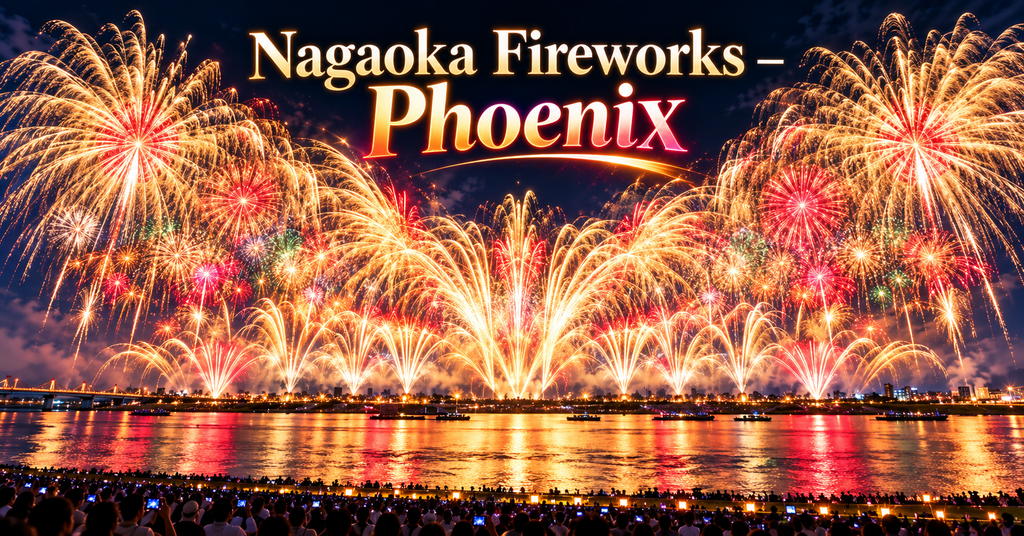
One of Nagaoka’s most famous displays is the Reconstruction Prayer Fireworks Phoenix.
The Phoenix display began as an expression of gratitude for support received after the 2004 earthquake and as a symbol of hope for recovery.
The large-scale starmine extends across approximately two kilometers of sky, creating one of the most dramatic panoramic fireworks displays in Japan.
2026 Event Information
- Dates: August 2 and 3, 2026
- Time: Approximately 7:20 PM–9:25 PM
- Venue: Shinano River riverbank
- Phoenix fireworks: Scheduled at 8:45 PM on both nights in 2026
Check the official Nagaoka Fireworks website for the latest program.
You Need a Ticket to Enter the Viewing Area
This is especially important for international visitors.
Nagaoka’s official viewing areas are all ticketed. There are no free viewing sections inside the official venue, and visitors without tickets are asked not to come to the surrounding viewing area because of crowd-control and safety concerns.
Tickets can sell out well before the event. In 2026, the official viewing tickets sold out during the general lottery process in June.
Before planning a trip specifically for Nagaoka Fireworks, check the official Nagaoka ticket center first. The official site reported that 2026 viewing tickets sold out during the general sales process.
Access and Travel Tips
The fireworks venue is around a 30-minute walk from JR Nagaoka Station.
Large crowds and traffic restrictions make transportation much slower than on a normal day, particularly after the fireworks end.
Check the official Nagaoka transportation and parking guide before traveling.
Which Fireworks Festival Should You Choose?
| If You Want… | Best Choice |
|---|---|
| To see Japan’s top pyrotechnicians compete | Omagari |
| Creative fireworks and starmine competition | Tsuchiura |
| Huge panoramic fireworks with a powerful story | Nagaoka |
| A summer fireworks trip | Omagari or Nagaoka |
| A major fireworks event later in the year | Tsuchiura |
All three are major events, but they offer very different experiences.
If you are especially interested in the technical and artistic side of Japanese fireworks, Omagari or Tsuchiura may be the most interesting.
If you want to experience fireworks connected to the history and emotions of a local community, Nagaoka offers a particularly meaningful experience.
Useful Japanese Fireworks Terms
Hanabi
Hanabi literally means “fire flowers” and is the common Japanese word for fireworks.
Starmine
A starmine is a rapid sequence of fireworks launched in a coordinated display. Large starmine performances can combine many colors, shapes, and firing positions.
10-go Firework
A 10-go shell is a large firework shell with a diameter of approximately 30 centimeters. Competitions such as Tsuchiura use this size as one of their major judging categories.
Important Tips for Attending a Fireworks Festival in Japan
Book Accommodation Early
Hotels near major fireworks venues can sell out months in advance.
This is particularly important for Omagari and Nagaoka, where a huge number of visitors arrive in relatively small regional cities at the same time.
Do Not Rely on Driving
Road closures, reserved parking systems, and heavy congestion are common around major fireworks events.
For many international visitors, traveling by train and walking to the venue is easier than driving.
Expect Crowded Trains After the Show
Thousands of spectators may leave the venue at almost the same time.
Do not plan a very tight connection immediately after the fireworks. Allow extra time for walking, station entry restrictions, and train queues.
Bring a Portable Charger
You may use your phone for navigation, tickets, weather updates, photography, translation, and contacting your travel companions throughout the day.
A portable charger can be extremely useful during a long festival day.
Prepare for Weather
Fireworks festivals are outdoor events. Summer events can be hot and humid, while rain can make riverbank venues muddy.
Bring appropriate clothing, water, and rain protection based on the forecast.
For more general trip preparation, see our 20 essential things to know before your first trip to Japan.
Fireworks Festival Etiquette
Major Japanese fireworks festivals can be extremely crowded, so being considerate of other spectators is important.
- Follow staff instructions and stay out of restricted areas.
- Do not block walkways with bags, chairs, or camera equipment.
- Take your trash to designated collection points or carry it with you.
- Do not fly drones unless the event explicitly allows them.
- Avoid standing in front of seated spectators during the fireworks.
- Follow the rules for your reserved seating area.
If you want to learn more about everyday customs and public behavior in Japan, see our Japanese etiquette guide for tourists.
Final Tips
Japan’s three major fireworks festivals show three different sides of Japanese hanabi culture.
Omagari highlights competition and craftsmanship, Tsuchiura showcases technical skill and creative fireworks, and Nagaoka combines enormous displays with powerful stories of remembrance and recovery.
Whichever event you choose, do not treat it like a small local fireworks show. These events attract huge crowds, and tickets, accommodation, and transportation often require advance planning.
Check the official website before traveling, book early when necessary, allow plenty of time to reach and leave the venue, and enjoy one of Japan’s most memorable nighttime experiences.