IC Cards in Japan: Suica, PASMO & ICOCA Guide for Tourists
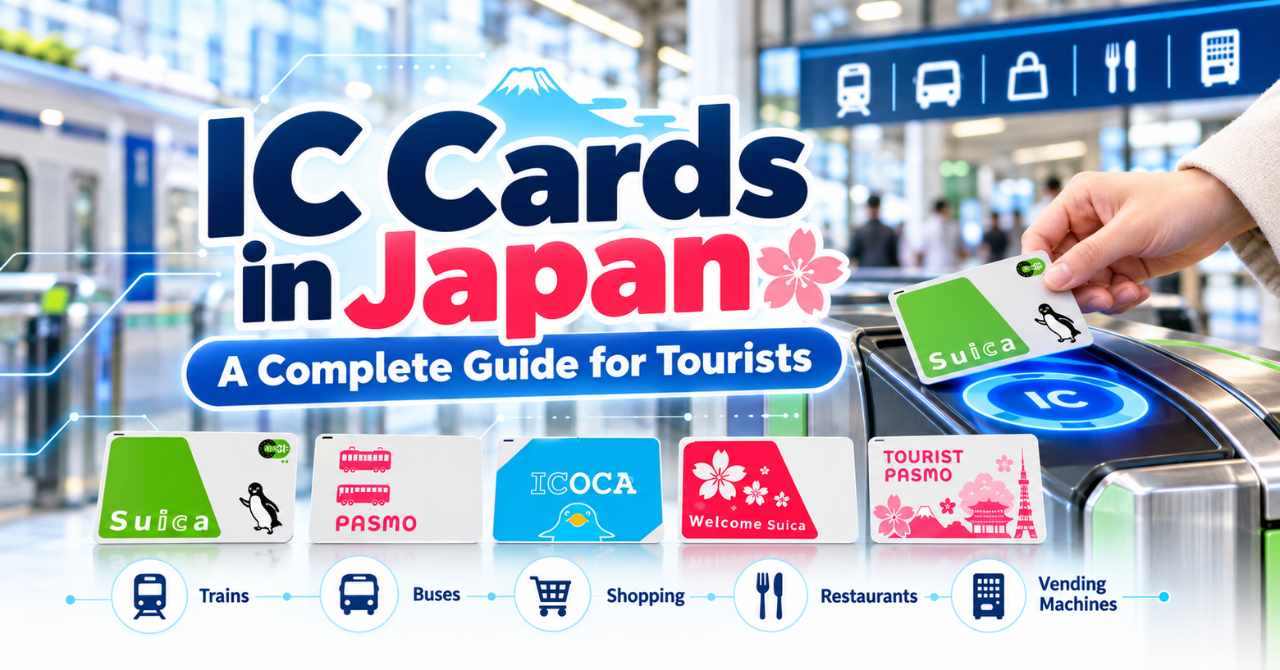
Trains and buses make it easy to travel around Japan, but buying a ticket for every ride can take time.
An IC card makes transportation much simpler.
You can tap the card at train gates, use it on many buses, and pay at convenience stores, vending machines, restaurants, and other places.
Japan has several IC cards, including Suica, PASMO, and ICOCA. They work in many of the same places, but tourists often wonder which one to choose and where to buy it.
This guide explains how IC cards work in Japan, how to buy and recharge one, where you can use it, and what you should know before your trip.
- What Is an IC Card in Japan?
- Suica, PASMO, and ICOCA: What Is the Difference?
- Which IC Card Should Tourists Choose in Japan?
- Where to Buy an IC Card in Japan
- How to Use an IC Card on Trains and Buses
- How to Recharge an IC Card in Japan
- Where Else Can You Use IC Cards in Japan?
- Can You Use One IC Card Across Japan?
- Can You Use an IC Card on the Shinkansen?
- How to Use Mobile Suica and Mobile IC Cards
- What If Your IC Card Balance Is Too Low?
- What to Do With Your IC Card Before Leaving Japan
- Common IC Card Mistakes Tourists Should Avoid
- IC Card Japan FAQ
- Final Tips for Using an IC Card in Japan
What Is an IC Card in Japan?
An IC card is a rechargeable smart card that lets you pay for transportation and everyday purchases in Japan.
Instead of buying a paper ticket for each train ride, simply tap your IC card on the ticket gate when you enter and leave the station.
The system automatically deducts the correct fare from your balance.
You can also use IC cards on many buses and at stores, vending machines, restaurants, coin lockers, and other locations that accept IC card payments.
Suica, PASMO, and ICOCA are some of the best-known IC cards in Japan.
Although different railway companies issue them, major IC cards work across many parts of the country through nationwide interoperability.
For an official overview of IC cards in Japan, see the Japan National Tourism Organization’s IC card guide.
Suica, PASMO, and ICOCA: What Is the Difference?
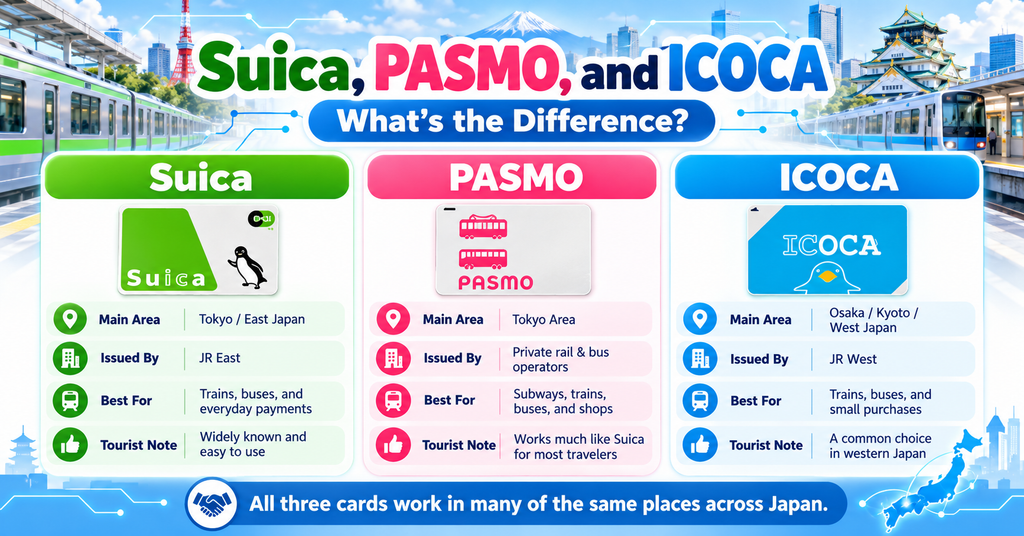
Suica, PASMO, and ICOCA are different IC card brands, but they work in many of the same places.
JR East issues Suica mainly in the Tokyo area. PASMO comes from private railway and bus operators in the Tokyo region, while JR West issues ICOCA mainly in western Japan.
For most tourists, the differences matter less than the area where you first buy the card.
Thanks to nationwide interoperability, you can use major IC cards across many train, subway, bus, and payment networks in Japan.
Suica
Suica is one of the most widely known IC cards in Japan.
JR East issues Suica mainly in Tokyo and other parts of eastern Japan.
You can use it on many trains, subways, and buses, and you can also pay at convenience stores, vending machines, restaurants, and other shops that accept IC card payments.
Suica also works in many other regions of Japan through the nationwide IC card network.
PASMO
PASMO mainly serves private railway, subway, and bus networks in the Tokyo area.
It works in many of the same places as Suica, so most tourists will not notice a major difference during everyday travel.
You can use PASMO for transportation and many small purchases, and it also works across many other regions that support nationwide IC card interoperability.
ICOCA
ICOCA is the main JR West IC card and is common in Osaka, Kyoto, Kobe, and other parts of western Japan.
You can use it on many trains, subways, and buses, as well as at shops and other locations that accept IC card payments.
ICOCA also works in many areas outside western Japan, including Tokyo, through the nationwide IC card network.
Which IC Card Should Tourists Choose in Japan?
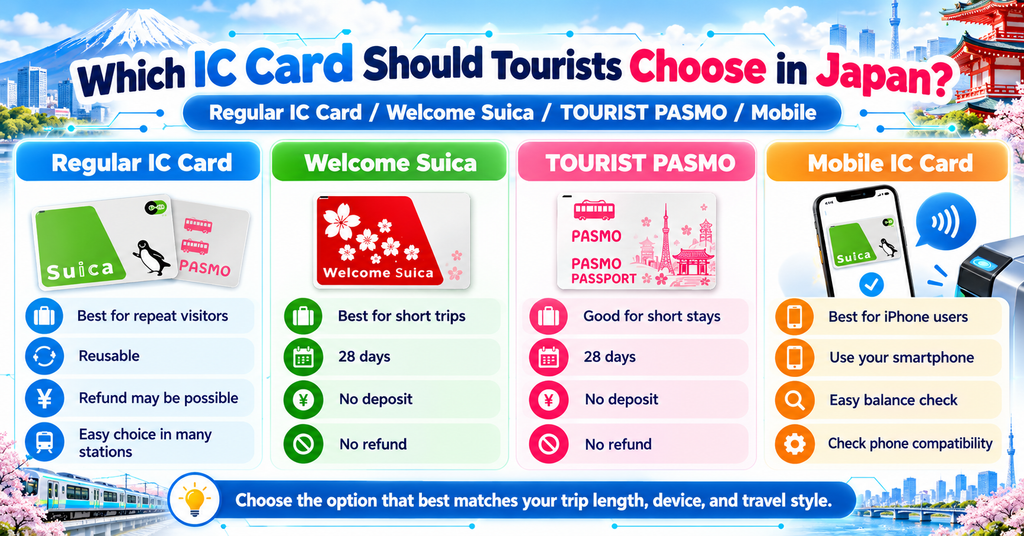
For most tourists, you do not need to worry too much about choosing the “best” IC card.
Suica, PASMO, and ICOCA work in many of the same places across Japan.
The easiest option usually depends on where you arrive and which card you can buy most conveniently.
Travelers can also choose tourist-focused options such as Welcome Suica and TOURIST PASMO.
Regular Suica, PASMO, or ICOCA
Regular Suica, PASMO, and ICOCA are good choices if you want a standard physical IC card.
If you arrive in Tokyo, you will commonly find Suica or PASMO. In Osaka and other parts of western Japan, ICOCA is a common choice.
You do not need to buy a new card every time you visit another major city.
For example, you can use Suica in many ICOCA areas and ICOCA in many Suica and PASMO areas.
Welcome Suica and TOURIST PASMO for Tourists
Welcome Suica and TOURIST PASMO are designed for international visitors.
Both make it easy to start using an IC card without paying a standard card deposit.
A physical Welcome Suica normally lasts for 28 days, and TOURIST PASMO also lasts for 28 days from purchase.
You cannot receive a refund for unused stored value on these tourist cards, so avoid adding more money than you expect to use.
These cards can be convenient for short trips, especially if you want to buy an IC card soon after arriving in Japan.
Check the official Welcome Suica and TOURIST PASMO websites for current sales locations, validity periods, and purchase details.
Physical IC Card or Mobile IC Card?
A physical IC card works well if you prefer a simple option or do not want to depend on your phone.
A mobile IC card lets you tap your smartphone at ticket gates and pay without carrying a separate card.
iPhone users can add supported Japanese transit cards such as Suica, PASMO, and ICOCA to Apple Wallet on compatible devices.
JR East also offers Welcome Suica Mobile for international visitors using supported Apple devices.
Android support can be more complicated for travelers because compatibility depends on the device and where it was purchased.
If you are unsure whether your phone supports a Japanese mobile IC card, a physical card is the safer choice.
Where to Buy an IC Card in Japan
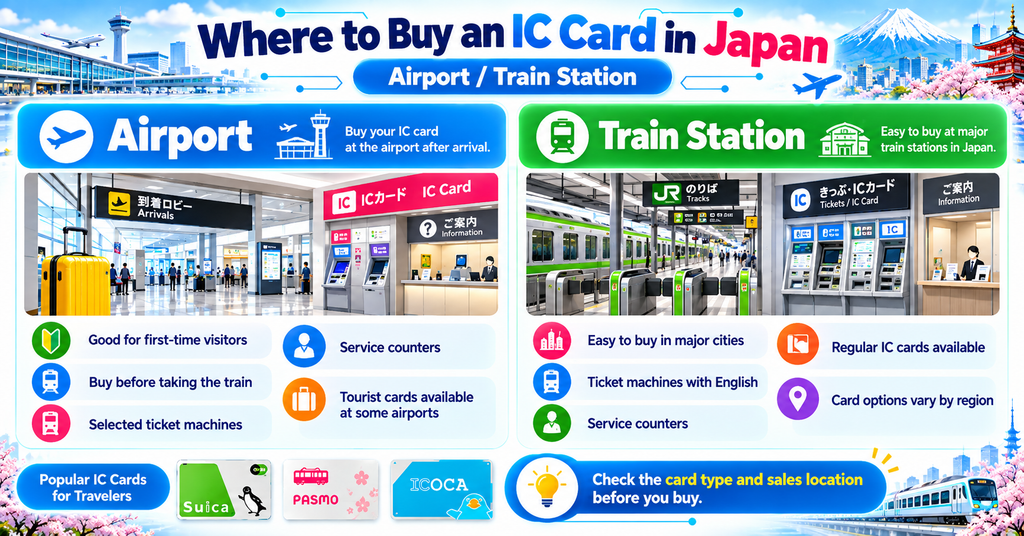
You can buy an IC card at many major train stations and airports in Japan.
The available card depends on the region and transportation company.
In the Tokyo area, travelers commonly buy Suica or PASMO. In western Japan, ICOCA is a common option.
Tourist cards such as Welcome Suica and TOURIST PASMO are also available at selected airports and major stations.
Buying an IC Card at the Airport
Buying an IC card at the airport can be convenient if you want to use trains immediately after arrival.
JR East sells Welcome Suica at Narita Airport and Haneda Airport, as well as at several major JR East travel service centers.
TOURIST PASMO is available at Haneda Airport and Narita Airport.
You can buy these cards from selected ticket machines or service counters.
Availability and sales locations can change, so check the official website before your trip.
Buying an IC Card at a Train Station
You can also buy regular IC cards at many train stations.
In the Tokyo area, participating stations sell PASMO through ticket machines and service counters.
In western Japan, JR West sells ICOCA at many stations in its service area.
Ticket machines often offer English instructions, which makes the process easy for international travelers.
If you cannot find the correct option, ask station staff for help.
How to Use an IC Card on Trains and Buses
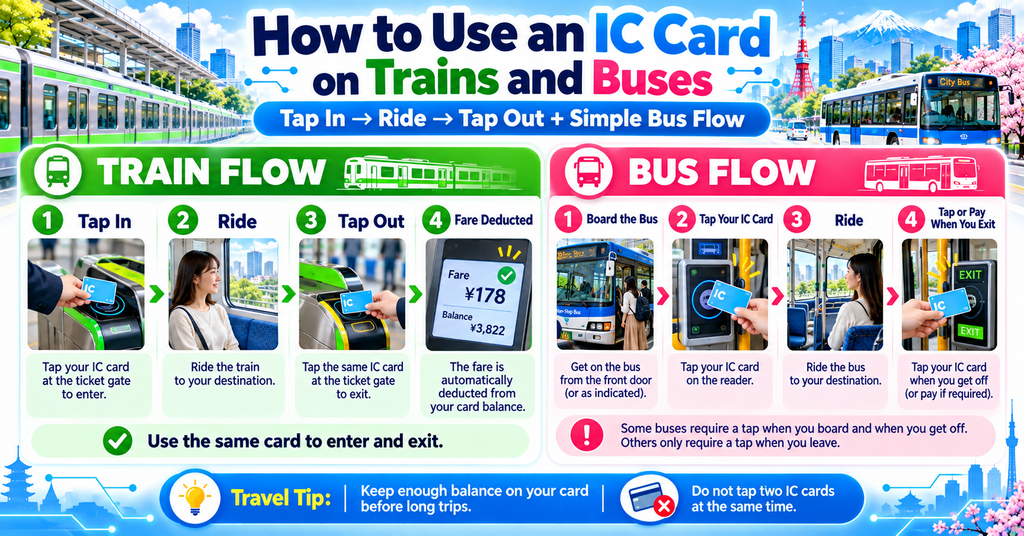
Using an IC card on trains and buses is simple.
You usually do not need to buy a ticket or calculate the fare yourself.
Just keep enough balance on your card and tap it at the correct reader when you travel.
The system calculates and deducts the fare automatically.
Need more help using trains in Japan? Check our complete beginner’s guide to train travel.
Using an IC Card at Train Gates
At train and subway stations, tap your IC card on the reader when you enter the ticket gate.
Tap the same card again when you leave at your destination.
The gate calculates the fare and deducts it from your balance.
Keep the card close to the reader for a moment until you hear a sound or see the gate open.
Do not tap two IC cards at the same time, as the reader may not know which card to use.
Using an IC Card on Buses
Many local buses in Japan also accept IC cards.
The exact process depends on the bus system.
On some buses, you tap your card when you board and again when you get off.
On others, you only tap when you leave.
Look for the IC card reader near the entrance or fare box, and follow the signs inside the bus.
If you are unsure, watch what other passengers do or ask the driver.
How to Recharge an IC Card in Japan
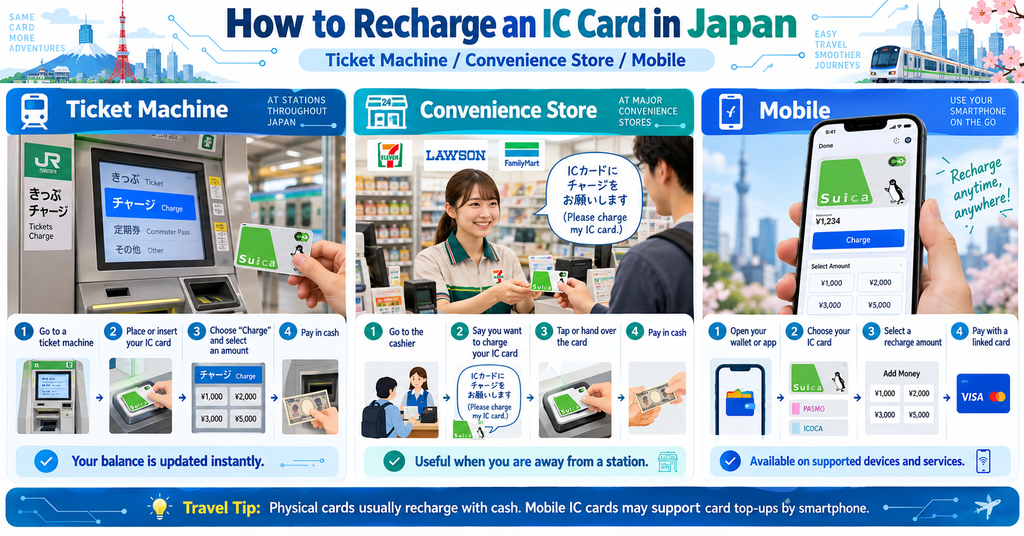
You can recharge an IC card whenever the balance gets low.
The easiest places are train station ticket machines and convenience stores.
Most travelers can recharge with cash, while some mobile IC cards also support credit card top-ups through a smartphone.
Recharge at Ticket Machines
Most major train stations have ticket machines that let you recharge IC cards.
Insert or place your card on the reader, choose the recharge option, and select the amount you want to add.
Many machines offer English instructions.
Cash is the most common payment method for physical IC card recharges.
Recharge at Convenience Stores
Many convenience stores also let you recharge IC cards.
Tell the cashier that you want to add money to your IC card, then place the card on the reader.
You usually pay the recharge amount in cash.
This can be useful when you are away from a train station.
How Much Money Should You Add?
You do not need to add a large amount at once.
For most tourists, adding a few thousand yen and recharging when needed works well.
This helps you avoid leaving too much unused balance on the card at the end of your trip.
If you plan to use the card often for trains, buses, shops, and vending machines, you may want to add more.
Where Else Can You Use IC Cards in Japan?
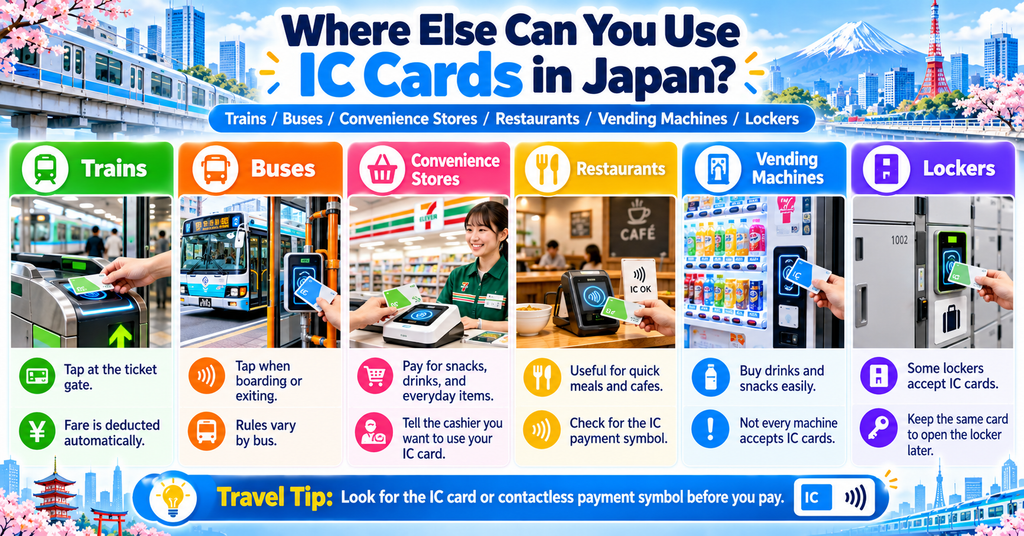
IC cards are useful for much more than trains and buses.
You can use them for many small purchases across Japan.
Look for the IC card or contactless payment symbol at the register before you pay.
Convenience Stores and Shops
Many convenience stores accept IC cards.
You can use them to pay for drinks, snacks, meals, and everyday items.
Some supermarkets, drugstores, and other shops also accept IC card payments.
Simply tell the cashier that you want to use your IC card and tap it on the reader.
Restaurants and Vending Machines
Many restaurants and vending machines also accept IC cards.
This makes it easy to pay for quick meals, drinks, and snacks without using cash.
Look for the IC card logo before paying, because not every restaurant or machine accepts the same payment methods.
Coin Lockers and Other Services
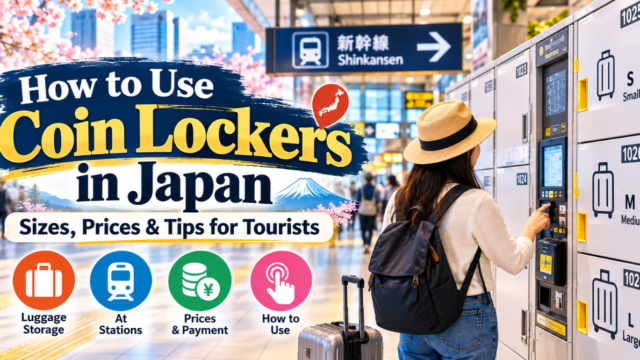
Some coin lockers let you pay with an IC card instead of cash.
In many cases, the card also works as the key to open the locker later.
You may also find IC card payments at some parking areas, station shops, and other travel services.
Keep the same card with you until you finish using the service.
Can You Use One IC Card Across Japan?
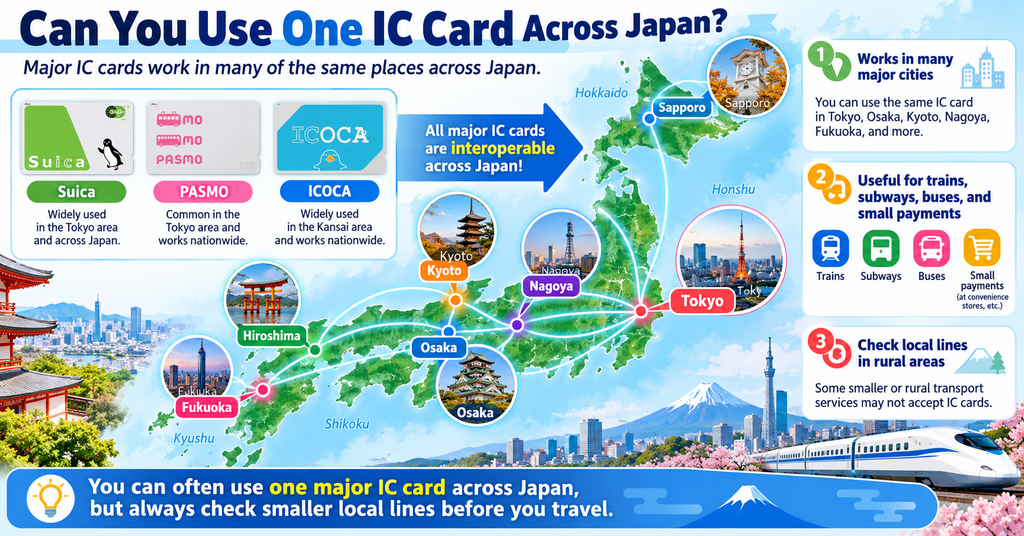
Yes, you can use major IC cards across many parts of Japan.
Suica, PASMO, ICOCA, and several other major cards work together through a nationwide interoperability network.
For example, you can use a Suica card in many areas around Osaka, Kyoto, Nagoya, Fukuoka, and other major cities.
You can also use ICOCA in many areas around Tokyo.
However, IC cards do not work on every train, bus, or rural transportation service in Japan.
Some local lines and smaller operators may require cash or a paper ticket.
When traveling outside major cities, check whether the station or bus accepts your IC card before boarding.
However, you generally cannot use an IC card for one continuous train journey that crosses between different IC card areas.
If your route crosses an area boundary, buy a regular ticket instead.
Can You Use an IC Card on the Shinkansen?
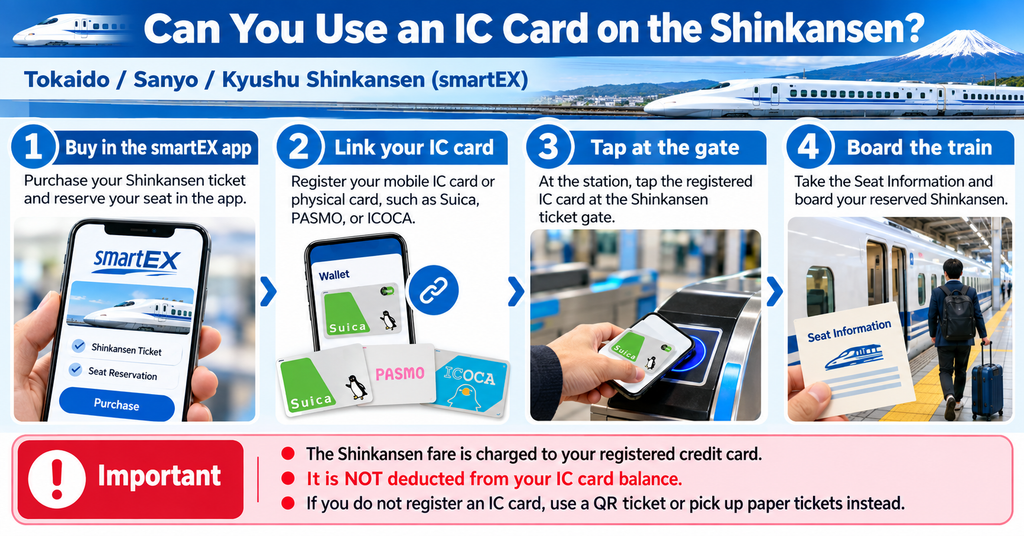
You cannot usually board the Shinkansen with only a regular IC card balance.
You still need a valid Shinkansen ticket or reservation for the journey.
However, some services let you link your Shinkansen reservation to an IC card.
For example, certain online booking systems allow you to register a Suica, PASMO, ICOCA, or other compatible IC card.
After linking the reservation, you can tap the registered IC card at the Shinkansen gate.
The exact process depends on the route and booking service, so check the instructions for your reservation before traveling.
With SmartEX, you can register a compatible physical or mobile IC card with your reservation and tap it directly at the Shinkansen gate. The Shinkansen fare is charged to your registered credit card, not deducted from your IC card balance.
If you plan to use an IC card with a Shinkansen reservation, check the official SmartEX boarding guide.
How to Use Mobile Suica and Mobile IC Cards
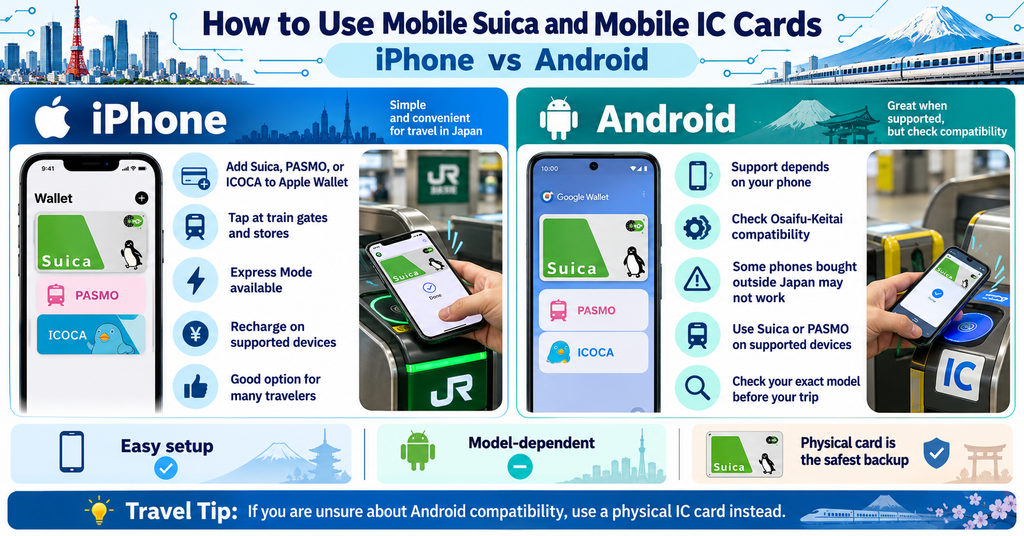
Mobile IC cards let you use your smartphone instead of carrying a physical card.
You can tap your phone at train gates, buses, shops, and other locations that accept compatible IC cards.
This can be convenient because you can check your balance and recharge without using a ticket machine.
However, compatibility depends on your phone, operating system, and the IC card service you want to use.
Using an IC Card on iPhone
Compatible iPhones can add Japanese transit cards such as Suica, PASMO, and ICOCA to Apple Wallet.
After adding the card, you can use your iPhone at train gates and supported stores.
Express Mode lets you tap your iPhone without unlocking it or opening an app each time.
You can also recharge supported cards through Apple Wallet with a compatible payment card.
International visitors can also use Welcome Suica Mobile on supported Apple devices.
Apple provides official instructions for adding and using Japanese transit cards on iPhone and Apple Watch.
Using an IC Card on Android
Android support can be more complicated for international travelers.
Google Wallet supports Suica and PASMO on compatible Android devices in Japan.
However, the phone must support Japan’s Osaifu-Keitai system for these electronic money features.
Many phones purchased outside Japan may not support this system.
Before relying on a mobile IC card, check whether your exact Android model supports Suica or PASMO.
If you are unsure, use a physical IC card instead.
Android users can check Google’s official Wallet support information for PASMO and other Japanese electronic money services.
What If Your IC Card Balance Is Too Low?
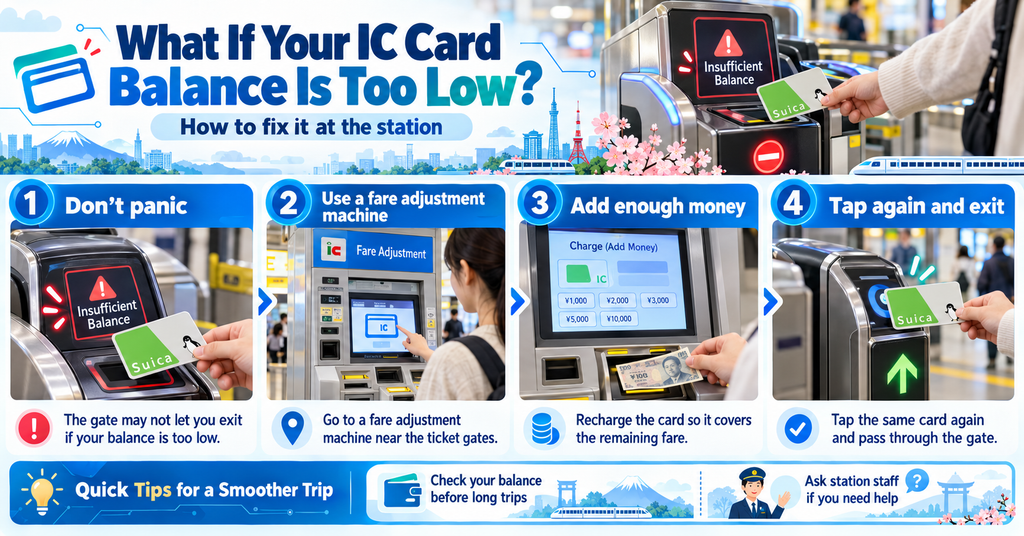
If your IC card balance is too low, the ticket gate may not let you exit.
Do not worry. You can usually recharge the card at a fare adjustment machine near the ticket gates.
Add enough money to cover the remaining fare, then tap your card again.
At some stations, you can also ask station staff for help.
To avoid delays, check your balance before long trips and recharge when it starts to get low.
What to Do With Your IC Card Before Leaving Japan
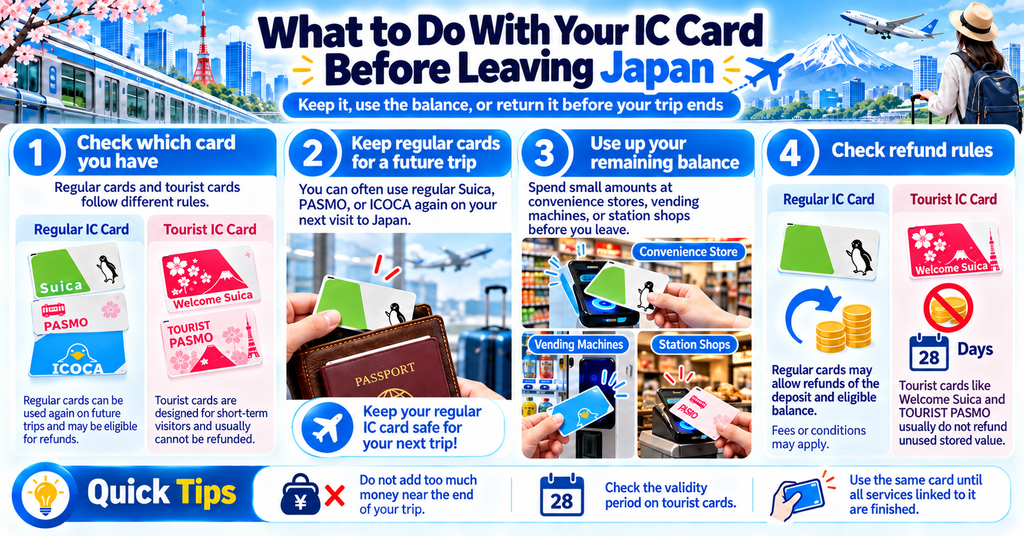
Before leaving Japan, decide whether you want to keep your IC card or return it.
Regular IC cards can be useful again on a future trip, while tourist cards such as Welcome Suica and TOURIST PASMO have limited validity periods.
Check the remaining balance before you leave so you do not leave too much money unused.
Keeping Your IC Card for a Future Trip
If you have a regular Suica, PASMO, or ICOCA, you may want to keep it for your next visit to Japan.
You can often use the same card again as long as it remains valid.
Keeping the card can save time because you will not need to buy another one when you return.
Tourist cards work differently. Welcome Suica and TOURIST PASMO have limited validity periods, so they are mainly designed for short stays.
Refunds and Remaining Balance
Refund rules depend on the type of IC card you use.
Regular cards such as PASMO and ICOCA may allow you to return the card and receive the deposit and eligible remaining balance, although fees or other conditions may apply.
Tourist cards usually work differently.
Welcome Suica and TOURIST PASMO do not refund unused stored value, so try to use most of your balance before the card expires.
You can spend a small remaining balance at many convenience stores, vending machines, and other places that accept IC card payments.
Common IC Card Mistakes Tourists Should Avoid
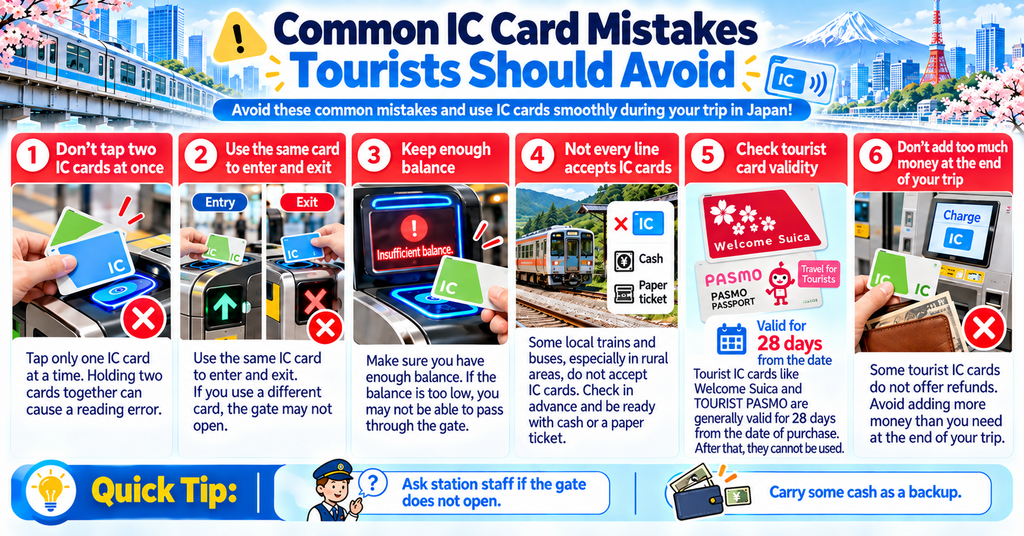
IC cards are easy to use, but a few simple mistakes can cause problems during your trip.
Avoid these common mistakes to make your travel smoother.
Do not tap more than one IC card on the reader at the same time.
Always use the same card when you enter and leave a train station.
Keep enough balance on the card before long journeys.
Do not assume every train, bus, or rural transport service accepts IC cards.
Check the card’s validity period if you use a tourist IC card such as Welcome Suica or TOURIST PASMO.
Do not add too much money near the end of your trip, especially if the card does not allow refunds.
If a ticket gate does not open, stop and ask station staff instead of repeatedly tapping the card.
IC Card Japan FAQ
These are some of the most common questions tourists have about using IC cards in Japan.
Can I Use Suica in Osaka and Kyoto?
Yes. You can use Suica on many trains, subways, buses, and payment networks in Osaka and Kyoto.
Major IC cards work together across many parts of Japan through nationwide interoperability.
However, some local lines and smaller operators may not accept Suica.
Can I Use ICOCA in Tokyo?
Yes. You can use ICOCA on many trains, subways, buses, and shops in the Tokyo area.
It works in many of the same places as Suica and PASMO.
Can Two People Share One IC Card?
No. Each traveler should use their own IC card when riding trains and buses.
The system records where you enter and leave, so one card cannot normally cover two passengers at the same time.
Can I Pay for Everything With an IC Card?
No. IC cards are widely accepted, but you cannot use them everywhere.
Some restaurants, small shops, rural transport services, and other businesses may still require cash or another payment method.
Keep some cash with you as a backup.
Do I Still Need Cash in Japan?
Yes. IC cards make many everyday payments easier, but cash still helps in some situations.
Small restaurants, local buses, temples, markets, and rural areas may not accept IC cards.
Using both an IC card and cash gives you more flexibility during your trip.
Want to know when to use cash, cards, or other payment methods in Japan? Read our complete money guide.
Final Tips for Using an IC Card in Japan
IC cards make transportation and small payments much easier during a trip to Japan.
Choose the card that is easiest to buy when you arrive, rather than worrying too much about Suica, PASMO, or ICOCA.
Keep enough balance on the card, but avoid adding more money than you expect to use.
Remember that some rural transport services and small businesses may not accept IC cards, so carry some cash as a backup.
If you use a tourist card such as Welcome Suica or TOURIST PASMO, check the validity period and refund rules before adding a large balance.
With an IC card and a little cash, you can handle most everyday transportation and small purchases smoothly during your trip.
Visiting Japan for the first time? Check our complete guide to essential things to know before your trip.