Coin Laundry in Japan: A Complete Guide for Travelers
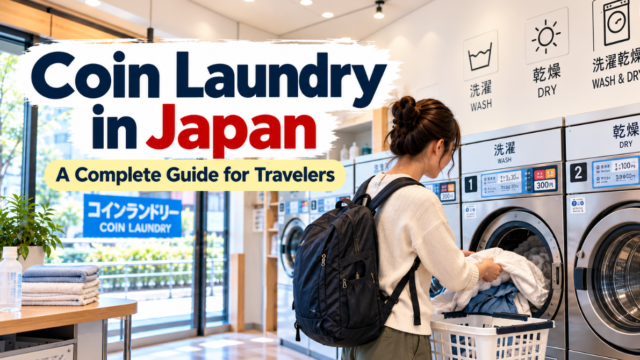
Doing laundry during a trip can be surprisingly important, especially if you are staying in Japan for a week or longer.
Fortunately, using a coin laundry in Japan is usually simple once you understand how the machines work. You can find laundromats in many areas, and some hotels and other accommodations also have washing machines for guests.
However, the machines, payment methods, detergent rules, and instructions can be different from what you are used to at home.
In this guide, you will learn where to find coin laundry in Japan, how much it costs, how to use the machines, whether you need detergent, how to pay, and useful tips for travelers.
- Coin Laundry in Japan: What Travelers Should Know First
- Where to Find Coin Laundry in Japan
- How Much Does Coin Laundry Cost in Japan?
- How to Use a Coin Laundry in Japan
- Do You Need to Bring Detergent?
- How to Pay at Coin Laundry in Japan
- Useful Japanese Words at a Coin Laundry
- Coin Laundry Etiquette in Japan
- What You Should Not Put in the Dryer
- Tips for Using Coin Laundry During Your Japan Trip
- Final Tips for Using Coin Laundry in Japan
Coin Laundry in Japan: What Travelers Should Know First
Coin laundries are common in Japan and can be very convenient for travelers who want to pack light or wash clothes during a longer trip.
You can find them in residential neighborhoods, near train stations, and sometimes inside hotels, hostels, and other accommodations.
Many modern laundromats have washing machines, dryers, and washer-dryer combination machines. Some machines automatically add detergent, while others may require you to add it yourself.
Payment methods also vary. Some machines accept coins, while newer laundromats may offer cashless payments or central payment machines.
Because each laundromat and machine can work differently, always check the instructions before starting your laundry.
Where to Find Coin Laundry in Japan
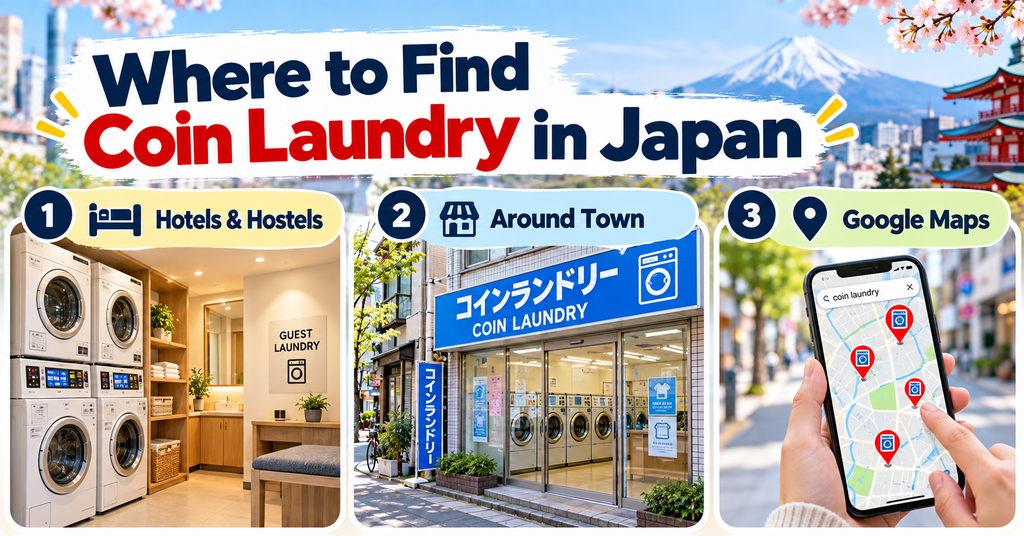
Finding a coin laundry in Japan is usually easy, especially in cities and residential areas.
You may find laundry facilities inside your accommodation, or you can use a public laundromat nearby.
Before going out, check whether your hotel or hostel already has washing machines available for guests.
Hotels and Accommodation Laundry Rooms
Many hotels, hostels, guesthouses, and capsule hotels in Japan have laundry rooms for guests.
These machines are convenient because you do not need to leave the building, and some are available late at night.
However, the number of machines may be limited, especially in smaller hotels. During busy hours, you may need to wait for a machine to become available.
Check the hotel facilities before your stay, or ask the front desk if you are unsure.
Coin Laundromats Around Town
You can also find public coin laundromats in many neighborhoods across Japan.
They are often located near apartment buildings, shopping streets, residential areas, and sometimes close to train stations.
Public laundromats may have larger machines than hotel laundry rooms, which can be useful if you have a lot of clothes or larger items.
Some laundromats are open 24 hours, while others have specific opening times, so check before visiting.
How to Search for Coin Laundry on Google Maps
One of the easiest ways to find a nearby laundromat is to use Google Maps.
Google Maps can also help you search for nearby places and check information such as opening hours, reviews, and photos.
If you plan to use Google Maps and other useful tools during your trip, check our guide to the best Japan travel apps for travelers.
Try searching for “coin laundry” or the Japanese word “コインランドリー.”
You can compare locations, opening hours, reviews, photos, and available facilities before you go.
Photos are especially useful because they can help you check whether the laundromat has large machines, dryers, or cashless payment options.
How Much Does Coin Laundry Cost in Japan?
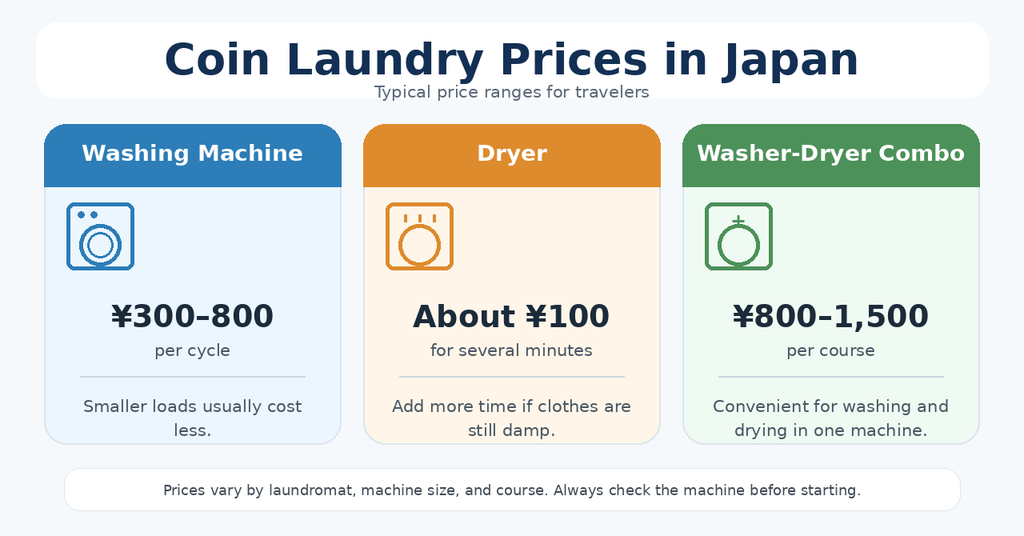
Coin laundry prices in Japan vary depending on the laundromat, machine size, and course you choose.
As a rough guide, a regular load of laundry may cost a few hundred yen, while washing and drying together usually costs more.
Always check the price displayed on the machine before you start.
For a real-world example, WASHHOUSE provides estimated prices and operating times for washers, dryers, and washer-dryer combination machines in Japan.
Washing Machine Prices
Washing-only machines often cost around ¥300 to ¥800 per cycle, depending on the size of the machine.
Larger machines designed for blankets or bigger loads usually cost more.
For travelers with only a few days of clothes, a smaller machine may be enough.
Dryer Prices
Dryers often charge by time rather than by a complete drying cycle.
A common price is around ¥100 for several minutes of drying, although the exact time varies by machine.
You may need to add more money if your clothes are still damp when the first drying period ends.
Check the fabric care labels before using a dryer, especially for delicate clothing.
Washer-Dryer Combination Machines
Many modern laundromats have machines that wash and dry your clothes in one continuous course.
These machines are convenient because you do not need to move your laundry to a separate dryer.
A wash-and-dry course often costs around ¥800 to ¥1,500, depending on the load size and machine.
Prices vary between laundromats, so treat these amounts as a general guide rather than a fixed price.
How to Use a Coin Laundry in Japan
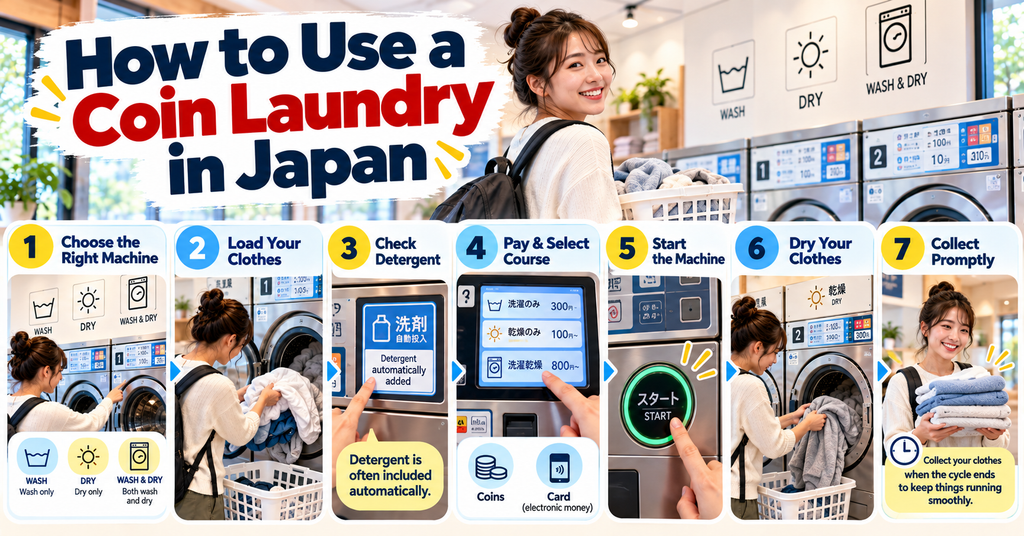
Using a coin laundry in Japan is usually straightforward, but the controls and payment process can vary between machines.
Before you start, check the instructions on the machine and make sure you understand the washing or drying course you want to use.
Follow these basic steps as a general guide.
Step 1: Choose the Right Machine
First, check whether you need a washing machine, dryer, or washer-dryer combination machine.
Look at the maximum load size shown on the machine and choose one that fits your laundry.
Do not overload the machine, as your clothes may not wash or dry properly.
Step 2: Load Your Clothes
Check your pockets and remove any items before putting your clothes into the machine.
Separate delicate clothing or anything that requires special care.
Also check the care labels on your clothes before washing or drying them.
Step 3: Check Whether Detergent Is Included
Some modern coin laundry machines automatically add detergent and softener.
Other machines may require you to add detergent yourself.
Look for instructions on the machine before adding anything. If you are unsure, do not add extra detergent until you confirm what the machine requires.
Step 4: Pay and Select a Course
Choose the washing or drying course that matches your laundry.
Depending on the machine, you may pay with coins, use a central payment terminal, or choose a cashless payment option.
The order of payment and course selection can vary, so follow the instructions displayed on the machine.
Step 5: Start the Machine
After selecting the course and completing the payment, start the machine.
Check the estimated finishing time so you know when to return.
Some machines display the remaining time throughout the cycle.
Step 6: Dry Your Clothes
If you used a washing-only machine, move your clothes to a dryer after the wash cycle finishes.
Choose a suitable drying time and check the care labels before using the dryer.
Thicker clothes, towels, and larger loads may need additional drying time.
Step 7: Collect Your Laundry Promptly
Return before or around the time your laundry finishes and remove your clothes as soon as possible.
Other customers may be waiting to use the machine, especially during busy periods.
Before leaving, check the drum and surrounding area to make sure you have not forgotten any clothes or personal items.
Do You Need to Bring Detergent?
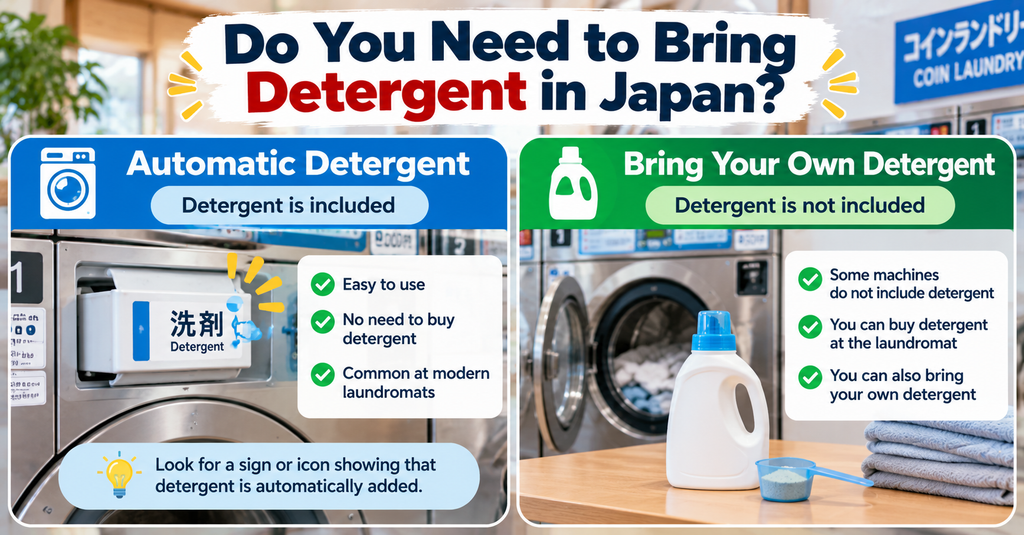
You may not need to bring detergent when using a coin laundry in Japan.
Many modern laundromats automatically add detergent during the wash cycle, but this is not always the case.
Before starting the machine, check the instructions to see whether detergent is included or if you need to add it yourself.
Machines with Automatic Detergent
Some washing machines automatically dispense detergent, and some may also add fabric softener.
In this case, you usually only need to load your clothes, choose the course, and complete the payment.
Do not add extra detergent unless the machine instructions tell you to do so.
When You Need to Buy Detergent
If the machine does not provide detergent automatically, you may need to bring or buy your own.
Some laundromats have detergent vending machines, while convenience stores, supermarkets, and drugstores often sell small packs or bottles of laundry detergent.
Choose a detergent that matches the type of washing machine and follow the instructions on the package.
How to Pay at Coin Laundry in Japan
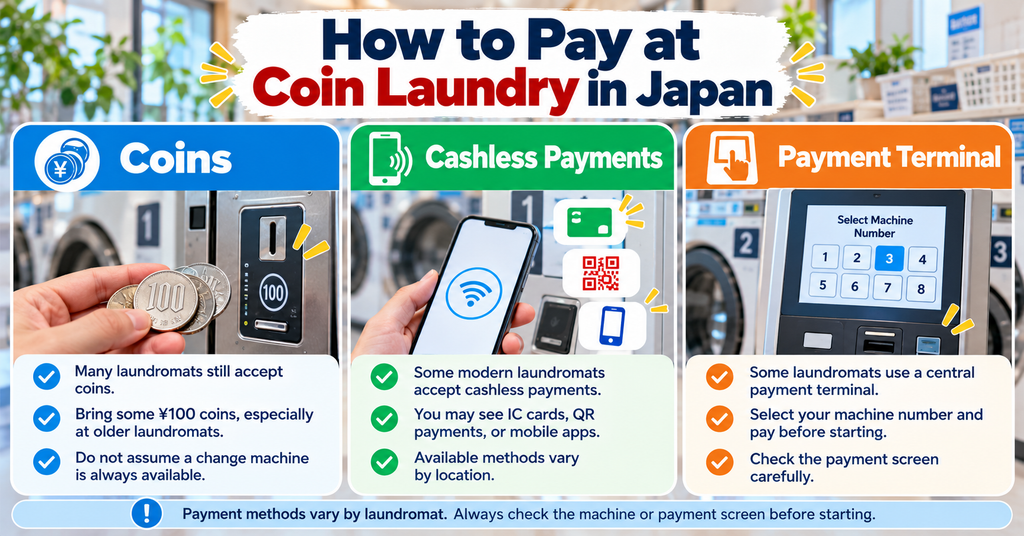
Payment methods at coin laundries in Japan vary by location and machine.
If you are unsure how much cash to carry or which payment methods are commonly used in Japan, see our complete guide to money and payments in Japan.
Some laundromats mainly use coins, while newer locations may also offer cashless payments or a central payment terminal.
Before starting, check the payment instructions on the machine or payment screen.
Coins
Many coin laundry machines still accept Japanese coins.
It is a good idea to have some ¥100 coins with you, especially if you are using an older or smaller laundromat.
Some locations have a change machine, but you should not assume that one will always be available.
For more details on when you may need Japanese yen during your trip, read our guide to how much cash you need in Japan.
Cashless Payments and Apps
Some modern coin laundries accept cashless payments such as transportation IC cards, QR code payments, or mobile payment apps.
Others use a central payment terminal where you select the machine number and pay before starting the cycle.
Available payment methods vary by laundromat, so check the signs or payment screen before loading your clothes.
Some laundry chains also offer their own apps for checking machine availability and making payments.
Useful Japanese Words at a Coin Laundry
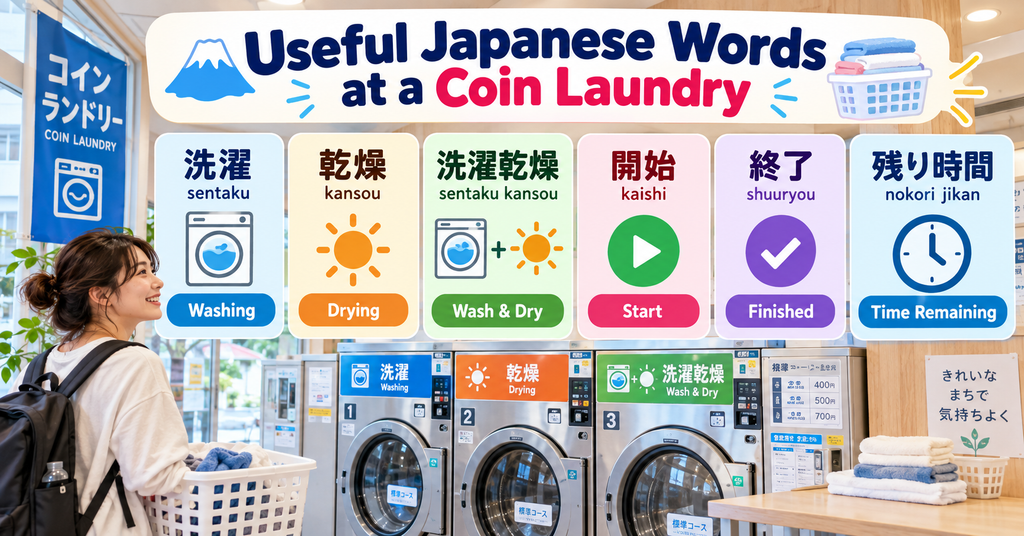
Some coin laundry machines in Japan have English instructions, but you may still see Japanese words on buttons, signs, or payment screens.
Knowing a few basic terms can make the process easier.
洗濯 (sentaku) — Washing
乾燥 (kansou) — Drying
洗濯乾燥 (sentaku kansou) — Wash and Dry
洗剤 (senzai) — Detergent
柔軟剤 (juunanzai) — Fabric Softener
標準 (hyoujun) — Standard
すすぎ (susugi) — Rinse
脱水 (dassui) — Spin Dry
開始 (kaishi) — Start
停止 (teishi) — Stop
終了 (shuuryou) — Finished
残り時間 (nokori jikan) — Time Remaining
料金 (ryoukin) — Price / Fee
使用中 (shiyouchuu) — In Use
空き (aki) — Available
If you are unsure about a button or instruction, use a translation app or check the machine carefully before starting.
Coin Laundry Etiquette in Japan
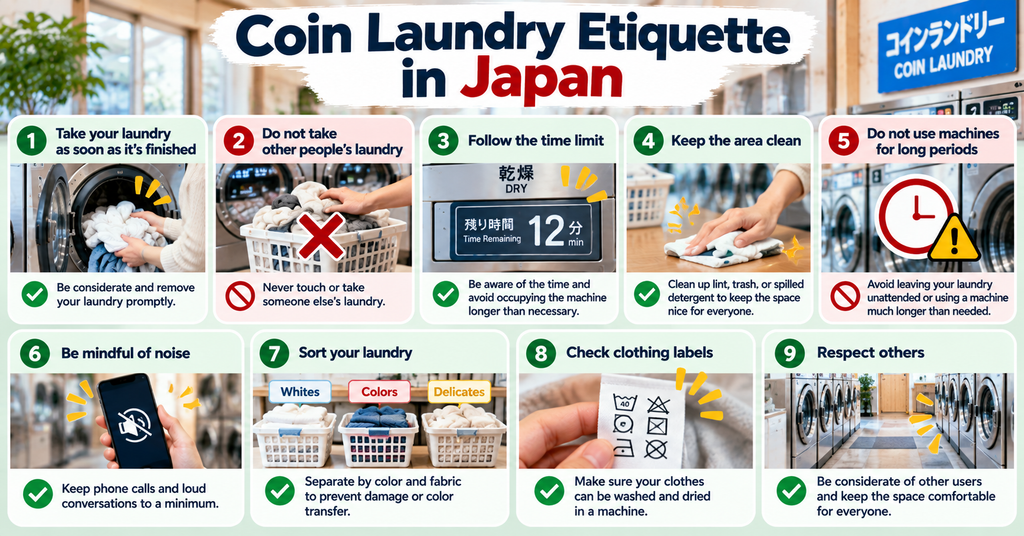
Coin laundries in Japan are shared spaces, so a little consideration goes a long way.
Most of the rules are simple: use the machines properly, keep the area clean, and avoid making other customers wait unnecessarily.
Following basic laundry etiquette will help you use the laundromat smoothly.
Do Not Leave Finished Laundry in the Machine
Try to return before your washing or drying cycle finishes.
If you leave finished laundry in the machine for a long time, other customers may not be able to use it.
Set a timer on your phone so you can come back around the estimated finishing time.
Do Not Touch Someone Else’s Laundry Unless Necessary
Avoid touching or moving another customer’s laundry unless the laundromat clearly allows it or staff handle it for you.
If a machine has finished but the owner has not returned, check the posted rules before doing anything.
When in doubt, wait or ask staff if someone is available.
Check the Rules for Shoes, Futons, and Other Items
Not every machine can wash shoes, futons, blankets, or other bulky items.
Some laundromats have special machines for these items, while others may not allow them at all.
Check the signs and machine instructions before washing anything other than regular clothing.
What You Should Not Put in the Dryer
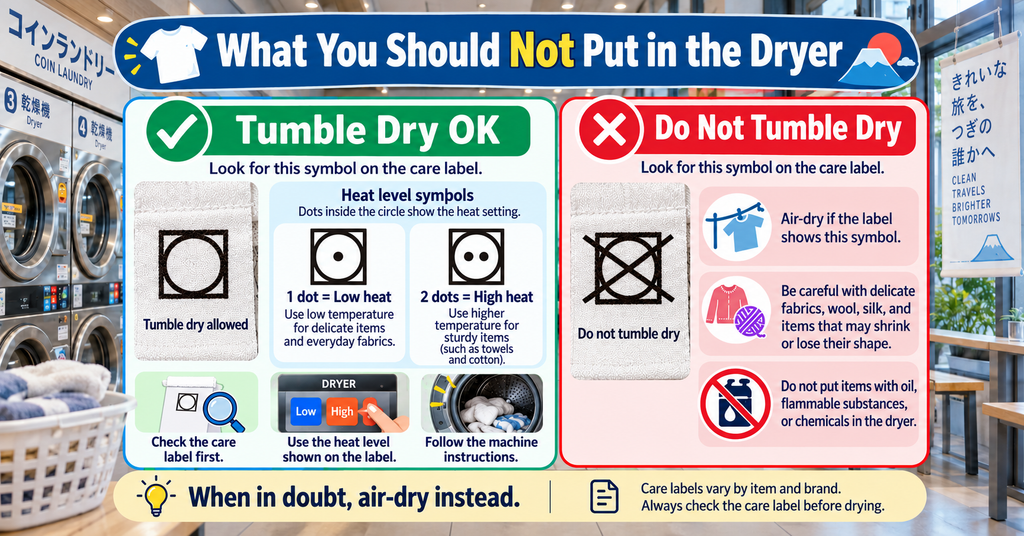
Not all clothes and fabrics are suitable for tumble drying.
Before using a dryer, check the care label on each item and make sure tumble drying is allowed.
Japan uses standardized laundry care symbols that show whether tumble drying is allowed and, when applicable, the recommended heat level.
Delicate fabrics, wool, some synthetic materials, clothes with printed designs, and items that may shrink or lose their shape may need to air-dry instead.
You should also avoid putting items with flammable substances, oil, or chemicals into a dryer.
If you are unsure, choose a lower-risk option and let the item air-dry rather than using high heat.
Tips for Using Coin Laundry During Your Japan Trip
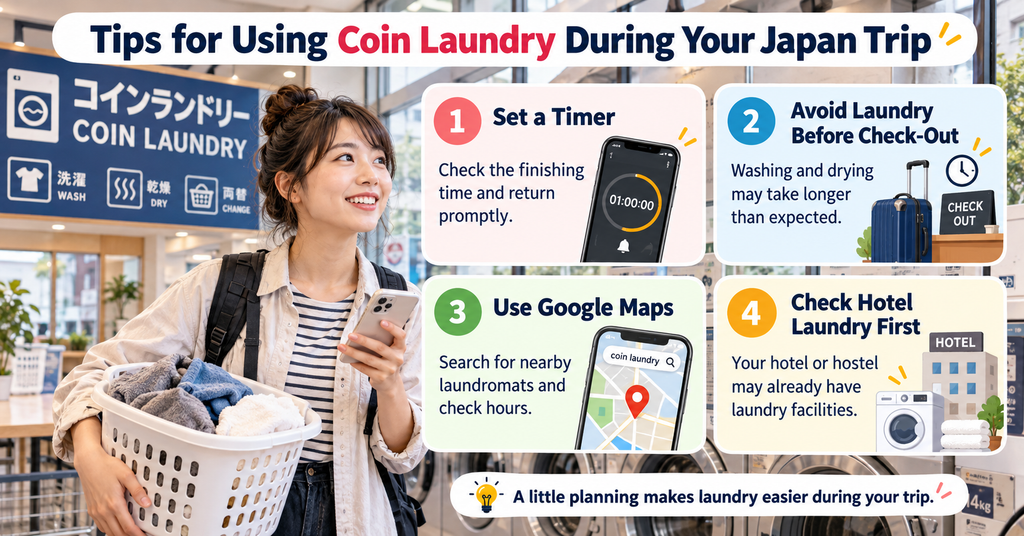
Using a coin laundry during your trip can be much easier with a little planning.
Try not to do laundry just before checking out of your hotel or catching a train, as washing and drying may take longer than expected.
Check the estimated finishing time before leaving the laundromat, and set a timer on your phone so you can return promptly.
It is also a good idea to check your clothing care labels before washing or drying anything unfamiliar.
If you are using a public laundromat, remember the machine number you are using, especially if there are many similar machines.
When searching for a nearby laundromat, try both “coin laundry” and “コインランドリー” on Google Maps.
Before leaving your accommodation, check whether your hotel or hostel already has laundry facilities, as this may be more convenient than going outside.
If this is your first trip to Japan, you may also find our guide to essential things to know before visiting Japan helpful.
Final Tips for Using Coin Laundry in Japan
Using a coin laundry in Japan is usually easy once you understand the basic steps.
Check the machine type, price, detergent instructions, and payment method before you start.
Bring some ¥100 coins just in case, but remember that some modern laundromats also offer cashless payments.
Always check your clothing care labels, especially before using a dryer.
Return around the finishing time, collect your laundry promptly, and follow any rules posted inside the laundromat.
With a little preparation, doing laundry during your Japan trip can be simple, convenient, and stress-free.