Best Scenic Spots in Japan: 5 Breathtaking Places to Visit
Japan is filled with beautiful landscapes, from snow-covered mountains and clear mountain streams to tropical blue seas.
But with so many places to choose from, it can be difficult to decide which scenic spots are worth adding to your Japan itinerary.
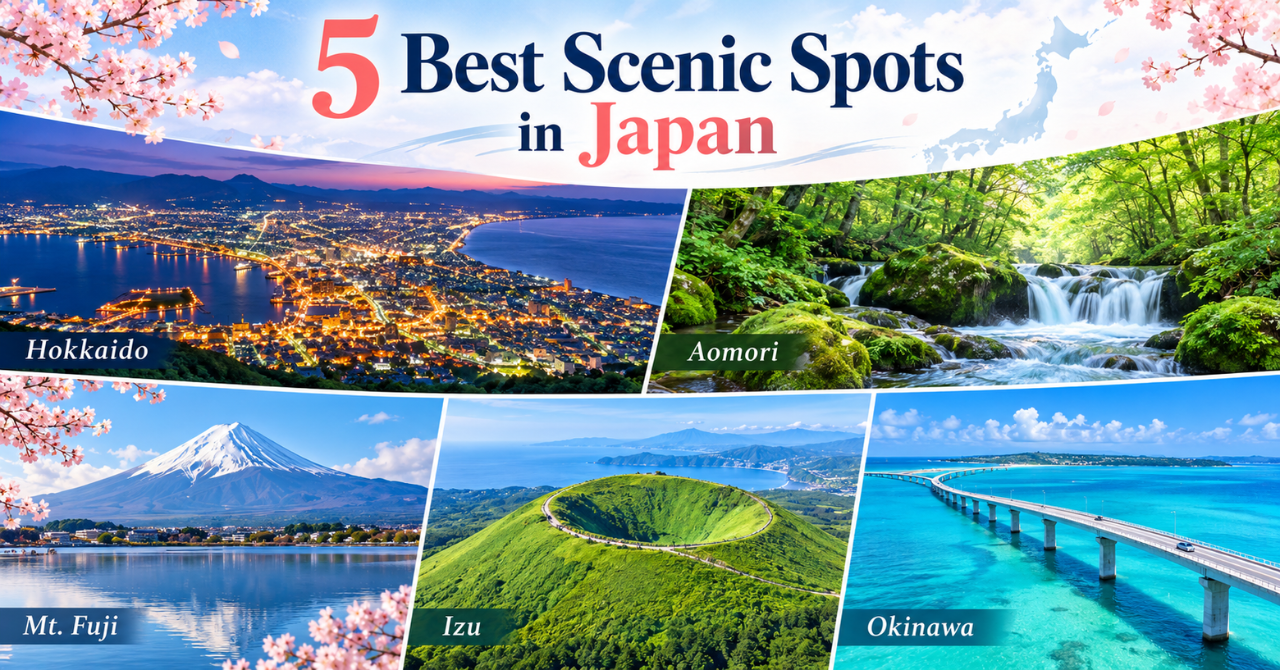
In this guide, we introduce five of the best scenic spots in Japan, covering destinations from Hokkaido in the north to Okinawa in the south.
Each place offers a completely different view of Japan, including one of the country’s most famous night views, a peaceful forest stream, the iconic Mount Fuji, a volcanic crater walk, and a spectacular bridge surrounded by turquoise water.
If you are interested in Japan’s historically famous landscapes, you can also read our guide to the Three Views of Japan.
Quick Guide to the Best Scenic Spots in Japan
| Scenic Spot | Location | Best For |
|---|---|---|
| Mount Hakodate | Hokkaido | Night views and city panoramas |
| Oirase Gorge | Aomori | Forests, waterfalls, and autumn colors |
| Mount Fuji | Yamanashi / Shizuoka | Japan’s most iconic mountain scenery |
| Mount Omuro | Shizuoka | Volcanic landscapes and 360° views |
| Irabu Bridge | Okinawa | Tropical ocean views and scenic drives |
These destinations are spread across Japan, so you do not need to visit all five on one trip. Instead, choose the places that fit naturally into your route.
If you are still deciding where to go, our guide to the best cities to visit in Japan can help you build the rest of your itinerary.
Mount Hakodate, Hokkaido
One of Japan’s Most Famous Night Views
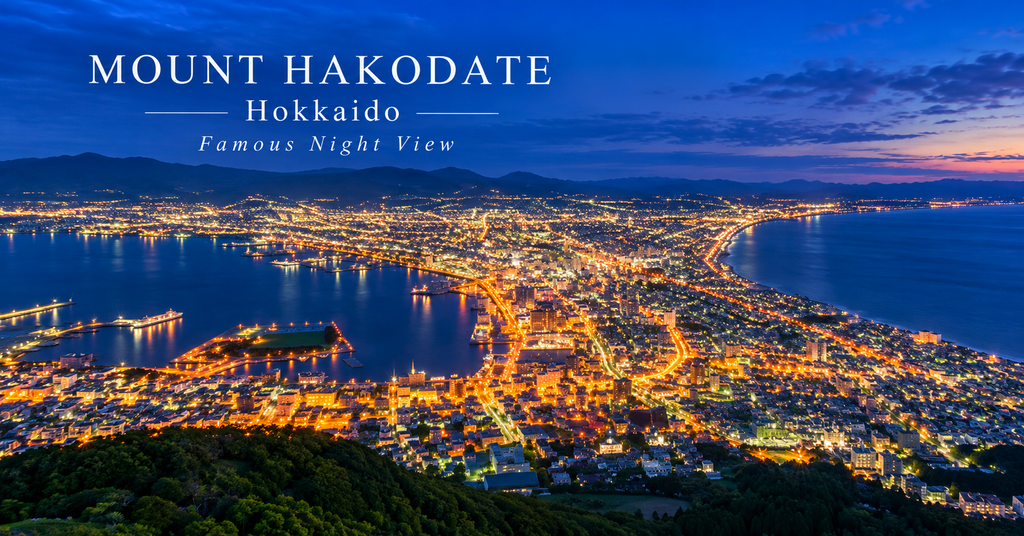
Mount Hakodate is a 334-meter mountain overlooking Hakodate City in southern Hokkaido.
From the observation area near the summit, you can see the city stretching between Hakodate Bay and the Tsugaru Strait. The narrow shape of the city creates a distinctive view that is especially impressive after sunset.
During the day, the observation area offers wide views of the sea, city, and surrounding landscape. However, Mount Hakodate is particularly famous for its night scenery, when thousands of city lights illuminate the land below.
If possible, arrive before sunset. This allows you to enjoy three different views during one visit: Hakodate in daylight, the colors of sunset, and the city lights at night.
How to Get to Mount Hakodate
The Mount Hakodate Ropeway is one of the easiest ways for travelers to reach the summit area.
Buses, taxis, and other transportation options may also be available depending on the season. However, road access and private vehicle restrictions can change throughout the year, especially during winter and busy sightseeing periods.
For this reason, check the latest access information before your visit.
Travel Tip: The summit can feel much colder and windier than central Hakodate, even when the weather in the city feels comfortable. Bringing an extra layer is a good idea, especially in the evening.
For current access and transportation information, visit the official Hakodate tourism website.
Oirase Gorge, Aomori
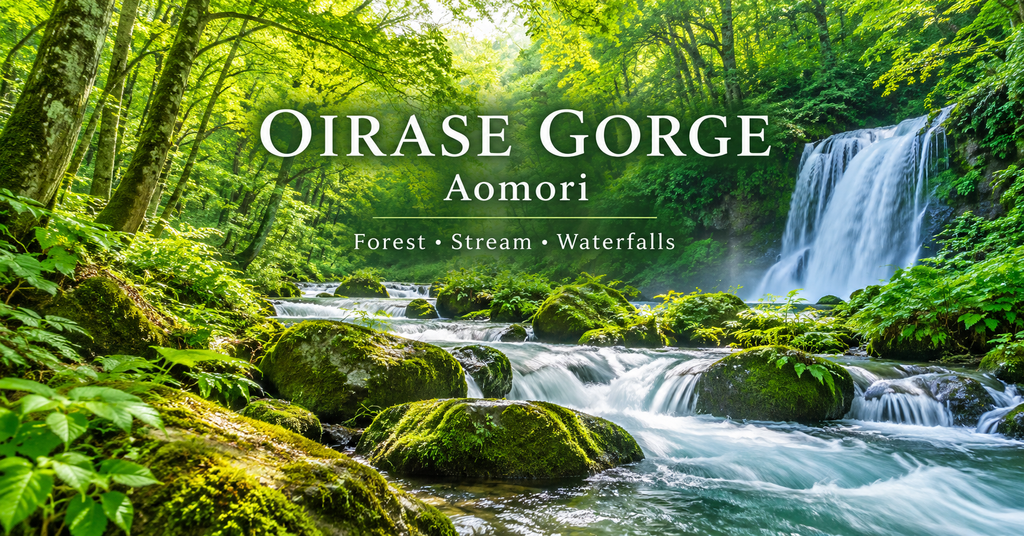
A Scenic Walk Through Forests and Waterfalls
Oirase Gorge is one of the most beautiful natural areas in northern Japan.
The gorge stretches for about 14 kilometers from the Lake Towada area and is known for its clear flowing water, moss-covered rocks, waterfalls, and thick forests.
One of the best things about Oirase is that the scenery changes as you walk. Instead of visiting a single observation deck, you experience the landscape gradually as the trail follows the stream through the forest.
You do not need to walk the entire 14-kilometer route. Travelers with limited time can choose a shorter section and still experience waterfalls, forest scenery, and the sound of the flowing stream.
When Is the Best Time to Visit Oirase Gorge?
Oirase Gorge looks very different throughout the year.
Fresh green leaves make late spring and early summer especially beautiful, while autumn transforms the forest into shades of red, orange, and yellow. Autumn colors usually become especially impressive around late October to early November, although the exact timing changes each year.
Winter creates another completely different landscape, but transportation is more limited. Some bus services are suspended during the winter season, so travelers visiting between late autumn and spring should check transportation schedules carefully.
How to Get to Oirase Gorge
Public buses connect the Oirase area with major transportation points such as Aomori and Hachinohe during the operating season.
If you are traveling by car, there are also places where you can stop and begin walking along the gorge.
Travel Tip: Wear comfortable walking shoes. Even if you only explore part of the gorge, paths can be wet or slippery because of water, rain, and moss.
Check the official Aomori tourism guide for Oirase Gorge before your trip.
Mount Fuji, Yamanashi and Shizuoka
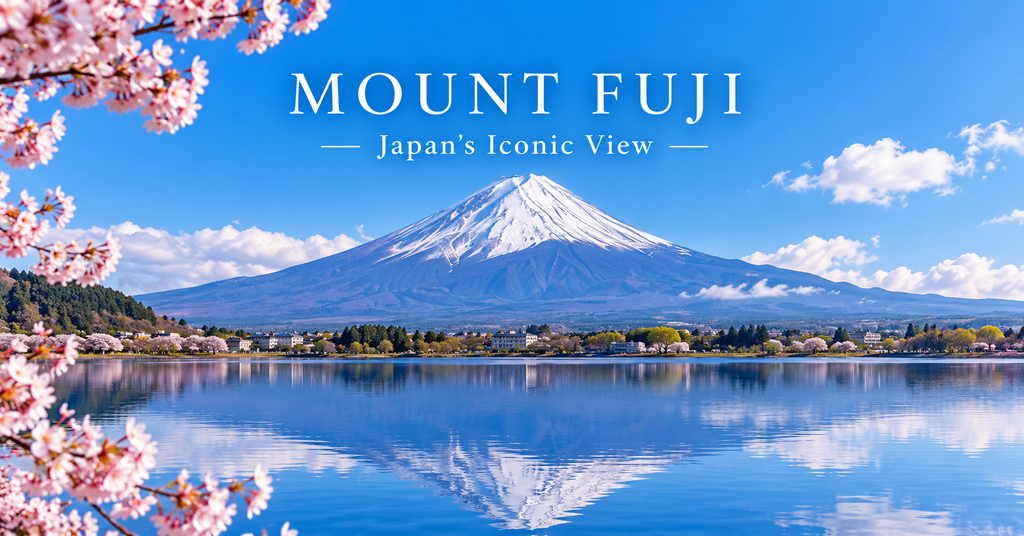
The Most Iconic Scenic View in Japan
At 3,776 meters, Mount Fuji is the highest mountain in Japan and one of the country’s most recognizable symbols.
What makes Mount Fuji especially interesting for travelers is that you do not have to climb it to enjoy the scenery.
In fact, some of the most famous views of Mount Fuji can be seen from towns, lakes, parks, and observation points around the mountain.
Where Can You See the Best Views of Mount Fuji?
Lake Kawaguchi is one of the most popular places to see Mount Fuji. On calm days, the mountain may even reflect on the surface of the lake, creating the famous view known as Sakasa Fuji, or “Upside-Down Fuji.”
Arakurayama Sengen Park is another famous viewpoint. From the higher part of the park, visitors can photograph Mount Fuji together with the Chureito Pagoda. During spring, cherry blossoms can make the scenery even more impressive.
Another option is simply to explore the Fuji Five Lakes area, where the appearance of the mountain changes depending on your location, the weather, and the season.
Mount Fuji and the surrounding area can also be visited from Tokyo. If you are planning to use Tokyo as your base, see our guide to the best day trips from Tokyo.
Do You Need to Climb Mount Fuji?
No. Climbing Mount Fuji and sightseeing around Mount Fuji are completely different experiences.
For most first-time travelers who mainly want beautiful photos and relaxed sightseeing, staying around Lake Kawaguchi or another Fuji Five Lakes destination is much easier than climbing the mountain.
If you do plan to climb Mount Fuji, remember that climbing routes are seasonal and official rules, fees, reservations, and access conditions can change.
Travel Tip: Mount Fuji can disappear behind clouds even when the weather elsewhere looks good. If seeing the mountain is one of the main reasons for your trip, avoid planning your entire visit around only one short viewing window.
For sightseeing information, visit the official JNTO Mount Fuji travel guide.
If you plan to climb the mountain, check the official Mount Fuji climbing website for the latest rules and conditions.
Mount Omuro, Shizuoka
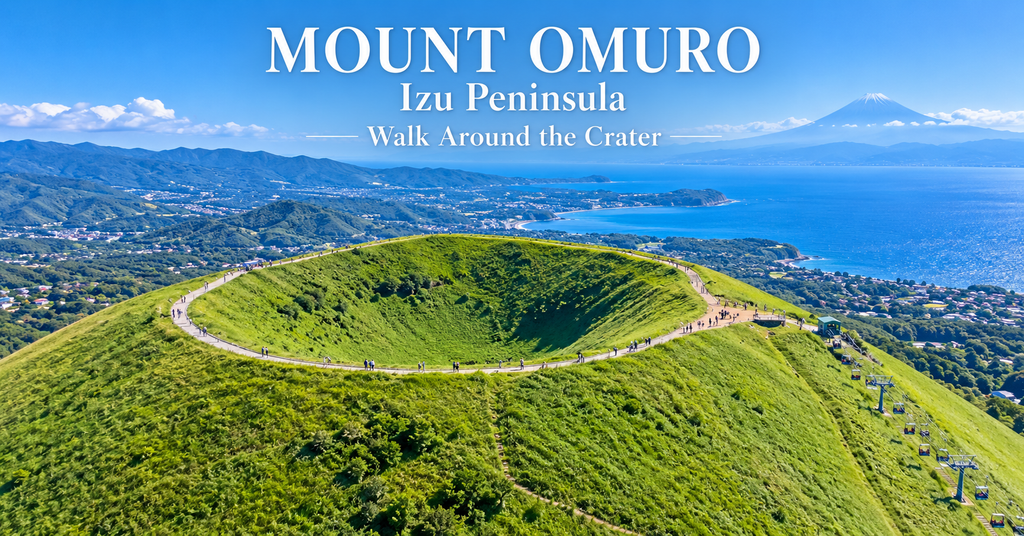
A Volcanic Crater You Can Walk Around
Mount Omuro is a 580-meter-high volcano on the Izu Peninsula in Shizuoka Prefecture.
Its smooth, rounded shape makes it look very different from many other mountains in Japan.
At the summit is a volcanic crater measuring about 300 meters across. A walking path circles the crater for roughly one kilometer, allowing visitors to enjoy panoramic views in almost every direction.
The walk around the crater usually takes about 20 to 30 minutes, but you may want to spend longer because there are many places to stop for photos.
On a clear day, you can see parts of the Izu Peninsula, the Izu Islands, surrounding mountains, and even Mount Fuji.
You Cannot Hike Up Mount Omuro
This is one detail that surprises many international visitors.
Although Mount Omuro looks like an easy mountain to hike, visitors are not allowed to walk up the mountainside.
Mount Omuro is designated as a national natural monument, and walking directly up the mountain is prohibited to protect the landscape. Visitors use the chairlift to reach the summit instead.
The lift ride itself is part of the experience and gives you an open view as you travel up the grassy mountainside.
How to Get to Mount Omuro
Buses travel to the Mount Omuro area from both Ito Station and Izu-Kogen Station. Get off near the Mount Omuro Lift and take the chairlift to the summit.
Travel Tip: The crater walk is very exposed to the weather. Strong wind, rain, fog, or other conditions can affect lift operations and access to the walking path, so check the operating status before traveling there.
For current lift hours, prices, weather-related closures, and access information, visit the official Mount Omuro website.
Irabu Bridge, Okinawa
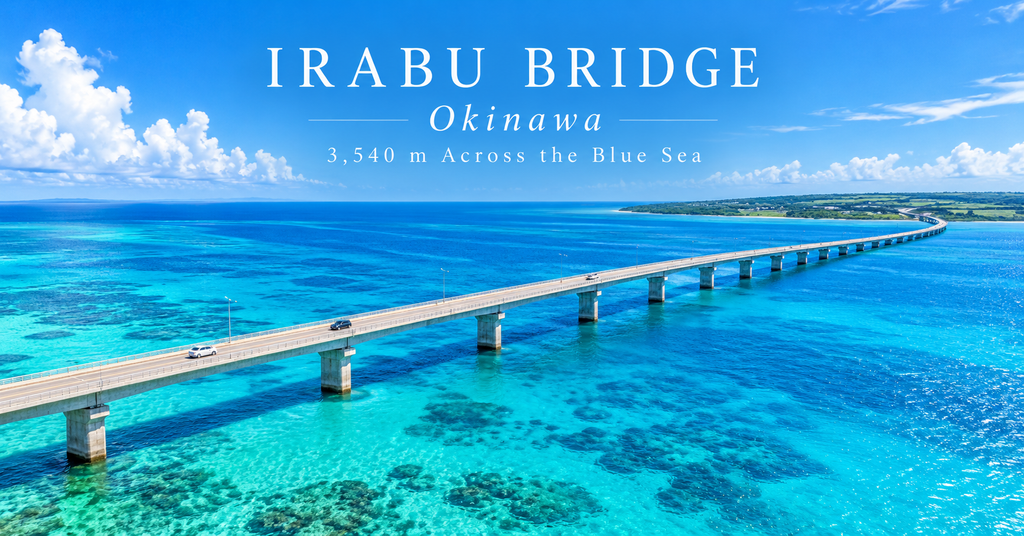
A Scenic Drive Across the Blue Sea
Irabu Bridge connects Miyako Island with Irabu Island in Okinawa.
The bridge is 3,540 meters long and is known as the longest bridge in Japan that can be crossed without paying a toll.
Unlike the mountain and forest scenery found in other parts of Japan, the main attraction here is the tropical ocean.
On sunny days, the shallow sea around Miyako and Irabu islands can appear in vivid shades of turquoise, emerald, and deep blue. The long bridge running across this water creates one of the most distinctive scenic drives in Japan.
The experience is especially memorable because the bridge rises and falls as it crosses the sea, giving passengers changing views of the surrounding water.
Do Not Stop on Irabu Bridge for Photos
It may be tempting to stop when you see the ocean from the bridge, but travelers should not park or stop on the bridge to take photos.
Instead, use designated parking areas and viewpoints near the ends of the bridge. This is safer and also gives you a better opportunity to photograph the full bridge with the sea in the background.
After crossing to Irabu Island, you can continue exploring beaches, observation points, and nearby Shimoji Island.
Travel Tip: A rental car is one of the easiest ways to explore the Miyako Islands because attractions are spread across several islands and public transportation is limited compared with major Japanese cities.
For more information about Irabu Island and the surrounding area, visit the official Okinawa travel guide.
Which Scenic Spot in Japan Should You Choose?
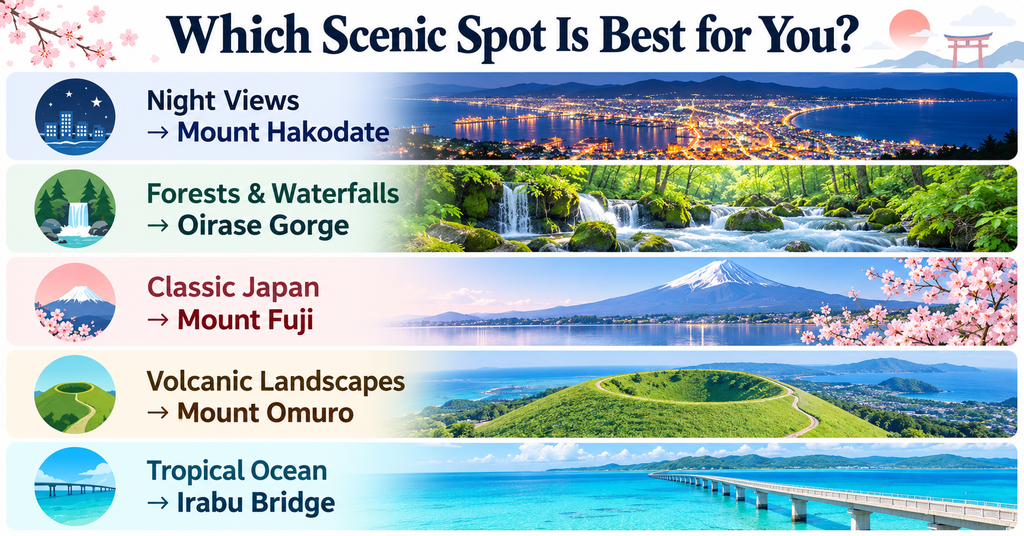
The best destination depends on what kind of scenery you want to experience.
If you love city lights and night photography, Mount Hakodate is the strongest choice.
If you prefer forests, waterfalls, and peaceful walking trails, choose Oirase Gorge.
For the classic image of Japan, it is difficult to beat Mount Fuji.
If you want an easy outdoor experience with unusual volcanic scenery, Mount Omuro is a great addition to an Izu trip.
For tropical scenery and a relaxing island road trip, Irabu Bridge offers a completely different side of Japan.
Travelers looking for quieter and more unusual natural destinations should also see our guide to hidden and mystical places in Japan.
Best Scenic Spots in Japan FAQ
What Is the Most Famous Scenic Spot in Japan?
Mount Fuji is probably Japan’s most internationally recognizable natural landmark. However, the best viewing experience often comes from seeing the mountain from surrounding locations such as Lake Kawaguchi rather than from the mountain itself.
Which Scenic Spot Is Best for a First Trip to Japan?
Mount Fuji is usually the easiest choice for first-time travelers because the surrounding Fuji Five Lakes area can be combined with Tokyo and other popular destinations.
Mount Omuro can also work well for travelers adding the Izu Peninsula to their itinerary.
Where Can I See Beautiful Nature Away From Tokyo and Kyoto?
Oirase Gorge in Aomori is an excellent choice for travelers interested in forests, waterfalls, hiking, and seasonal scenery.
For tropical landscapes, the Miyako Islands in Okinawa offer clear water, beaches, and scenic bridges that look completely different from mainland Japan.
Are These Scenic Spots Open All Year?
The landscapes themselves may be accessible for much of the year, but transportation and facilities can be seasonal.
Weather can affect the Mount Hakodate Ropeway and road access, buses around Oirase Gorge operate differently in winter, Mount Omuro’s lift may close because of strong wind or bad weather, and Okinawa can experience severe weather and typhoons.
Always check official information shortly before your visit.
What Are the Three Views of Japan?
The traditional “Three Views of Japan,” or Nihon Sankei, are Matsushima in Miyagi, Amanohashidate in Kyoto Prefecture, and Miyajima in Hiroshima Prefecture.
They are different from the five destinations in this guide because the Three Views are a historical group of famous Japanese landscapes rather than a modern list of recommended scenic destinations.
You can learn more in our complete guide to the Three Views of Japan.
Final Tips for Visiting Japan’s Best Scenic Spots
Japan’s scenery changes dramatically from region to region.
In one trip, you can see snow-covered mountains, deep green forests, volcanic landscapes, historic city views, and tropical blue seas.
You do not need to visit every famous viewpoint. Choose one or two scenic destinations that fit naturally into your itinerary and give yourself enough time to enjoy them without rushing.
Weather is also important. Mountains may be hidden by clouds, lifts can stop because of strong wind, and seasonal transportation may change. Checking official information shortly before your visit can help you avoid unnecessary problems.
Whether you choose the lights of Mount Hakodate, the forests of Oirase Gorge, the iconic shape of Mount Fuji, the crater of Mount Omuro, or the blue sea around Irabu Bridge, each destination shows a completely different side of Japan.