Best Shrines in Japan: 5 Popular Shrines for International Visitors
Japan has thousands of Shinto shrines, ranging from small neighborhood sanctuaries to world-famous landmarks visited by travelers from around the globe.
For first-time visitors, however, choosing which shrines to include in a Japan itinerary can be difficult.
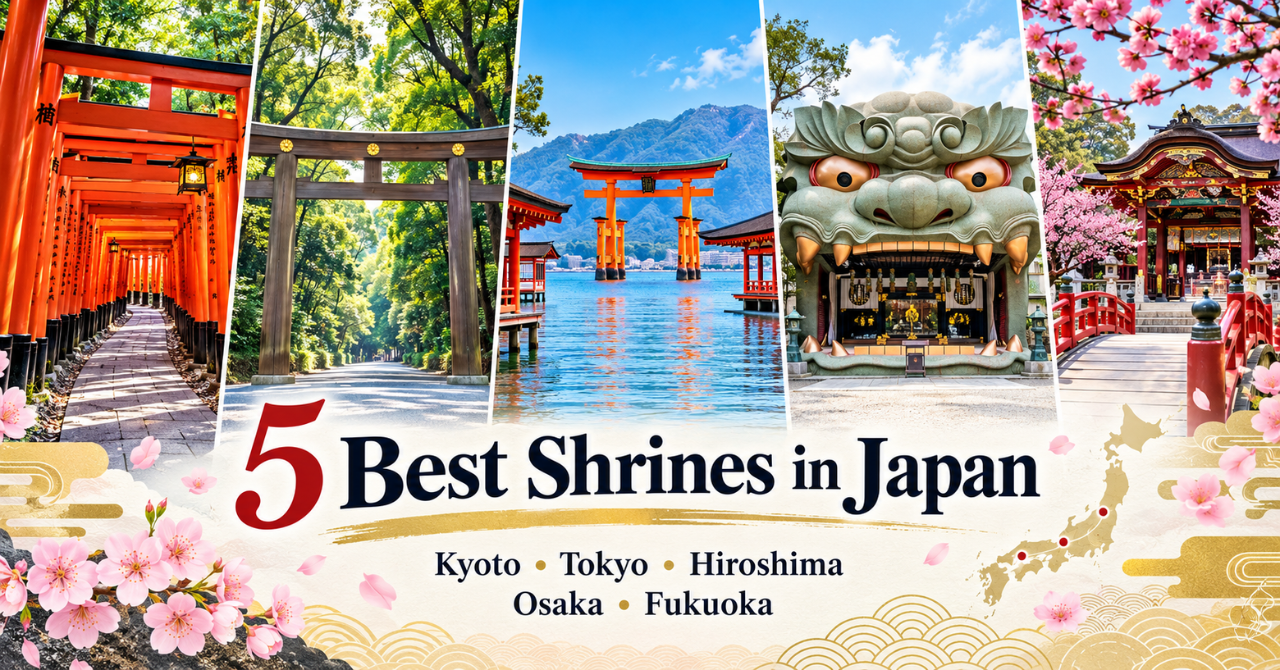
In this guide, we introduce five of the best shrines in Japan for international visitors, including famous torii gates, peaceful forest paths, unique architecture, and important cultural sites.
The five shrines were selected with reference to a 2024 analysis of foreign-language Google Maps reviews of shrines across Japan. Rather than focusing only on rankings, this guide explains what makes each shrine special, how to get there, and what travelers should know before visiting.
If this is your first time visiting a Japanese shrine, you may also want to read our guide to Japanese etiquette for tourists before your trip.
- 5 Best Shrines in Japan at a Glance
- Fushimi Inari Taisha, Kyoto
- Meiji Jingu, Tokyo
- Itsukushima Shrine, Hiroshima
- Namba Yasaka Shrine, Osaka
- Dazaifu Tenmangu, Fukuoka
- Basic Shrine Etiquette for Travelers
- Which Shrine in Japan Should You Visit?
- Best Shrines in Japan FAQ
- Final Tips for Visiting Japan’s Best Shrines
5 Best Shrines in Japan at a Glance
| Shrine | Location | Best For |
|---|---|---|
| Fushimi Inari Taisha | Kyoto | Thousands of red torii gates |
| Meiji Jingu | Tokyo | Peaceful forest atmosphere |
| Itsukushima Shrine | Hiroshima | Floating torii and island scenery |
| Namba Yasaka Shrine | Osaka | Unique giant lion-head building |
| Dazaifu Tenmangu | Fukuoka | Learning, history, and seasonal flowers |
These shrines are located in different parts of Japan, so you do not need to visit all five on one trip.
Instead, choose the shrines that fit naturally into the cities and regions you plan to visit. If you are still deciding where to go, see our guide to the best cities to visit in Japan.
Fushimi Inari Taisha, Kyoto
Walk Through Kyoto’s Famous Red Torii Gates
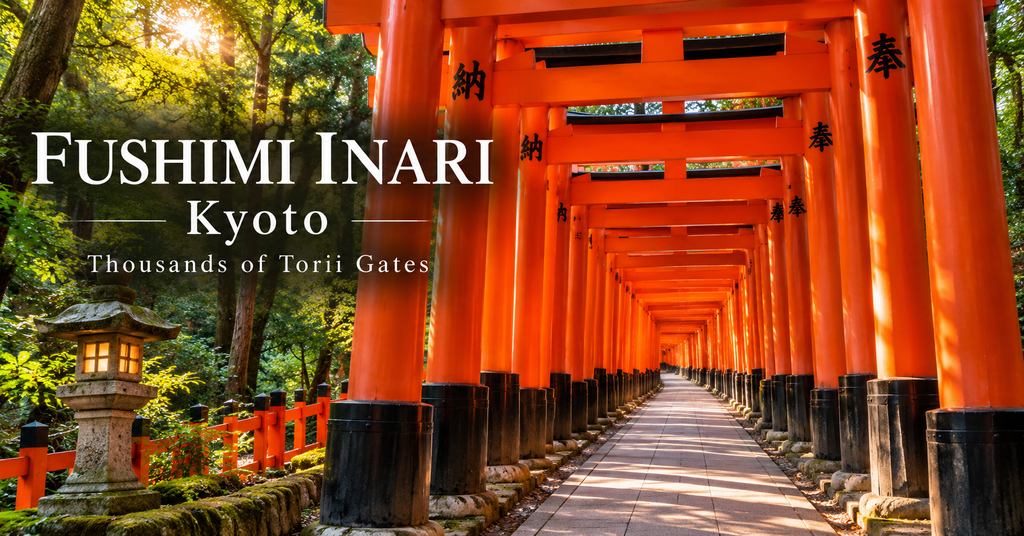
Fushimi Inari Taisha is one of the most recognizable shrines in Japan.
Located in southern Kyoto, the shrine is famous for the long pathways of vermilion torii gates that climb Mount Inari.
Fushimi Inari is the head shrine of Inari shrines across Japan and has a history dating back to 711.
The most famous section is the Senbon Torii, where rows of closely spaced red gates create tunnel-like paths through the forest.
Many visitors only walk through the first sections of the torii gates, but the shrine grounds continue much farther up Mount Inari.
How Long Should You Spend at Fushimi Inari?
If you only want to see the main shrine buildings and the most famous torii gates, around one hour may be enough.
If you want to explore farther up Mount Inari, allow two hours or more depending on how far you walk.
One useful thing to know is that the paths usually become quieter as you continue farther away from the main entrance.
How to Get to Fushimi Inari
Fushimi Inari Taisha is very easy to reach from central Kyoto.
JR Inari Station is located directly beside the shrine and is only about five minutes from Kyoto Station on the JR Nara Line.
Fushimi-inari Station on the Keihan Main Line is also about a five-minute walk away.
Travel Tip: Fushimi Inari can become extremely busy. Visiting early in the morning is one of the easiest ways to enjoy a quieter atmosphere.
Remember that this is an active place of worship. Avoid blocking narrow paths while taking photographs and follow any signs or instructions around sacred areas.
For official visitor information, see the Fushimi Inari Taisha official website.
If you are planning a longer stay in Kyoto, see our guide to the top places to visit in Kyoto.
Meiji Jingu, Tokyo
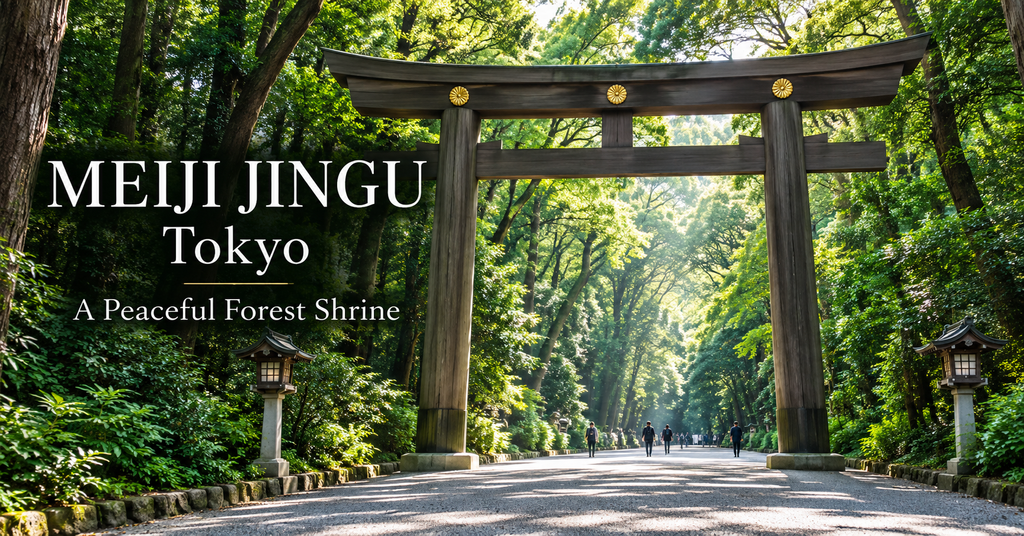
A Peaceful Shrine in the Center of Tokyo
Meiji Jingu is one of the easiest major shrines to visit during a trip to Tokyo.
The shrine is located beside Harajuku and not far from Shibuya, yet the atmosphere changes almost immediately after you pass through the large torii gate.
Meiji Jingu is surrounded by a forest covering around 70 hectares, creating a surprisingly peaceful environment in the middle of one of the world’s largest cities.
The shrine was established in 1920 and is dedicated to Emperor Meiji and Empress Shoken.
What Makes Meiji Jingu Special?
For many international visitors, the contrast between busy Harajuku and the quiet forest is part of the experience.
You can walk along wide gravel paths under tall trees before reaching the main shrine area.
You may also see traditional Shinto ceremonies or weddings during your visit, although visitors should always keep a respectful distance.
How to Get to Meiji Jingu
Meiji Jingu has several entrances and can be accessed from stations including Harajuku, Meiji-jingumae, Yoyogi, and Sangubashi.
Keep in mind that reaching the entrance does not mean you have reached the main shrine. From some entrances, the walk to the main sanctuary takes at least another 10 minutes.
Travel Tip: Photography is allowed in many areas, but the shrine officially prohibits photography and video directly in front of the main sanctuary where people are praying.
The shrine opens around sunrise and closes around sunset, so opening hours change depending on the season.
Check the official Meiji Jingu website before visiting.
Itsukushima Shrine, Hiroshima
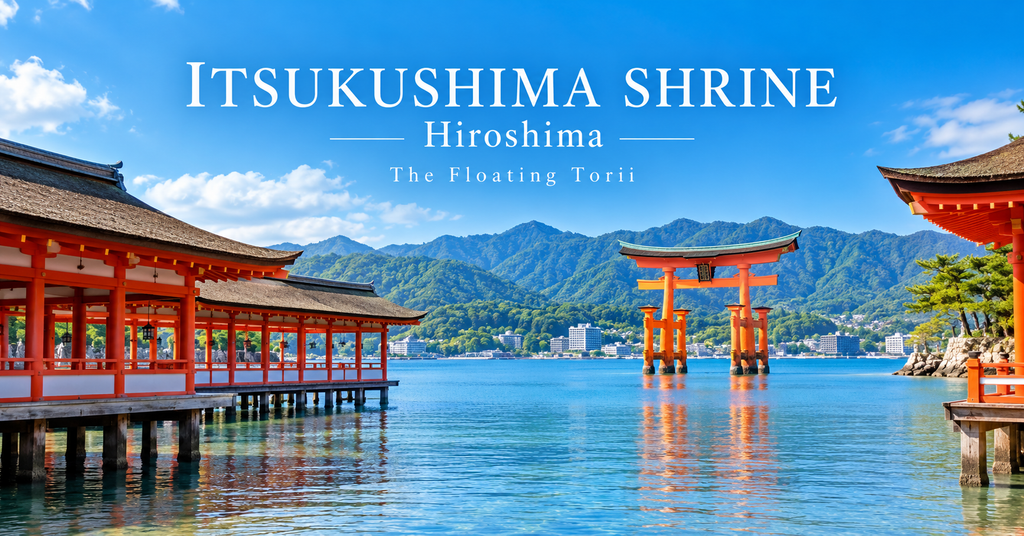
Japan’s Famous Floating Torii Gate
Itsukushima Shrine is located on Miyajima Island in Hiroshima Prefecture and is one of Japan’s most famous coastal landmarks.
The shrine is especially known for its enormous red torii gate standing in the sea.
At high tide, the torii appears to float on the water, while at lower tide the landscape looks completely different.
Itsukushima Shrine was registered as a UNESCO World Heritage Site in 1996 and is considered one of Japan’s most important historic shrine complexes.
Check the Tide Before You Visit
The tide has a major effect on the experience at Itsukushima Shrine.
At high tide, water surrounds much of the shrine and creates the famous floating appearance.
At low tide, the water retreats and visitors may be able to see the torii from a completely different perspective.
If Itsukushima Shrine is one of the highlights of your trip, checking the local tide times before visiting can help you decide what kind of scenery you want to see.
How to Get to Itsukushima Shrine
From Hiroshima Station, take the JR Sanyo Line to Miyajimaguchi Station. The train journey takes around 30 minutes.
From Miyajimaguchi, walk to the ferry terminal and take a ferry to Miyajima Island. The ferry ride takes around 10 minutes.
Travel Tip: The wooden corridors inside the shrine have small gaps between the floorboards. The shrine recommends comfortable shoes, and high heels may become caught in the gaps.
For current opening hours, admission fees, and access information, visit the official Itsukushima Shrine website.
Itsukushima is also included among Japan’s most famous torii gates. You can learn more in our guide to the Three Great Torii Gates of Japan.
Namba Yasaka Shrine, Osaka
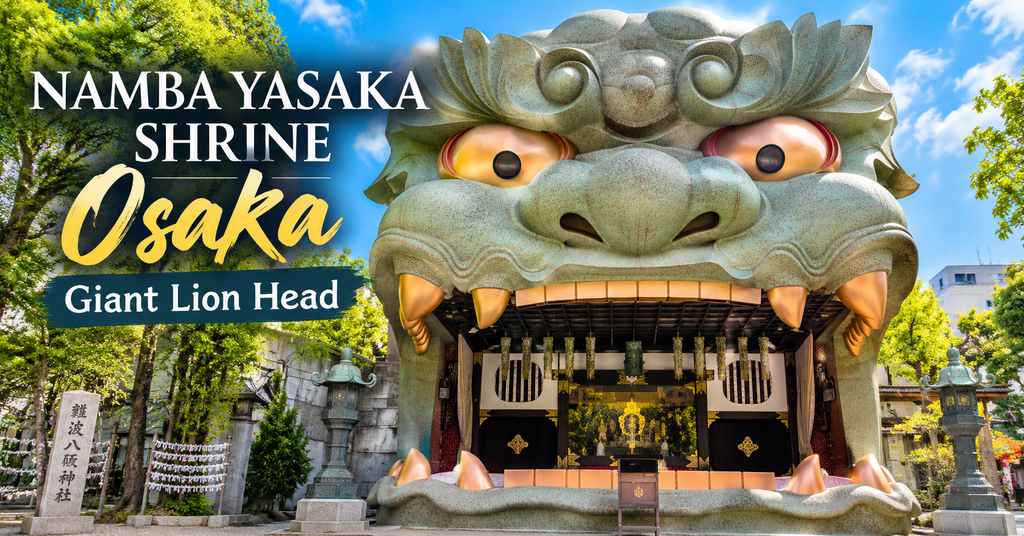
One of Osaka’s Most Unique Shrines
Namba Yasaka Shrine looks very different from most of the shrines on this list.
Its most famous feature is an enormous lion-head-shaped building known as the Shishi-den or Lion Hall.
The dramatic structure is approximately 12 meters high, 11 meters wide, and 10 meters deep.
The giant open mouth is traditionally associated with swallowing evil spirits and bringing good fortune.
For international travelers, it is one of the most visually unusual shrine buildings you can easily visit in a major Japanese city.
Easy to Combine With Namba and Dotonbori
Namba Yasaka Shrine is located only a short walk from the busy Namba area.
This means you can easily combine the shrine with shopping, restaurants, Dotonbori, Kuromon Market, or other attractions in central Osaka.
The shrine itself is relatively compact, so you do not need several hours to visit.
Travel Tip: Because the grounds are much smaller than Fushimi Inari or Meiji Jingu, Namba Yasaka works particularly well as a short cultural stop during an Osaka sightseeing day.
Admission to the shrine grounds is free.
For current visitor information, see the official Osaka tourism information for Namba Yasaka Shrine.
Dazaifu Tenmangu, Fukuoka
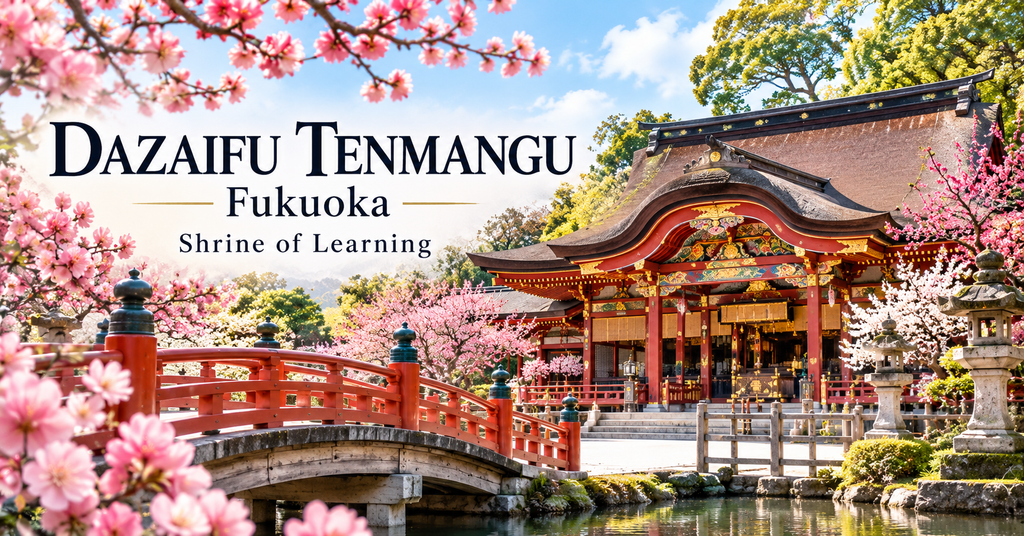
The Shrine of Learning and Culture
Dazaifu Tenmangu is one of the most important shrines in Kyushu and one of the best day trips from Fukuoka.
The shrine is dedicated to Sugawara Michizane, a scholar and politician who became associated with Tenjin, the Shinto deity of learning, culture, and the arts.
Because of this connection, many Japanese students visit Tenmangu shrines to pray for success in school and examinations.
This may be an interesting cultural detail for international visitors: during exam season, you may see many ema wooden plaques containing wishes from students.
Dazaifu Tenmangu’s Main Hall Reopened in 2026
Dazaifu Tenmangu’s historic main hall underwent a major renovation beginning in 2023.
The restoration was completed in 2026, and worship in front of the restored main hall resumed in September 2026.
This means travelers can once again see and pray in front of the renovated main sanctuary.
Plum Blossoms and Umegae Mochi
Dazaifu Tenmangu is especially famous for plum blossoms, which are closely connected with Sugawara Michizane.
The shrine grounds contain thousands of plum trees, making late winter and early spring a particularly beautiful time to visit.
Another part of the experience is walking along the approach from Dazaifu Station.
The street is lined with shops and cafes, many selling umegae mochi, a grilled rice cake filled with sweet red bean paste that is strongly associated with Dazaifu.
How to Get to Dazaifu Tenmangu
Dazaifu is an easy side trip from central Fukuoka.
From the Tenjin area, trains can reach Dazaifu in around 30 minutes depending on the service and transfer.
Dazaifu Tenmangu is about a five-minute walk from Nishitetsu Dazaifu Station.
Travel Tip: If you enjoy photography, consider visiting earlier in the day. The approach and shrine grounds are usually quieter before the busiest sightseeing hours.
For the latest access, opening hours, events, and shrine information, visit the official Dazaifu Tenmangu website.
Basic Shrine Etiquette for Travelers
Japanese shrines are tourist attractions, but they are also active religious sites.
You do not need to memorize every Shinto custom before visiting, but a few simple rules will help you enjoy the experience respectfully.
- Bow slightly before passing through a torii gate if you wish to follow traditional etiquette.
- Avoid blocking the center of busy pathways or shrine entrances for photographs.
- Keep your voice down around people who are praying.
- Check signs before taking photos near the main sanctuary.
- Do not enter restricted areas.
- Follow the rules displayed at each individual shrine.
At many shrines, the common prayer sequence is:
Two bows → Two claps → Prayer → One bow
However, practices can differ between shrines, so local instructions should always take priority.
For a more complete explanation, read our Japanese etiquette guide for tourists.
Which Shrine in Japan Should You Visit?
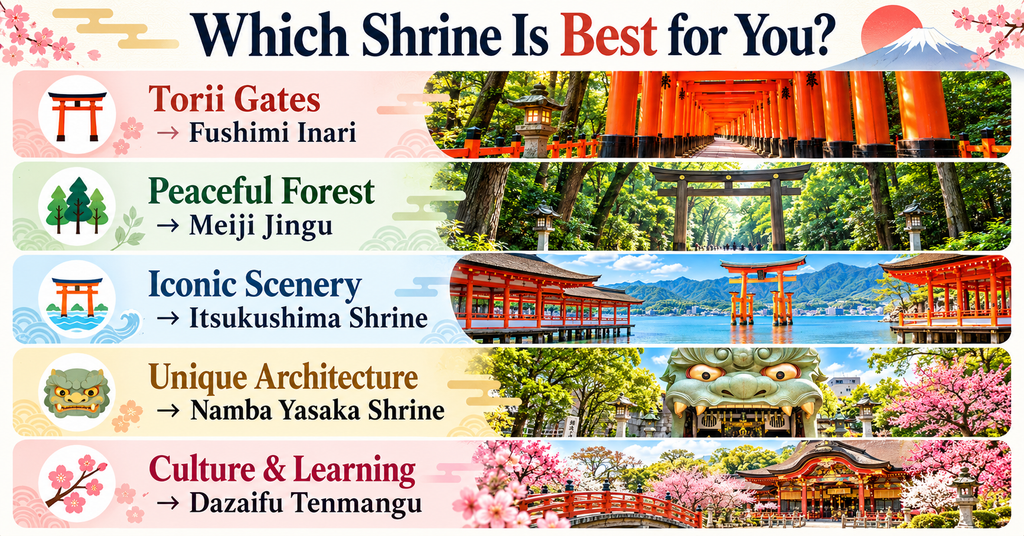
The best shrine for your trip depends on your itinerary and what kind of experience you want.
Choose Fushimi Inari Taisha if you want Japan’s most famous red torii gate experience.
Choose Meiji Jingu if you are staying in Tokyo and want a peaceful cultural experience without leaving the city.
Choose Itsukushima Shrine if you want dramatic scenery, a UNESCO World Heritage Site, and one of Japan’s most iconic torii gates.
Choose Namba Yasaka Shrine if you want something unusual and easy to combine with sightseeing in central Osaka.
Choose Dazaifu Tenmangu if you are visiting Fukuoka and want to experience shrine culture, history, seasonal flowers, and local food in one trip.
Best Shrines in Japan FAQ
What Is the Most Famous Shrine in Japan?
Fushimi Inari Taisha in Kyoto is one of the most internationally recognizable shrines in Japan because of its long pathways of red torii gates.
Meiji Jingu in Tokyo and Itsukushima Shrine in Hiroshima are also extremely well known among international visitors.
What Is the Difference Between a Shrine and a Temple in Japan?
A shrine is associated with Shinto, while a temple is associated with Buddhism.
One of the easiest visual differences is that Shinto shrines commonly have torii gates at their entrances.
Worship customs also differ. At shrines, clapping is often part of the prayer ritual, while visitors generally do not clap when praying at Buddhist temples.
Are Japanese Shrines Free to Visit?
Many shrine grounds are free to enter, including Fushimi Inari Taisha, Meiji Jingu, Namba Yasaka Shrine, and Dazaifu Tenmangu.
However, some shrines or special areas require admission fees. Itsukushima Shrine, for example, charges admission to enter the shrine complex.
Museums, gardens, treasure halls, and special exhibitions may also require separate tickets.
Can Tourists Pray at Japanese Shrines?
Yes. International visitors are welcome to visit and pray at Shinto shrines regardless of their religious background.
You can also participate in common shrine experiences such as drawing an omikuji fortune, writing a wish on an ema plaque, receiving an omamori amulet, or collecting a goshuin shrine seal where available.
Can You Take Photos at Japanese Shrines?
Photography is often allowed in outdoor areas, but rules vary between shrines.
Some locations prohibit photography near the main sanctuary, sacred objects, ceremonies, or prayer areas.
Always check signs before taking photos and avoid interfering with people who are worshipping.
Final Tips for Visiting Japan’s Best Shrines
You do not need to visit dozens of shrines to experience Shinto culture in Japan.
A few carefully chosen shrines can show you very different sides of the country.
Fushimi Inari offers mountain paths covered with torii gates. Meiji Jingu provides a quiet forest in central Tokyo. Itsukushima combines history with dramatic coastal scenery. Namba Yasaka offers unusual architecture, while Dazaifu Tenmangu connects spirituality with learning, seasonal nature, and local culture.
When visiting, remember that these places are not only sightseeing attractions. They are sacred spaces where people continue to pray, celebrate festivals, and participate in traditions that have been passed down for generations.
Visit respectfully, follow local rules, and take enough time to experience more than just the famous photo spot.