Journey Through Japan’s World Natural Heritage Sites

Japan is home to five UNESCO World Natural Heritage Sites, each protecting a very different part of the country’s natural environment.
From the ancient cedar forests of Yakushima and the untouched beech forests of Shirakami-Sanchi to the wild landscapes of Shiretoko and the subtropical islands of southern Japan, these places show a side of Japan that is very different from its famous cities and temples.
In this guide, we introduce all five World Natural Heritage Sites in Japan, what makes each one special, what travelers can experience there, and some practical tips for planning your visit.
From a Local Perspective: Japan’s World Natural Heritage sites are spread across very different environments, from subtropical islands to northern forests. Access can take much longer than the map suggests, so transportation planning is part of the experience.
- What Are the 5 World Natural Heritage Sites in Japan?
- Yakushima – Ancient Cedar Forests in Kagoshima
- Shirakami-Sanchi – One of Japan’s Great Beech Forests
- Shiretoko – Wild Nature in Hokkaido
- Ogasawara Islands – Japan’s Remote Subtropical Islands
- Amami-Oshima, Tokunoshima, Northern Okinawa and Iriomote
- Which World Natural Heritage Site Should You Visit?
- How to Visit Japan’s Natural Heritage Sites Responsibly
- Final Tips
What Are the 5 World Natural Heritage Sites in Japan?
Japan currently has five natural properties on the UNESCO World Heritage List.
| World Natural Heritage Site | Location | UNESCO Year | Best For |
|---|---|---|---|
| Yakushima | Kagoshima | 1993 | Ancient forests and hiking |
| Shirakami-Sanchi | Aomori & Akita | 1993 | Beech forests and quiet nature |
| Shiretoko | Hokkaido | 2005 | Wildlife and dramatic landscapes |
| Ogasawara Islands | Tokyo | 2011 | Remote islands and marine nature |
| Amami-Oshima, Tokunoshima, Northern Okinawa & Iriomote | Kagoshima & Okinawa | 2021 | Subtropical forests and rare wildlife |
Although all five are UNESCO natural heritage sites, the travel experience is very different at each one. Some are relatively easy to include in a Japan itinerary, while others require extra travel time and careful planning.
Yakushima – Ancient Cedar Forests in Kagoshima

Yakushima is a mountainous island south of Kyushu in Kagoshima Prefecture. It was one of Japan’s first natural sites to be added to the UNESCO World Heritage List in 1993.
The island is famous for its extremely wet climate, rich plant life, and ancient Japanese cedar trees known as Yakusugi. Some of these trees are more than 1,000 years old.
Why Yakushima Is a UNESCO World Heritage Site
Yakushima has an unusual ecosystem because its mountains rise from the subtropical coast to nearly 2,000 meters above sea level.
This creates several different vegetation zones within a relatively small island. Visitors can see subtropical plants near the coast, temperate forests at higher elevations, and alpine vegetation near the mountain peaks.
The ancient cedar forests are especially important. UNESCO recognizes Yakushima for both its outstanding natural scenery and its unique ecological system.
What to See in Yakushima
One of the most famous attractions is Jomon Sugi, a huge ancient cedar deep in the mountains. Reaching it requires a long hike, so travelers should prepare carefully and start early.
Shiratani Unsuikyo Ravine is another popular area. Its moss-covered forests, streams, and cedar trees create one of Yakushima’s most atmospheric landscapes.
Even travelers who do not want to take a long hike can enjoy waterfalls, coastal scenery, beaches, forests, and shorter walking trails around the island.
Access and Travel Tips
Yakushima can be reached from Kagoshima by plane or boat. Flights are also available from some other cities depending on the season and schedule.
Public buses operate on the island, but services are limited compared with major Japanese cities. Renting a car can make exploring the island much easier.
Yakushima receives a large amount of rain throughout the year, especially in the mountains. Bring waterproof clothing, proper walking shoes, and enough water if you plan to hike.
Weather conditions can change quickly, so always check local trail and transportation information before heading into the mountains.
Shirakami-Sanchi – One of Japan’s Great Beech Forests
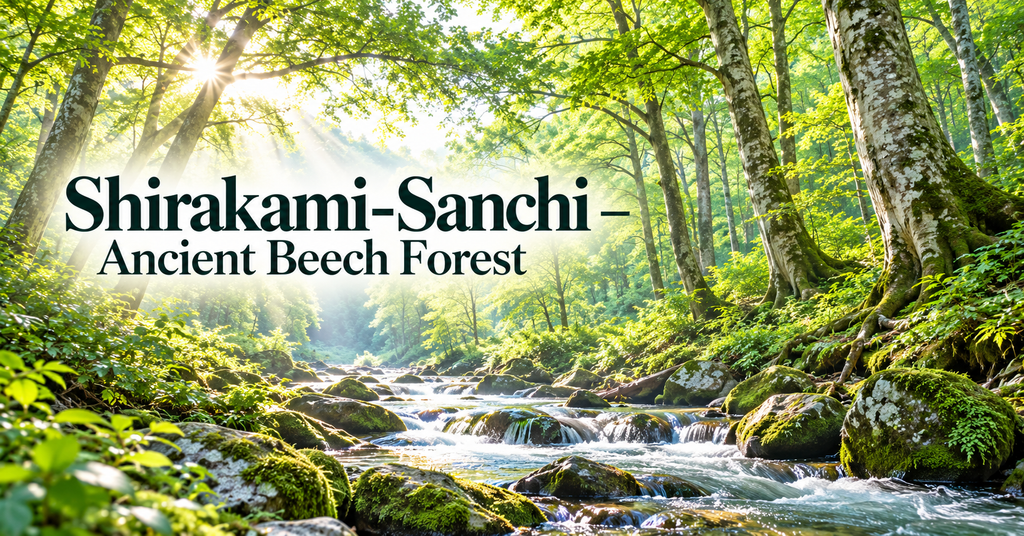
Shirakami-Sanchi stretches across Aomori and Akita prefectures in northern Japan. Together with Yakushima, it became one of Japan’s first UNESCO World Natural Heritage Sites in 1993.
The area protects an extensive natural forest dominated by Siebold’s beech trees and is known for its quiet mountain scenery and relatively untouched environment.
Why Shirakami-Sanchi Is Special
Large areas of natural beech forest once existed across northern Japan, but many disappeared through development and forestry.
Shirakami-Sanchi preserves an important ecosystem where forests, mountains, rivers, animals, and plants continue to exist with relatively little human disturbance.
The protected area is especially valuable because it provides habitat for many species and preserves an example of the natural forests that once covered much more of northern Japan.
What to See in Shirakami-Sanchi
Travelers can explore hiking routes, forests, waterfalls, mountain viewpoints, and lakes around the Shirakami area.
Some areas are suitable for casual walking, while others require proper hiking equipment and experience.
The scenery changes dramatically with the seasons. Fresh green forests appear in spring and early summer, while autumn brings colorful leaves across the mountains.
Access and Travel Tips
Shirakami-Sanchi covers a large area, so your access route depends on which part you want to visit.
Hirosaki in Aomori is one common gateway. Buses can take visitors toward the Shirakami-Sanchi Visitor Center and nearby areas, although public transportation becomes limited deeper in the mountains.
Some trails and roads may close because of snow, weather, or natural conditions. Before visiting, check the latest local information and choose a trail that matches your experience level.
Visitors should also take all garbage home and avoid feeding or disturbing wildlife.
Shiretoko – Wild Nature in Hokkaido
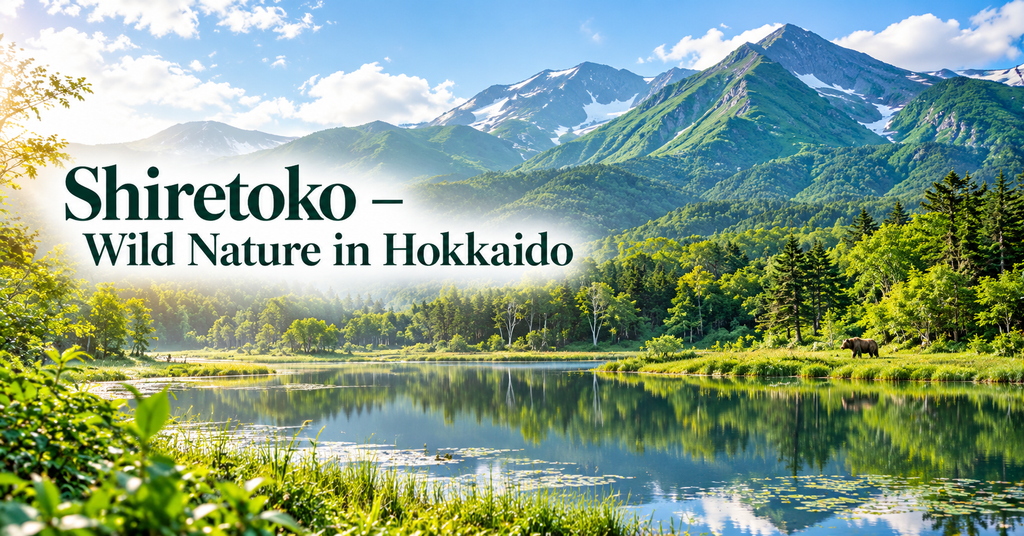
Shiretoko is located on a remote peninsula in northeastern Hokkaido and became a UNESCO World Natural Heritage Site in 2005.
It is one of the best places in Japan to experience large-scale wilderness, with mountains, forests, lakes, cliffs, the Sea of Okhotsk, and a rich variety of wildlife.
Why Shiretoko Is a UNESCO World Heritage Site
One of the most important features of Shiretoko is the close connection between its marine and land ecosystems.
Seasonal sea ice reaches the coast during winter and supports a highly productive marine environment. This marine ecosystem is closely connected to the wildlife and forests on land.
The peninsula is home to animals including brown bears, deer, rare birds, marine mammals, and many species of fish.
What to See in Shiretoko
Shiretoko Five Lakes is one of the area’s best-known attractions. Visitors can enjoy views of forests, mountains, and lakes from walking routes and elevated boardwalks.
Boat cruises offer another way to see the dramatic coastline, waterfalls, cliffs, and wildlife from the sea.
Winter brings a completely different experience when drift ice reaches the Sea of Okhotsk. Wildlife watching and seasonal tours are also popular throughout the year.
Access and Travel Tips
Memanbetsu Airport is one of the most convenient airports for reaching the western side of Shiretoko. Utoro is a common base for exploring the national park.
Public transportation is limited, so renting a car or joining a guided tour can make travel easier. If you plan to drive in Hokkaido, see our complete guide to renting a car in Japan before your trip.
Shiretoko is also brown bear habitat. Never approach or feed wild animals, and always follow local safety instructions.
Some roads, walking routes, and facilities operate only seasonally, especially because of winter snow. Check current conditions before visiting.
Transportation and seasonal road conditions can change, so check the official Shiretoko National Park access guide before your visit.
Ogasawara Islands – Japan’s Remote Subtropical Islands

The Ogasawara Islands are a remote group of islands in the Pacific Ocean about 1,000 kilometers south of central Tokyo.
Although they are officially part of Tokyo, reaching them feels very different from visiting the capital. The islands became a UNESCO World Natural Heritage Site in 2011.
Why the Ogasawara Islands Are Special
Because the islands developed far from Japan’s main landmass, many plants and animals evolved in isolation.
This created ecosystems with numerous species that are unique to the islands.
The surrounding ocean is also rich in marine life, making the Ogasawara Islands an interesting destination for travelers who enjoy both forests and the sea.
What to See and Do
Chichijima is the main island for most visitors and is a base for hiking, snorkeling, diving, kayaking, and boat tours.
Depending on the season, visitors may also have opportunities to see dolphins, whales, coral reefs, and other marine wildlife.
Hahajima offers an even quieter atmosphere and can be reached by boat from Chichijima.
Some protected areas can only be visited under specific rules or with licensed guides, helping to protect the fragile environment.
If you enjoy unusual natural landscapes, you may also like our guide to mystical places in Japan, which includes another look at the Ogasawara Islands and other hidden natural wonders.
Access and Travel Tips
There is no passenger airport serving the main Ogasawara Islands.
The main way to reach Chichijima is by ferry from Takeshiba Pier in Tokyo. The journey takes about 24 hours, and departures are not as frequent as ordinary domestic transportation.
Check the official Ogasawara access guide for the latest ferry schedule and travel information.
Because your trip depends heavily on the ferry schedule, you should plan accommodation, tours, and your return journey before leaving Tokyo.
Travelers should allow several days for an Ogasawara trip rather than trying to include it as a short side trip.
Amami-Oshima, Tokunoshima, Northern Okinawa and Iriomote

Japan’s newest World Natural Heritage Site was added to the UNESCO list in 2021.
It includes protected areas on Amami-Oshima Island, Tokunoshima Island, the northern part of Okinawa Island, and Iriomote Island.
Unlike the other four natural heritage sites, this is not one single destination. The four regions are spread across southern Japan, so travelers normally choose one or two areas rather than visiting all of them on the same short trip.
Why These Islands Became a World Heritage Site
These islands protect subtropical evergreen forests with exceptionally rich biodiversity.
The long geographical isolation of the islands allowed many species to evolve independently.
Rare animals include the Amami rabbit, Okinawa rail, and Iriomote cat, each closely associated with particular islands or regions.
UNESCO recognizes the area primarily for the importance of its habitats and the conservation of endemic and threatened species.
What Travelers Can Experience
On Amami-Oshima, travelers can explore subtropical forests, mangrove areas, beaches, and local island culture.
Tokunoshima offers a quieter island experience with forests, dramatic coastlines, and habitats for rare wildlife.
Northern Okinawa, often known as the Yambaru area, is very different from the resort areas of southern Okinawa. Dense forests cover much of the region and provide habitat for the Okinawa rail and other endemic species.
Iriomote is famous for its mangrove rivers, subtropical forests, waterfalls, kayaking, and trekking.
Access and Travel Tips
Each region requires a different travel route.
Amami-Oshima can be reached by plane from major Japanese cities and by ferry from some locations. Tokunoshima is also accessible by air and sea.
Northern Okinawa is usually reached after flying to Naha and continuing north by rental car, bus, taxi, or tour.
To reach Iriomote, travelers normally fly to Ishigaki Island and then take a ferry.
Wildlife conservation is extremely important in all four regions. Drive carefully, especially at night, stay on designated routes, and follow local rules designed to protect rare animals and plants.
Which World Natural Heritage Site Should You Visit?
Each of Japan’s five natural World Heritage Sites offers a completely different experience.
| If You Want… | Consider Visiting |
|---|---|
| Ancient forests and serious hiking | Yakushima |
| Quiet forests away from major tourist areas | Shirakami-Sanchi |
| Wildlife and dramatic Hokkaido scenery | Shiretoko |
| A remote island adventure | Ogasawara Islands |
| Subtropical forests and rare wildlife | Amami, Tokunoshima, Northern Okinawa or Iriomote |
For travelers already visiting Kyushu, Yakushima can be easier to combine with an existing itinerary.
Shiretoko is a good choice for travelers planning a longer trip around Hokkaido, while the Ogasawara Islands are better for visitors who can dedicate several days to one remote destination.
The southern heritage islands are especially attractive for travelers who want to experience a side of Okinawa and southern Japan beyond beaches and large resorts.
How to Visit Japan’s Natural Heritage Sites Responsibly
World Natural Heritage status helps protect environments that are valuable not only to Japan but also to the world.
When visiting these areas, small actions can help reduce your impact.
- Stay on designated trails and walking routes.
- Do not feed or approach wild animals.
- Take your garbage with you.
- Do not collect plants, animals, rocks, or other natural objects.
- Follow local rules and temporary trail restrictions.
- Use local guides when required or recommended.
- Drive slowly in areas where rare wildlife may cross roads.
- Check weather and safety information before hiking.
Some areas have stricter rules than ordinary tourist destinations because they contain endangered species and fragile ecosystems. Always check the latest local information before your visit.
For official information about Japan’s protected natural heritage areas and conservation efforts, see the Ministry of the Environment’s World Natural Heritage guide.
Final Tips
Japan’s five World Natural Heritage Sites show just how diverse the country’s landscape can be.
Yakushima offers ancient cedar forests, Shirakami-Sanchi preserves vast beech forests, Shiretoko combines land and sea ecosystems, the Ogasawara Islands protect isolated island nature, and the southern heritage islands are home to rare subtropical wildlife.
These destinations generally require more planning than popular places such as Tokyo, Osaka, or Kyoto, but that is also part of what makes them special.
Choose a destination that matches your interests, allow enough travel time, check the latest transportation and weather information, and respect the natural environment during your visit.
With good preparation, Japan’s World Natural Heritage Sites can offer some of the most memorable nature experiences of your trip.
Looking for more beautiful landscapes? Explore our guide to the best scenic spots in Japan.