10 Best Hot Springs in Japan for First-Time Visitors
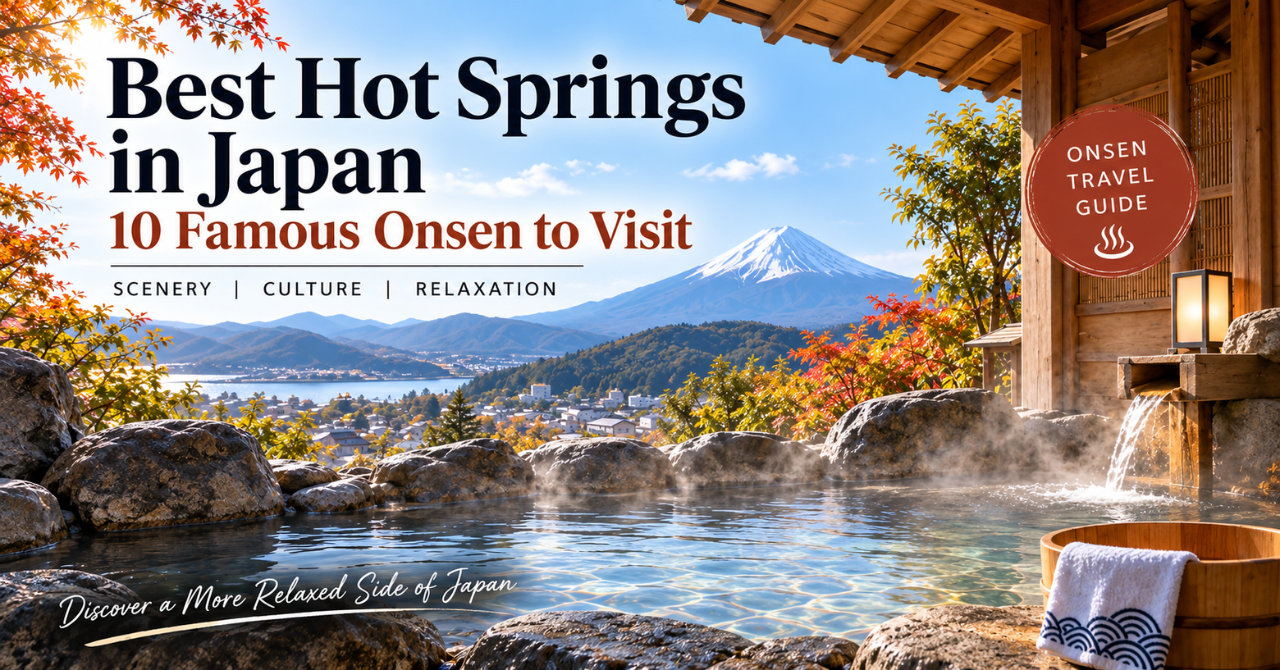
Looking for the best hot springs in Japan?
Japan has thousands of natural hot springs, known as onsen, spread across the country from Hokkaido in the north to Kyushu in the south.
For Japanese people, visiting an onsen is more than simply taking a bath. It is a chance to relax, enjoy beautiful scenery, stay at a traditional ryokan, and experience an important part of Japanese culture.
For international visitors, however, choosing an onsen can be difficult. Some hot spring towns are easy day trips from major cities, while others are worth traveling across Japan to experience.
In this guide, we introduce 10 of the best hot springs in Japan, including famous destinations such as Kusatsu, Hakone, Beppu, Kinosaki, and Noboribetsu.
We will also explain what makes each destination special, who it is best for, and what you should know before visiting a Japanese onsen for the first time.
Whether you want mountain scenery, a traditional hot spring town, unique mineral waters, or an easy escape from Tokyo, this guide will help you find an onsen that fits your trip.
- Best Hot Springs in Japan at a Glance
- Kusatsu Onsen – Gunma
- Hakone Onsen – Kanagawa
- Beppu Onsen – Oita
- Kinosaki Onsen – Hyogo
- Arima Onsen – Hyogo
- Noboribetsu Onsen – Hokkaido
- Dogo Onsen – Ehime
- Yufuin Onsen – Oita
- Gero Onsen – Gifu
- Ibusuki Onsen – Kagoshima
- Which Hot Spring in Japan Is Best for You?
- Best for First-Time Onsen Visitors: Hakone or Kusatsu
- Best for a Traditional Onsen Town Experience: Kinosaki
- Best for Travelers With Tattoos: Kinosaki
- Best for a Unique Experience: Ibusuki
- Best for Volcanic Scenery: Noboribetsu
- Best for History and Architecture: Dogo or Arima
- Best for a Relaxing Couple’s Trip: Yufuin
- Best for Exploring Different Hot Springs: Beppu
- Best for a Relaxing Traditional Stay: Gero
- What to Know Before Visiting a Japanese Onsen
- Can You Enter an Onsen With Tattoos?
- Final Thoughts
Best Hot Springs in Japan at a Glance
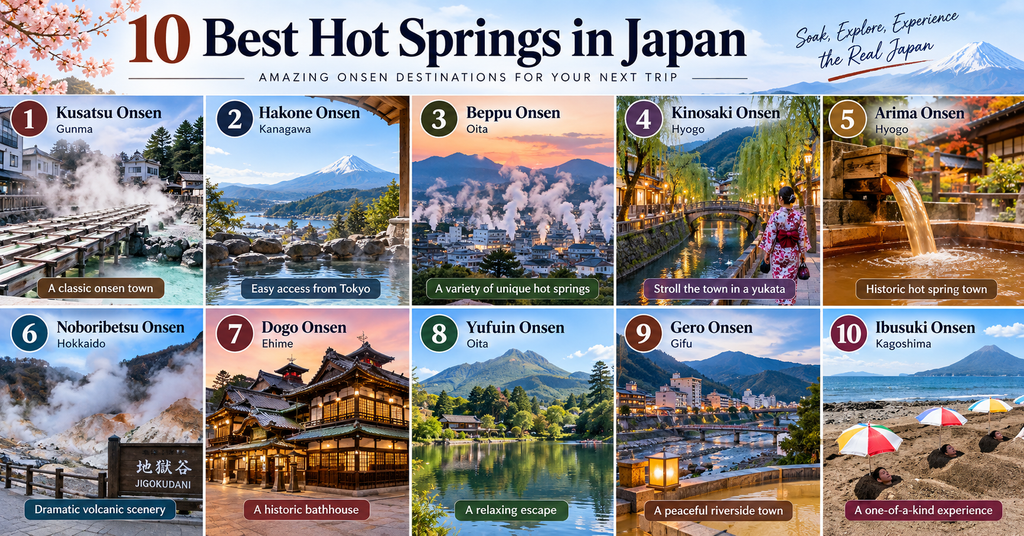
Japan has many famous onsen destinations, and each one offers a different experience.
Some are known for traditional hot spring streets, while others are famous for mountain scenery, unique bathing experiences, or easy access from major cities.
Here is a quick comparison of the 10 hot springs featured in this guide.
| Hot Spring | Prefecture | Best For | Highlights |
|---|---|---|---|
| Kusatsu Onsen | Gunma | Classic Japanese onsen experience | Famous hot spring town, Yubatake, mountain atmosphere |
| Hakone Onsen | Kanagawa | Easy trip from Tokyo | Hot springs, Mt. Fuji views, museums, ryokan |
| Beppu Onsen | Oita | Variety of hot springs | Many types of baths, steam, unique onsen culture |
| Kinosaki Onsen | Hyogo | Traditional onsen town | Yukata, seven public bathhouses, walkable streets |
| Arima Onsen | Hyogo | History and easy access from Kansai | Historic atmosphere, distinctive mineral waters |
| Noboribetsu Onsen | Hokkaido | Dramatic natural scenery | Jigokudani, volcanic landscape, multiple spring types |
| Dogo Onsen | Ehime | History and architecture | One of Japan’s best-known historic hot spring areas |
| Yufuin Onsen | Oita | Relaxing countryside escape | Mountain views, cafes, ryokan, peaceful atmosphere |
| Gero Onsen | Gifu | Relaxing traditional stay | Riverside town, ryokan, easy walking |
| Ibusuki Onsen | Kagoshima | Unique bathing experience | Famous natural sand baths |
There is no single onsen that is best for every traveler.
The right choice depends on where you are traveling, how much time you have, and what kind of experience you want.
Later in this guide, we will also compare these destinations by travel style to help you choose the best onsen for your trip.
Kusatsu Onsen – Gunma
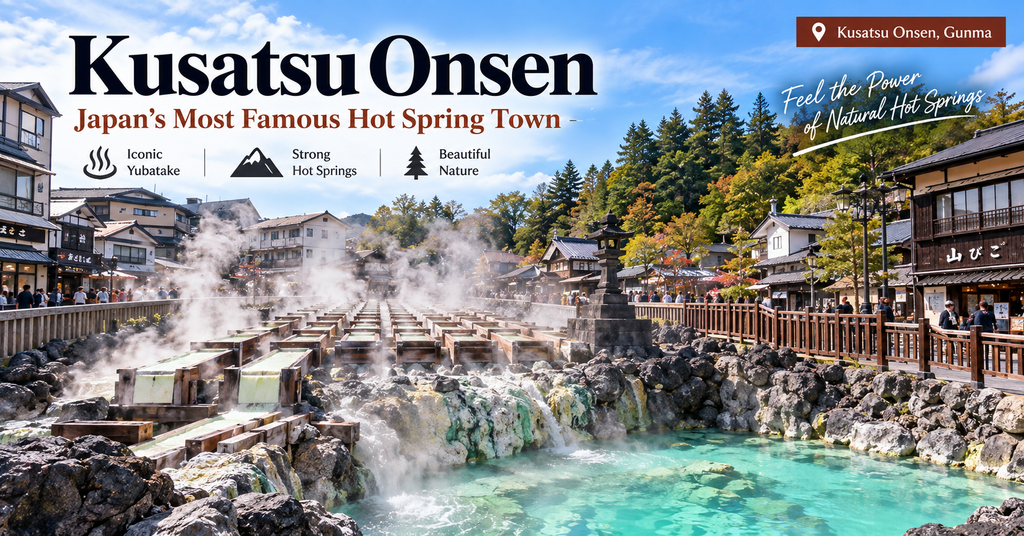
Kusatsu Onsen is one of Japan’s most famous hot spring towns and a great choice for travelers who want a classic Japanese onsen experience.
Located in Gunma Prefecture, Kusatsu is surrounded by mountains and has a compact town center that is easy to explore on foot.
The heart of the town is Yubatake, or the “hot water field,” where large amounts of natural hot spring water flow through wooden channels in the center of town.
Steam rises constantly from the water, creating one of the most recognizable onsen scenes in Japan.
At night, the Yubatake area is illuminated, giving the town a completely different atmosphere from the daytime.
Experience Kusatsu’s Famous Yumomi Tradition
One of the most unique traditions in Kusatsu is yumomi.
Kusatsu’s hot spring water can be very hot, so people historically cooled the water by stirring it with large wooden paddles instead of adding cold water.
This method helped lower the temperature while preserving the character of the hot spring water.
Today, visitors can watch traditional yumomi performances at Netsunoyu near Yubatake.
The rhythmic songs, large wooden paddles, and rising steam make this one of the most distinctive cultural experiences in Kusatsu.
What Makes Kusatsu Onsen Special?
Kusatsu is especially good for travelers who want more than just a bath.
You can walk around the Yubatake area, try foot baths, visit public bathhouses, enjoy local food, and stay overnight at a traditional ryokan.
The town is also relatively compact, making it easy to enjoy the atmosphere without needing a car.
Kusatsu is especially recommended for:
- First-time visitors to a Japanese onsen town
- Travelers who want a traditional hot spring atmosphere
- Couples looking for a relaxing overnight trip
- Visitors who enjoy mountain scenery and walking around town
Before You Visit Kusatsu Onsen
Kusatsu is located in the mountains, so the weather can be cooler than Tokyo, especially in winter.
Snow is common during the colder months, so travelers should check the weather and transportation conditions before visiting.
The town center around Yubatake is walkable, but some streets and slopes can be slippery in winter.
If you are visiting with large luggage, it may be easier to leave it at your accommodation before exploring the town.
For the latest information about attractions, events, transportation, and seasonal conditions, check the official Kusatsu Onsen tourism website before your visit.
Hakone Onsen – Kanagawa
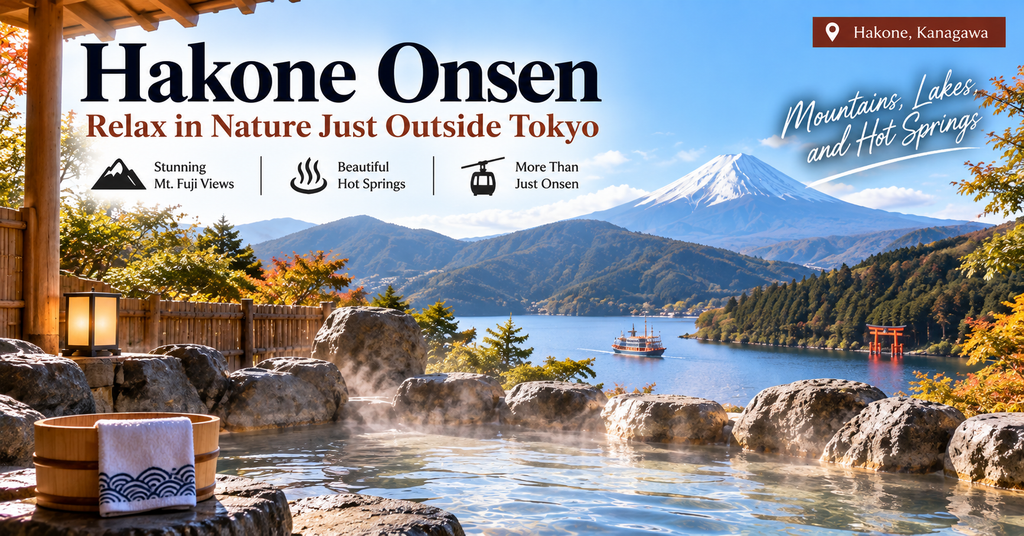
Hakone Onsen is one of the best hot spring destinations in Japan for travelers who want an easy escape from Tokyo.
Located in Kanagawa Prefecture, Hakone can be reached relatively easily from the Tokyo area and combines hot springs with mountain scenery, museums, traditional ryokan, and sightseeing.
Hakone is not just one single hot spring town.
The area includes several different onsen districts, such as Hakone-Yumoto, Gora, Miyanoshita, and Sengokuhara, each with its own atmosphere and accommodation options.
This makes Hakone especially convenient for first-time visitors who want to experience a Japanese onsen without traveling too far from a major city.
Enjoy More Than Just the Hot Springs
One of Hakone’s biggest attractions is that you can combine an onsen stay with sightseeing.
Popular places include Lake Ashi, Owakudani, Hakone Shrine, and the many art museums found throughout the area.
On clear days, some parts of Hakone also offer beautiful views of Mt. Fuji.
Owakudani is especially impressive, with volcanic steam rising from the valley and hot spring water flowing from the surrounding volcanic area.
Because there is so much to see, Hakone works well for both day trips and overnight stays.
Which Area of Hakone Is Best for You?
Different parts of Hakone offer different experiences.
Hakone-Yumoto is a convenient choice for first-time visitors because it has many ryokan, shops, restaurants, and day-use hot spring facilities.
Gora is popular with travelers who want easy access to museums, the Hakone Ropeway, and the mountainous side of Hakone.
Sengokuhara has a quieter atmosphere and is a good choice for travelers looking for a more peaceful stay.
If you are visiting Hakone for the first time, choosing your accommodation based on what you want to see can make your trip much easier.
What Makes Hakone Onsen Special?
Hakone is especially recommended for travelers who want a balanced Japan experience.
You can stay at a traditional ryokan, enjoy an onsen, explore volcanic scenery, visit museums, and see historic sites during the same trip.
Hakone is especially recommended for:
- First-time visitors to Japan
- Travelers staying in Tokyo
- Couples looking for a relaxing overnight trip
- Visitors who want to combine hot springs with sightseeing
- Travelers interested in ryokan stays and Japanese hospitality
Before You Visit Hakone Onsen
Hakone is spread across a large mountainous area, so transportation can take longer than the map suggests.
Trains, buses, cable cars, and ropeways connect the main sightseeing areas, but travel times can increase on weekends and holidays.
If you are visiting for only one day, it is better to choose a few places rather than trying to see everything.
For a more relaxed experience, staying overnight at a ryokan allows you to enjoy the hot springs without rushing between attractions.
For current transportation, sightseeing, and hot spring information, check the official Hakone tourism website before your trip.

Beppu Onsen – Oita
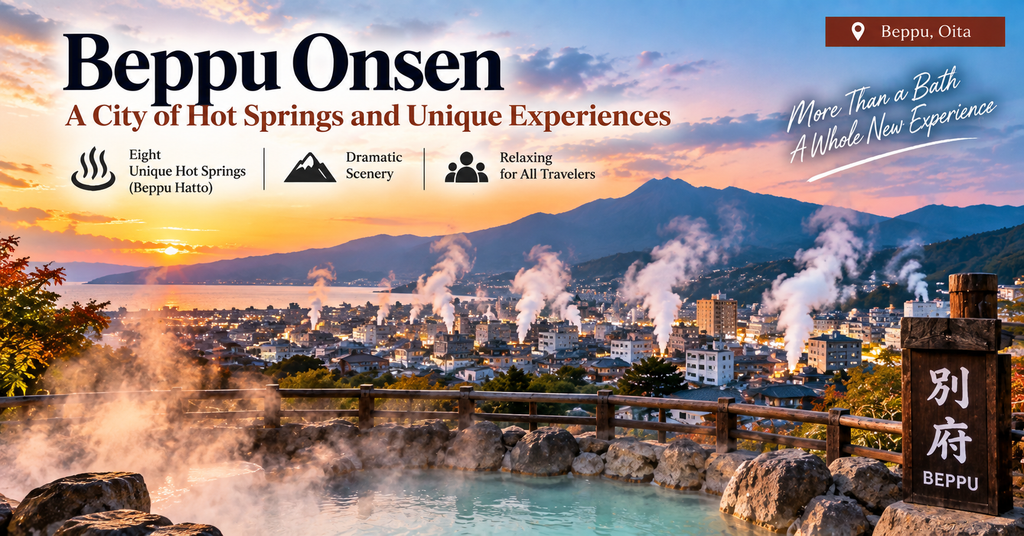
Beppu Onsen is one of Japan’s most famous hot spring destinations and one of the best places to experience a wide variety of onsen in a single trip.
Located in Oita Prefecture on the island of Kyushu, Beppu is known for the large amount of hot spring water that rises throughout the city.
Unlike many onsen destinations, Beppu is not centered around just one hot spring area.
The city is home to eight major hot spring districts, collectively known as the Beppu Hatto.
These areas include Beppu, Hamawaki, Kankaiji, Horita, Myoban, Kannawa, Shibaseki, and Kamegawa.
Each area has its own atmosphere, scenery, and types of hot spring water, which makes Beppu especially interesting for travelers who want to compare different onsen experiences.
Explore the Beppu Hatto
One of the best things about visiting Beppu is that you can experience several different hot spring areas without leaving the city.
Kannawa is especially famous for its streets filled with rising steam and its traditional hot spring atmosphere.
Myoban is known for its mountain setting and distinctive onsen culture, while central Beppu offers easy access to public baths, restaurants, and accommodation.
Because the eight hot spring areas are spread across the city, each one feels slightly different.
For travelers who enjoy exploring local neighborhoods, Beppu offers much more than simply staying at one ryokan and taking one bath.
See the Famous Beppu Hells
Beppu is also famous for its “hells,” known in Japanese as jigoku.
These are extremely hot natural geothermal areas where visitors can see steaming water, bubbling mud, and volcanic activity.
They are sightseeing attractions rather than places for bathing.
Several of the most famous hells are located around the Kannawa and Kamegawa areas.
The colorful pools, rising steam, and unusual volcanic scenery make the Beppu Hells one of the most distinctive attractions in any Japanese hot spring destination.
If this is your first visit to Beppu, combining an onsen experience with the Jigoku Meguri, or “Hell Tour,” is one of the easiest ways to experience what makes the city unique.
What Makes Beppu Onsen Special?
Beppu is ideal for travelers who want to experience the scale and variety of Japan’s hot spring culture.
You can visit public baths, stay at a ryokan, walk through neighborhoods filled with steam, explore volcanic landscapes, and try different types of hot spring experiences during the same trip.
Beppu is especially recommended for:
- Travelers who want to try several different hot springs
- Visitors exploring Kyushu
- People interested in volcanic landscapes
- Travelers who enjoy local public baths and traditional neighborhoods
- Visitors looking for a more unusual onsen experience
Before You Visit Beppu Onsen
Beppu’s hot spring areas are spread across the city, so it is worth deciding which neighborhoods you want to visit before you arrive.
The Beppu Station area is convenient for accommodation and transportation, while Kannawa is a good choice if you want to experience the city’s famous steaming streets and the Beppu Hells.
Public bathhouses in Beppu can also be quite different from modern hotel spas.
Some are simple neighborhood baths used by local residents, so first-time visitors should learn basic Japanese onsen etiquette before entering.
If you are unsure about the rules, check posted instructions or ask the staff before bathing.
For the latest information about the Beppu Hatto, public baths, and sightseeing, visit the official Beppu tourism website.
Kinosaki Onsen – Hyogo
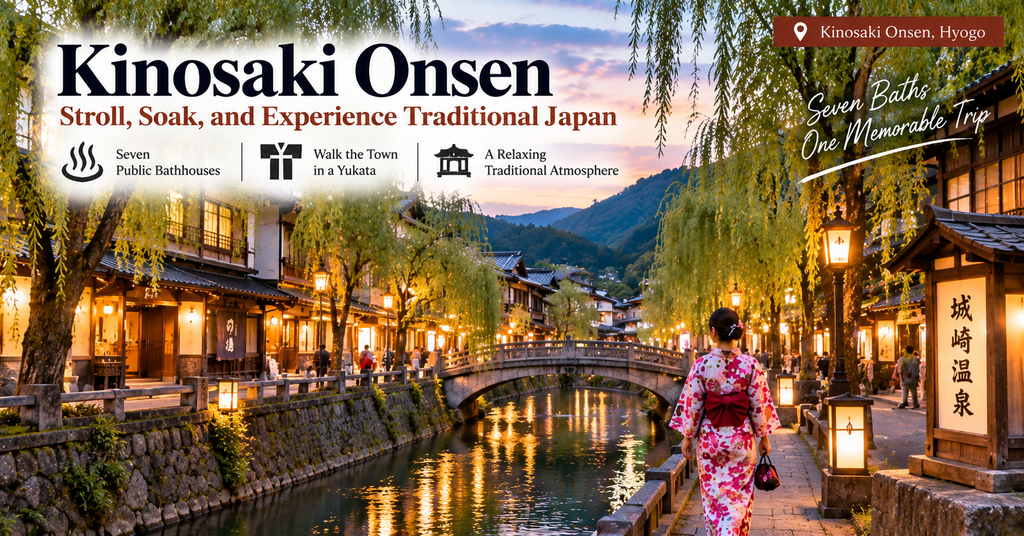
Kinosaki Onsen is one of the best hot spring towns in Japan for travelers who want to experience a traditional onsen town on foot.
Located in Hyogo Prefecture, Kinosaki is famous for its seven public bathhouses, traditional ryokan, willow-lined streets, and relaxed atmosphere.
One of the most enjoyable parts of visiting Kinosaki is simply walking through town in a yukata and stopping at different bathhouses along the way.
The town is compact and easy to explore, which makes it ideal for travelers who want to experience an onsen destination without spending much time on local transportation.
Kinosaki has more than 1,300 years of hot spring history and has preserved much of its traditional atmosphere.
Try the Seven Public Bathhouses
Kinosaki is best known for its seven public bathhouses.
Each bathhouse has its own atmosphere and style, so many visitors enjoy trying several during the same stay.
Guests staying at participating ryokan often receive a pass that allows access to the public baths.
Walking from one bathhouse to another in a yukata and geta sandals is part of the Kinosaki experience.
Because the bathhouses are located close to one another, it is easy to spend an evening slowly exploring the town and soaking in different hot springs.
Walk Around Town in a Yukata
In many parts of Japan, a yukata is mainly worn inside a ryokan or during festivals.
Kinosaki is different.
Visitors are encouraged to wear their yukata while walking through the town, visiting restaurants, shops, and public bathhouses.
This creates a unique atmosphere, especially in the evening when the streets and bridges are softly lit.
For international visitors, this is one of the easiest places in Japan to experience the feeling of a traditional onsen town.
Kinosaki Onsen Is Tattoo-Friendly
Kinosaki Onsen is also one of the easiest hot spring destinations in Japan for travelers with tattoos.
All seven public bathhouses in Kinosaki allow tattoos, including large tattoos.
This is unusual compared with many other onsen facilities in Japan, where tattoos may be restricted.
However, private baths inside ryokan and hotels may have their own rules.
If you have tattoos and plan to use your accommodation’s bath, check the policy with the ryokan or hotel in advance.
What Makes Kinosaki Onsen Special?
Kinosaki is especially recommended for travelers who want to experience the atmosphere of a traditional Japanese hot spring town.
Rather than spending the entire evening inside one ryokan, you can walk through the streets, visit several baths, stop at local shops, and enjoy the town itself.
Kinosaki is especially recommended for:
- Travelers who want to try several public bathhouses
- Visitors interested in traditional Japanese townscapes
- Couples looking for a relaxing overnight stay
- Travelers who want to wear a yukata around town
- Visitors with tattoos who want a more accessible onsen experience
Before You Visit Kinosaki Onsen
Kinosaki is about 2.5 hours by train from Kyoto and around 3 hours from Osaka.
For the full experience, staying overnight is recommended.
An evening walk in a yukata, followed by visits to several public baths, is one of the highlights of the town.
In winter, Kinosaki can be cold and snowy, so wear warm outer layers over your yukata when walking outside.
If this is your first time using a Japanese public bath, learn the basic onsen rules before entering.
Check the official Kinosaki Onsen website for the latest bathhouse hours, access information, and local travel updates.
Arima Onsen – Hyogo
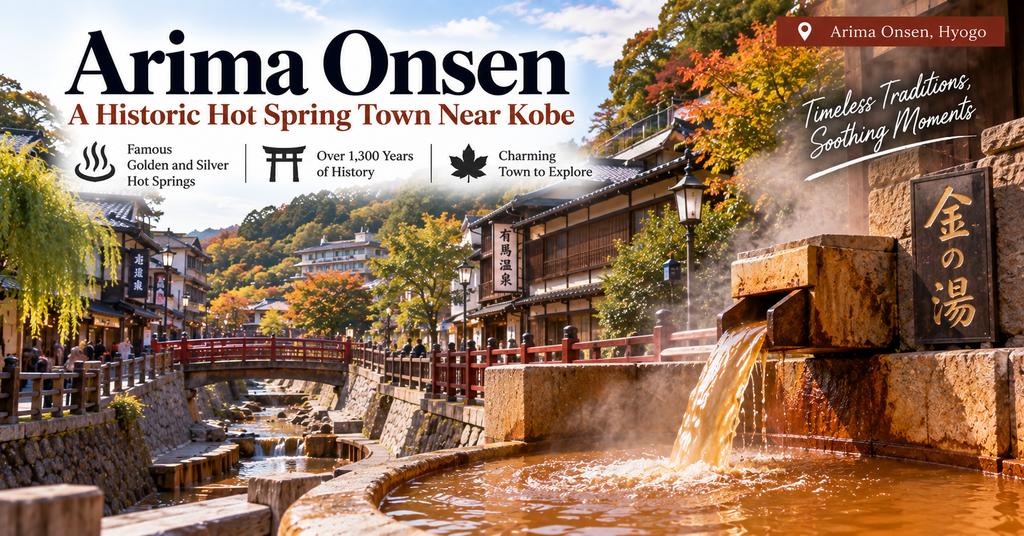
Arima Onsen is one of Japan’s oldest and most historic hot spring destinations.
Located in the mountains behind Kobe in Hyogo Prefecture, Arima has been visited for centuries by emperors, nobles, samurai, and other important figures in Japanese history.
The town is compact, with narrow streets, traditional ryokan, small shops, temples, and hot spring facilities all within walking distance.
One of Arima’s biggest attractions is that you can experience two very different types of hot spring water in the same town: Kinsen, or “Golden Spring,” and Ginsen, or “Silver Spring.”
Arima is especially convenient for travelers exploring the Kansai region because it can be reached relatively easily from Kobe and Osaka.
Try Arima’s Golden and Silver Springs
Arima Onsen is famous for two distinctive types of hot spring water.
Kinsen, meaning “Golden Spring,” has a reddish-brown color caused by its iron and salt content.
Ginsen, or “Silver Spring,” is clear and colorless.
For first-time visitors, trying both types is one of the most interesting parts of an Arima Onsen trip because the appearance and bathing experience are noticeably different.
Public bathhouses and ryokan around the town offer opportunities to experience these famous waters.
A Hot Spring Loved by Toyotomi Hideyoshi
Arima Onsen also has strong connections to Japanese history.
One of its most famous visitors was Toyotomi Hideyoshi, the powerful warlord who helped unify Japan in the late 16th century.
Hideyoshi visited Arima several times and supported the restoration of the hot spring town after it was damaged by natural disasters.
Today, visitors can still find places around Arima connected to Hideyoshi and the town’s long history.
This historical background gives Arima a different atmosphere from many modern hot spring resorts.
Enjoy the Historic Streets of Arima
Arima is also a good place to explore on foot.
The old town is filled with narrow streets, traditional buildings, temples, souvenir shops, and small restaurants.
Because the town is surrounded by mountains, some streets are steep, but the main sightseeing area is relatively compact.
You can visit a hot spring, stop for local snacks, explore temples and shrines, and enjoy the historic atmosphere without needing a car.
For travelers who enjoy combining sightseeing with a relaxing onsen experience, Arima is an excellent choice.
What Makes Arima Onsen Special?
Arima Onsen is especially recommended for travelers who want to combine hot springs with Japanese history.
Its compact town center, distinctive hot spring waters, and convenient location make it easy to include in a Kansai itinerary.
Arima is especially recommended for:
- Travelers visiting Kobe or Osaka
- Visitors interested in Japanese history
- Couples looking for a traditional ryokan stay
- Travelers who want to try both Kinsen and Ginsen
- Visitors looking for a historic onsen town that is easy to explore on foot
Before You Visit Arima Onsen
Arima Onsen is located in a mountainous area, and some streets in the town are steep.
Comfortable walking shoes are recommended, especially if you plan to explore beyond the main shopping streets.
From central Kobe, Arima can be reached in about 30 minutes by public transportation, while direct buses are also available from several major cities in the Kansai region.
Because bathhouse opening hours and maintenance schedules can change, check the latest official information before deciding which hot springs to visit.
For current bathing information, local attractions, and travel tips, check the official Arima Onsen website before visiting.
Noboribetsu Onsen – Hokkaido
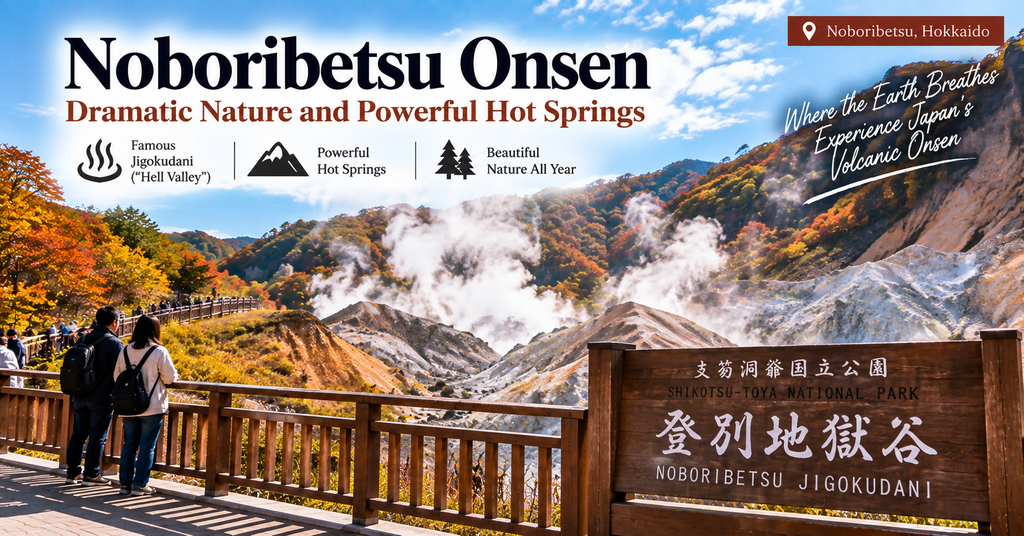
Noboribetsu Onsen is one of Hokkaido’s most famous hot spring destinations and an excellent choice for travelers who want to combine onsen with dramatic volcanic scenery.
Located in southwestern Hokkaido, Noboribetsu is especially known for the variety of hot spring waters found in the area.
The resort has nine different types of hot spring water, including sulfur springs, chloride springs, and other mineral-rich waters.
This variety is unusual even in Japan and allows visitors to experience different colors, scents, and bathing sensations during the same trip.
The town itself is relatively compact, with ryokan, hotels, restaurants, souvenir shops, and hot spring facilities located close to the main sightseeing areas.
Explore Noboribetsu Jigokudani
The most famous attraction in Noboribetsu is Jigokudani, or “Hell Valley.”
This volcanic crater was created by the activity of Mt. Hiyori and is filled with steaming vents, bubbling water, and exposed volcanic rock.
Around 10,000 tons of hot spring water flow from the area each day and supply many of the hotels and ryokan in Noboribetsu Onsen.
Walking through Jigokudani gives visitors a rare chance to see where some of the hot spring water comes from before enjoying it in an onsen.
The landscape can feel almost otherworldly, especially when steam rises across the valley.
Experience Different Types of Hot Spring Water
One of the biggest reasons to visit Noboribetsu is the variety of hot spring water.
Different hotels and bath facilities may use different spring sources, so the color, smell, and feel of the water can vary from one bath to another.
Sulfur springs are especially easy to recognize because of their milky appearance and distinctive mineral smell.
Some larger onsen facilities offer several types of hot spring water in the same bathing area, making it easy to compare them without visiting multiple towns.
For travelers who are curious about the differences between Japanese hot springs, Noboribetsu is one of the most interesting places to visit.
What Makes Noboribetsu Onsen Special?
Noboribetsu is especially recommended for travelers who want to experience both Hokkaido’s nature and Japanese hot spring culture.
Unlike an onsen town where the main attraction is simply relaxing at a ryokan, Noboribetsu lets you explore the volcanic landscape that creates the hot springs themselves.
Noboribetsu is especially recommended for:
- Travelers visiting Hokkaido
- Visitors interested in volcanic landscapes
- Travelers who want to try different types of hot spring water
- Couples looking for a relaxing ryokan stay
- Visitors who enjoy nature walks and unique scenery
Before You Visit Noboribetsu Onsen
Noboribetsu Onsen is located about 8 km from JR Noboribetsu Station, so you will normally need to take a bus or other transportation from the station to the hot spring town.
Limited express trains connect Sapporo with Noboribetsu Station, making the area possible to include in a Hokkaido itinerary.
The weather can be cold and snowy in winter, so appropriate shoes and warm clothing are important if you plan to walk around Jigokudani.
Several hotels and ryokan also offer day-use bathing, so staying overnight is not always necessary.
However, an overnight stay gives you more time to explore the volcanic scenery and enjoy the onsen without rushing.
Before your trip, check the official Noboribetsu Onsen website for the latest access, sightseeing, and day-use bathing information.
Dogo Onsen – Ehime
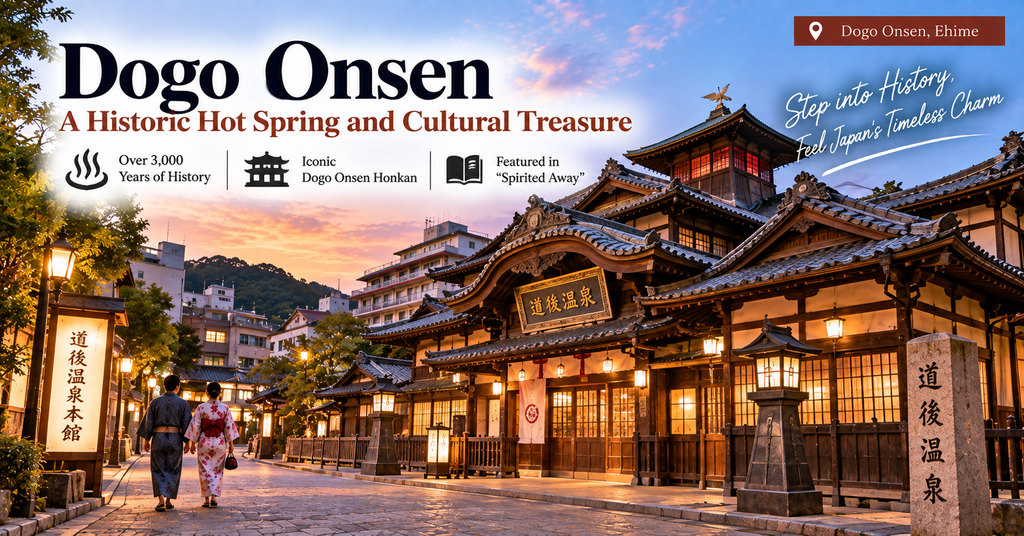
Dogo Onsen is one of Japan’s most historic hot spring destinations and an excellent choice for travelers interested in both onsen culture and traditional architecture.
Located in Matsuyama, Ehime Prefecture on the island of Shikoku, Dogo Onsen is often described as one of the oldest hot springs in Japan.
The compact neighborhood around Dogo Onsen Station is easy to explore on foot, with public bathhouses, ryokan, shops, cafes, temples, and historic streets all located close together.
The symbol of the area is Dogo Onsen Honkan, a beautiful wooden public bathhouse that has become one of the most recognizable hot spring buildings in Japan.
Unlike many historic buildings that can only be viewed from the outside, visitors can actually bathe inside Dogo Onsen Honkan.
Bathe Inside a Historic Cultural Property
Dogo Onsen Honkan is much more than a typical public bathhouse.
The present main building was completed in 1894 and was later designated an Important Cultural Property of Japan.
Its wooden architecture, maze-like interior, traditional bathing rooms, and distinctive tower create an atmosphere that feels very different from a modern spa.
The building underwent major conservation work beginning in 2019, and the entire facility reopened to visitors in July 2024.
For international travelers, one of the most memorable things about Dogo is that you can experience a traditional Japanese bath inside a building that is itself an important part of Japan’s cultural heritage.
Discover Dogo’s Long History and Legends
Dogo Onsen is surrounded by stories that reflect its long history.
One of the best-known legends tells of an injured white egret that discovered the hot spring and repeatedly soaked its leg in the water until it recovered.
After local people saw what happened, they began using the hot spring themselves.
You can still find references to the white egret throughout the Dogo area today.
Whether or not you believe the legend, stories like this show how deeply the hot spring is connected to the local identity of Matsuyama.
Explore More Than One Bathhouse
Dogo Onsen Honkan is the most famous bathhouse in the area, but it is not the only place where visitors can enjoy the hot spring water.
Dogo also has Asuka-no-Yu, a newer bathhouse inspired by traditional Japanese architecture and art, as well as Tsubaki-no-Yu, a public bath that has long been popular with local residents.
This gives travelers several options depending on the kind of experience they want.
You can choose the historic atmosphere of Dogo Onsen Honkan, the artistic design of Asuka-no-Yu, or the more local feeling of Tsubaki-no-Yu.
What Makes Dogo Onsen Special?
Dogo Onsen is especially recommended for travelers who want to experience Japanese history as part of their hot spring visit.
The attraction is not simply the water itself, but the opportunity to bathe inside historic buildings and explore a compact neighborhood filled with local culture.
Dogo Onsen is especially recommended for:
- Travelers visiting Shikoku
- Visitors interested in Japanese history and architecture
- First-time visitors who want an easy-to-explore onsen area
- Travelers who enjoy traditional public bathhouses
- Visitors combining Matsuyama Castle and Dogo Onsen in the same trip
Before You Visit Dogo Onsen
Dogo Onsen is easy to explore on foot once you arrive.
The main bathhouses and shopping streets are located around Dogo Onsen Station, making it possible to enjoy the area without a car.
Dogo Onsen Honkan offers several bathing and resting options, and some areas have different admission fees and operating hours.
Popular times can be busy, especially on weekends and holidays.
Before visiting, check the official Dogo Onsen website for the latest opening hours, admission fees, maintenance information, and reservation details.
Yufuin Onsen – Oita
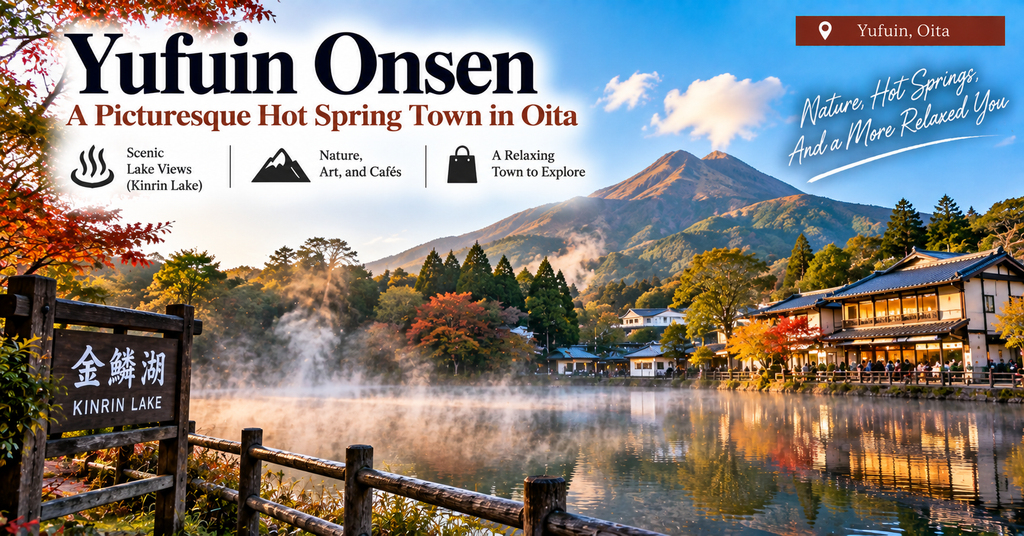
Yufuin Onsen is a relaxing hot spring destination in Oita Prefecture, known for its mountain scenery, peaceful atmosphere, and charming town streets.
Unlike some larger onsen resorts, Yufuin feels more like a countryside retreat.
The town is surrounded by nature, with Mt. Yufu rising behind the valley and hot spring water flowing throughout the area.
Visitors can enjoy traditional ryokan, cafes, small shops, art galleries, walking paths, and scenic spots all within a relatively compact area.
Yufuin is especially popular with travelers who want to combine an onsen stay with a slower, more relaxed style of sightseeing.
Walk Around Kinrin Lake and Yufuin’s Town Center
One of the most popular places to visit in Yufuin is Kinrin Lake.
The lake is surrounded by trees, walking paths, cafes, and small shops, making it a pleasant place for a slow morning or afternoon walk.
The area between Yufuin Station and Kinrin Lake is also popular for sightseeing.
You will find cafes, local sweets, souvenir shops, galleries, and small restaurants along the way.
However, Yufuin is not only a tourist area.
It is also a residential community, so visitors are encouraged to respect private property, avoid blocking narrow streets, and be considerate when taking photos.
Enjoy Yufuin’s Onsen in a Ryokan or Day-Use Bath
Yufuin offers many different ways to enjoy its hot springs.
Traditional ryokan are one of the most popular choices, especially for travelers who want to stay overnight and enjoy a private or open-air bath.
There are also public baths and day-use onsen facilities around the town.
Some accommodations offer private baths that can be reserved for families, couples, or travelers who prefer more privacy.
This variety makes Yufuin a good choice for visitors who want a quieter and more personal onsen experience.
What Makes Yufuin Onsen Special?
Yufuin is especially recommended for travelers who want to combine hot springs with scenery, food, and a relaxed countryside atmosphere.
The town is less about rushing from one famous attraction to another and more about enjoying the experience of walking, eating, bathing, and taking in the surroundings.
Yufuin is especially recommended for:
- Couples looking for a relaxing overnight stay
- Travelers who enjoy cafes and local food
- Visitors interested in mountain scenery
- Travelers who prefer a quieter onsen experience
- Visitors exploring Oita or northern Kyushu
Before You Visit Yufuin Onsen
Yufuin is easy to explore on foot, but some popular areas can become crowded during weekends and holidays.
The walk between Yufuin Station and Kinrin Lake is one of the most popular routes, so allow extra time if you want to stop at cafes and shops along the way.
If your main goal is to enjoy the hot springs, staying overnight at a ryokan is usually more relaxing than visiting only for a few hours.
Yufuin is also a real residential community, so respect local homes, private property, and narrow streets while sightseeing.
For official sightseeing information and responsible travel tips, check Yufu City’s visitor information before exploring Yufuin.
Gero Onsen – Gifu
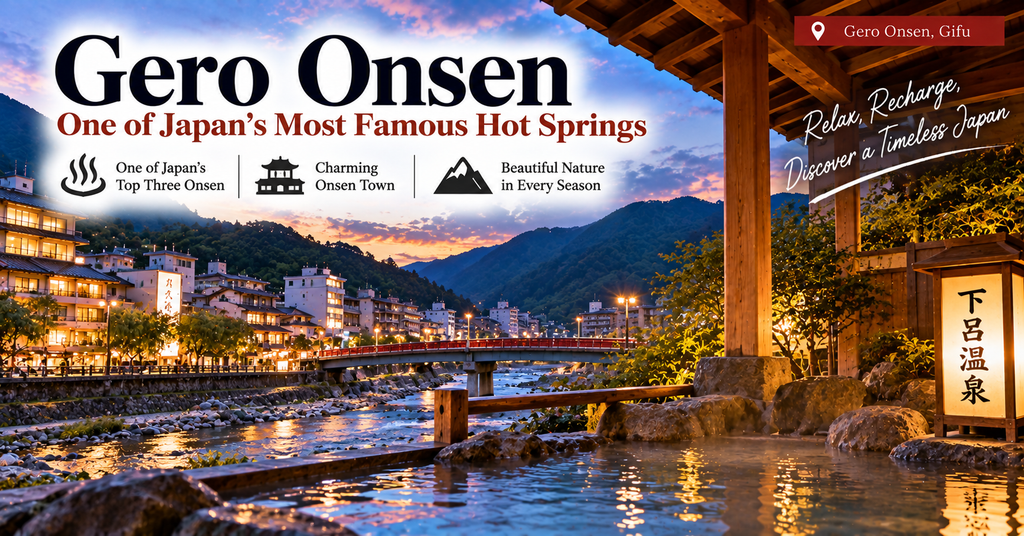
Gero Onsen is one of Japan’s most famous traditional hot spring destinations and is often counted among the country’s “Three Great Hot Springs,” together with Arima Onsen and Kusatsu Onsen.
Located in Gifu Prefecture along the Hida River, Gero has a relaxed riverside atmosphere, traditional ryokan, public baths, foot baths, and small streets that are easy to explore on foot.
The town is especially known for the smooth feeling of its hot spring water.
Unlike larger resort areas, Gero has a compact and relaxed atmosphere, making it a good choice for travelers who want to slow down and enjoy a traditional onsen stay.
It is also conveniently located between Nagoya and the Hida region, making it easy to combine with destinations such as Takayama.
Try Gero’s Foot Baths and Public Baths
One of the easiest ways to enjoy Gero Onsen is by trying the foot baths scattered around the town.
Several foot baths can be used for free, so you can stop for a quick soak while walking between shops, ryokan, and sightseeing spots.
Gero also has public bathhouses where visitors can enjoy the local hot spring water without staying overnight.
For travelers who want to try several baths, the town also offers a hot spring hopping pass that can be used at participating ryokan and bathing facilities.
This makes Gero a good destination for visitors who want to experience different onsen without traveling between several towns.
Walk Along the Hida River
Gero Onsen is built around the Hida River, which gives the town a relaxed and scenic atmosphere.
Many ryokan and hotels are located close to the river, and the bridges provide attractive views of the hot spring town.
Walking along the river is especially pleasant in the evening, when the lights from the town reflect on the water.
Because the main sightseeing area is relatively compact, it is easy to combine a riverside walk with foot baths, cafes, and local shops.
What Makes Gero Onsen Special?
Gero Onsen is especially recommended for travelers who want a simple and relaxing traditional hot spring experience.
It may not have the dramatic volcanic scenery of Noboribetsu or the large number of sightseeing attractions found in Hakone, but its charm comes from its calm atmosphere and easy-to-explore town center.
Gero Onsen is especially recommended for:
- Travelers looking for a relaxing ryokan stay
- Visitors traveling between Nagoya and the Hida region
- Couples looking for a quiet overnight trip
- Travelers who enjoy walking around small hot spring towns
- Visitors who want to try foot baths and public baths
Before You Visit Gero Onsen
Gero Onsen is easy to explore once you arrive, and the main town area is close to JR Gero Station.
From Nagoya, the train journey takes about 1.5 hours, making Gero relatively easy to include in a central Japan itinerary.
If you plan to use several hot springs, check the latest opening hours and participating facilities before purchasing a hot spring hopping pass.
Some foot baths are outdoors, so they may temporarily close for cleaning or maintenance.
For a more relaxing experience, staying overnight at a ryokan allows you to enjoy the town after many day visitors have left.
Check the official Gero Onsen tourism website for the latest bathing facilities, foot baths, and hot spring hopping information.
Ibusuki Onsen – Kagoshima
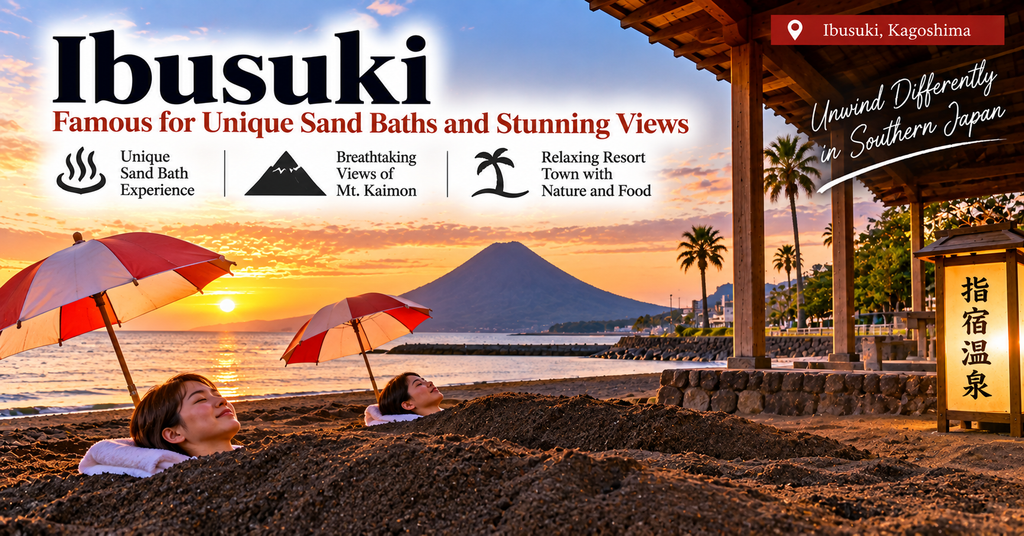
Ibusuki Onsen is one of the most unique hot spring destinations in Japan.
Located in southern Kagoshima Prefecture on the island of Kyushu, Ibusuki is famous for its natural sand baths.
Instead of soaking in a hot spring pool, visitors wear a special yukata and lie down on sand naturally heated by geothermal hot spring water.
Staff then cover most of the body with warm sand, creating a relaxing experience that feels completely different from a normal onsen bath.
With its warm climate, coastal scenery, traditional hot springs, and unusual sand bathing culture, Ibusuki offers an onsen experience that is difficult to find anywhere else in Japan.
Try Ibusuki’s Famous Sand Bath
The sand bath is the experience that makes Ibusuki especially famous.
After changing into a special yukata, you lie on the warm sand while staff gently cover your body, leaving your head above the surface.
The sand is naturally heated by geothermal hot spring water beneath the ground.
You can feel both the heat and the surprising weight of the sand around your body.
A typical sand bath lasts around 10 to 20 minutes, although you can leave earlier if you feel too hot or uncomfortable.
After leaving the sand, you wash it off and can then enjoy a regular hot spring bath.
For first-time visitors, the experience may look unusual, but it is one of the most memorable ways to experience Japan’s onsen culture.
Visit the Natural Sand Bath Center Saraku
One of the best-known places to experience Ibusuki’s sand baths is the Natural Sand Bath Center Saraku.
The facility is located near the coast and offers both the famous sand bath experience and a regular indoor onsen.
Depending on weather, tide, and other conditions, the sand bathing experience may take place close to the beach or in a covered area.
Saraku can be visited without staying overnight at a ryokan, making it convenient for travelers visiting Ibusuki on a day trip.
Operating hours and temporary closures can change, so check the latest official information before visiting.
What Makes Ibusuki Onsen Special?
Ibusuki is especially recommended for travelers who want an onsen experience that feels completely different from a normal hot spring bath.
The combination of geothermal sand, coastal scenery, and traditional hot spring water gives Ibusuki a character unlike the other destinations in this guide.
Ibusuki is especially recommended for:
- Travelers looking for a unique Japanese experience
- Visitors exploring southern Kyushu
- Couples looking for a memorable onsen trip
- Travelers who want to try a natural sand bath
- Visitors interested in coastal scenery and geothermal landscapes
Before You Visit Ibusuki Onsen
Sand bathing feels different from a normal onsen because the heated sand places both warmth and weight around your body.
If you feel too hot, uncomfortable, or unwell at any point, tell the staff and leave the sand bath.
Follow the instructions provided by the facility, especially if you have any health concerns.
The sand bath experience can also be affected by weather, tides, maintenance, and facility conditions.
If trying a sand bath is one of the main reasons for your trip, check the latest official information before traveling to Ibusuki.
For a more relaxed visit, consider combining the sand bath with a traditional onsen and an overnight stay in the area.
Before visiting, check the official tourism information for the Natural Sand Bath Center Saraku for the latest hours and temporary closure notices.
Which Hot Spring in Japan Is Best for You?
With so many famous onsen destinations in Japan, choosing the right one can be difficult.
The best hot spring for your trip depends on where you are traveling, how much time you have, and what kind of experience you want.
Here are some simple recommendations based on different travel styles.
Best for First-Time Onsen Visitors: Hakone or Kusatsu
Hakone is a great choice if you are staying in Tokyo and want to combine an onsen experience with sightseeing.
Kusatsu is better for travelers who want the atmosphere of a classic Japanese hot spring town, complete with steaming streets, traditional baths, and the famous Yubatake.
Best for a Traditional Onsen Town Experience: Kinosaki
Kinosaki is one of the best choices for travelers who want to walk around town in a yukata and visit several public bathhouses.
The compact streets, traditional ryokan, and seven public baths create one of the most complete onsen town experiences in Japan.
Best for Travelers With Tattoos: Kinosaki
All seven public bathhouses in Kinosaki allow tattoos, making the town one of the easiest major onsen destinations in Japan for travelers with tattoos.
Individual ryokan and hotel baths may have different rules, so always check your accommodation in advance.
Best for a Unique Experience: Ibusuki
If you want something completely different from a normal hot spring bath, visit Ibusuki.
Its famous natural sand baths allow visitors to lie in warm geothermal sand before enjoying a traditional onsen.
Best for Volcanic Scenery: Noboribetsu
Noboribetsu is ideal for travelers who want to see the natural landscape behind Japan’s hot springs.
Jigokudani, or “Hell Valley,” is filled with volcanic steam, hot water, and dramatic rock formations.
Best for History and Architecture: Dogo or Arima
Dogo Onsen is especially attractive for travelers interested in historic bathhouses and traditional Japanese architecture.
Arima Onsen combines centuries of history with its famous Golden Spring and Silver Spring waters.
Best for a Relaxing Couple’s Trip: Yufuin
Yufuin is a good choice for couples who prefer a quieter trip with mountain scenery, cafes, ryokan, and relaxing walks.
The town has a slower atmosphere than many larger hot spring resorts.
Best for Exploring Different Hot Springs: Beppu
Beppu is ideal if you want to experience several types of hot springs during one trip.
With the eight Beppu Hatto districts, public baths, volcanic steam, and the famous Beppu Hells, there is a huge variety of onsen experiences to explore.
Best for a Relaxing Traditional Stay: Gero
Gero is a good choice for travelers who want to slow down and enjoy a traditional ryokan stay, foot baths, riverside walks, and a compact hot spring town.
It is also convenient for travelers exploring central Japan and the Hida region.
What to Know Before Visiting a Japanese Onsen
Using a Japanese onsen for the first time can feel confusing, but the basic rules are simple once you know them.
Most public onsen follow similar bathing etiquette, and understanding a few important customs will help you feel much more comfortable.
Wash Before Entering the Bath
Always wash your body thoroughly before entering the hot spring.
Japanese onsen are shared baths, so the bath itself is for soaking and relaxing, not for washing your body.
Use the shower area first, wash with soap and shampoo, and rinse everything off before entering the bath.
Do Not Wear a Swimsuit
In most traditional Japanese onsen, people bathe completely naked.
Swimsuits, underwear, and other clothing are usually not allowed in the bath.
This can feel unusual for first-time visitors, but public bathing is a normal part of Japanese culture.
If you prefer more privacy, look for a private bath, often called a kashikiri-buro.
Keep Your Towel Out of the Water
Most onsen provide or allow you to bring a small towel.
You can use it while washing or to cover yourself while walking around the bathing area, but do not put it into the hot spring water.
Many people place the towel on the side of the bath or fold it on top of their head while soaking.
Keep Long Hair Out of the Bath
If you have long hair, tie it up before entering the hot spring.
Hair should not touch the bathwater.
This is another simple rule designed to keep the shared water clean.
Keep Quiet and Relax
An onsen is generally a place for quiet relaxation.
Avoid swimming, splashing, speaking loudly, or using your phone in the bathing area.
Photography is also usually prohibited because other guests are bathing without clothing.
Check the Rules Before You Enter
While these basic rules are common across Japan, every onsen can have slightly different policies.
Always check signs at the entrance or ask the staff if you are unsure.
This is especially important for tattoos, private baths, towels, and mixed-gender bathing facilities.
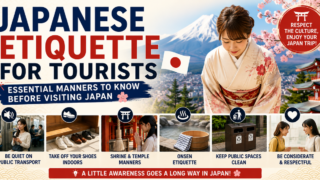
For more details about onsen rules and other Japanese customs, read our complete guide to Japanese etiquette for travelers.
Can You Enter an Onsen With Tattoos?
Tattoo rules vary depending on the onsen.
Some traditional hot springs in Japan still do not allow guests with tattoos, while others are becoming more accepting.
If you have a small tattoo, some facilities may allow you to cover it with a waterproof tattoo cover or sticker.
However, this is not guaranteed, and larger tattoos may still be restricted.
The safest option is to check the rules of the specific onsen before visiting.
If a public bath does not allow tattoos, you can also look for a private bath, known as a kashikiri-buro, or book a ryokan room with its own private onsen.
One destination that is especially convenient for travelers with tattoos is Kinosaki Onsen.
All seven of Kinosaki’s public bathhouses allow tattoos of any size.
However, baths inside individual ryokan and hotels may have different rules, so check with your accommodation separately.
Tattoo policies in Japan are gradually changing, but there is still no single rule that applies to every onsen.
Final Thoughts
Japan’s hot springs offer much more than just a place to take a bath.
Each onsen destination has its own atmosphere, scenery, history, and style of travel.
Kusatsu is perfect for a classic hot spring town experience, Hakone is convenient for travelers staying in Tokyo, Kinosaki is ideal for bathhouse hopping, and Ibusuki offers one of the most unusual onsen experiences in Japan.
Other destinations such as Noboribetsu, Dogo, Arima, Yufuin, Beppu, and Gero each offer something different as well.
The best hot spring in Japan depends on what kind of trip you want.
Before visiting, remember that onsen rules, tattoo policies, opening hours, and public bathing options can vary by facility.
Checking the latest official information in advance will help you avoid surprises and enjoy your visit more comfortably.
Whether this is your first onsen experience or one of many, spending time in a Japanese hot spring is a great way to slow down, relax, and experience a part of everyday Japanese culture that has been enjoyed for generations.
I hope this guide helps you find the perfect onsen for your trip to Japan.