Where Are the Trash Cans in Japan? A Complete Guide for Tourists
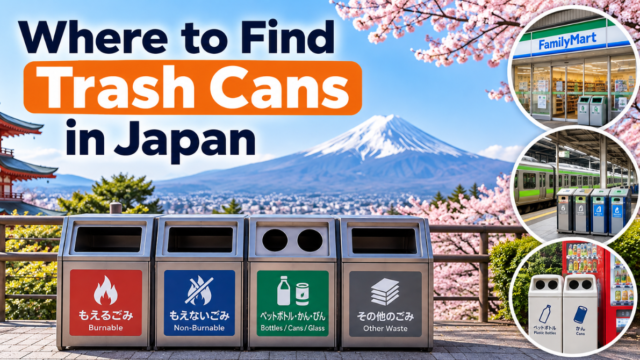
Trash cans in Japan can be surprisingly difficult to find.
This often confuses first-time visitors because Japanese streets are usually very clean.
You may walk through a busy station area or tourist district without seeing a public trash bin.
However, trash cans do exist. You just need to know where to look.
Convenience stores, train stations, vending machine areas, shopping malls, and highway rest stops are common places to check.
You may also need to carry your trash with you until you find the correct bin.
In this guide, we explain where to find trash cans in Japan, how to sort waste, and what to do when no bin is available.
We also cover basic trash etiquette that travelers should know.
If this is your first trip to Japan, see our guide to 20 essential things to know before visiting Japan.
- Why Are There So Few Trash Cans in Japan?
- Where Can You Find Trash Cans in Japan?
- How to Sort Trash in Japan
- What Should You Do If You Cannot Find a Trash Can?
- Can You Throw Away Trash at Convenience Stores?
- Trash Rules at Train Stations and Vending Machines
- What About Food and Drink Waste?
- Japanese Trash Etiquette for Tourists
- Trash Cans in Japan FAQ
- Final Tips for Dealing With Trash in Japan
Why Are There So Few Trash Cans in Japan?
Japan has fewer public trash cans than many travelers expect.
There is no single reason for this.
Security concerns have led some stations and public facilities to reduce or relocate trash cans.
Maintaining public bins also requires regular collection and cleaning.
In many places, businesses provide bins mainly for waste created by their own products or customers.
People in Japan are also generally expected to take their trash home if they cannot find an appropriate bin.
As a result, clean streets do not necessarily mean that trash cans are everywhere.
For travelers, the easiest solution is to keep a small bag for trash until you find a proper place to dispose of it.
Where Can You Find Trash Cans in Japan?
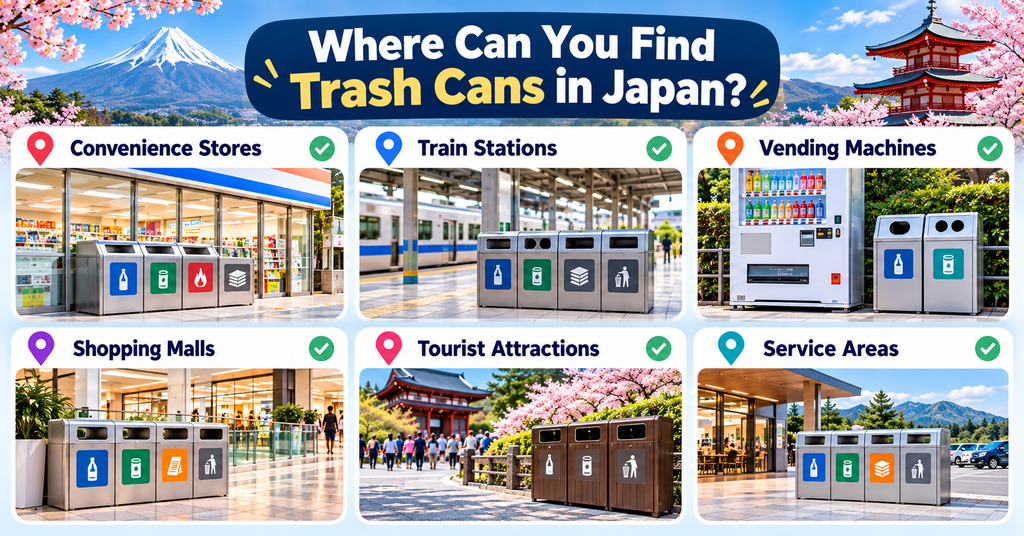
Trash cans in Japan are easier to find in certain places.
Convenience stores, train stations, vending machine areas, shopping malls, tourist attractions, and highway rest stops are good places to check.
However, not every location has public bins.
Some trash cans are only for customers or for waste from products sold nearby.
When you find a bin, check the label before throwing anything away.
Different bins may be used for burnable trash, bottles, cans, and other recyclables.
Convenience Stores
Some convenience stores have trash cans near the entrance or inside the store.
However, not every convenience store provides public trash bins.
Bins may be intended mainly for waste from products purchased at that store.
If you are unsure, check the signs or ask a staff member.
Do not leave large bags of outside trash at a convenience store.
If you need help asking staff, see our guide to 52 useful Japanese phrases for travelers.
Train Stations
Many train stations have trash cans, but availability varies.
You may find bins near ticket gates, platforms, vending machines, or waiting areas.
Some stations have fewer bins than travelers expect.
Trash cans may also be separated by type.
Look carefully at the labels before disposing of your waste.
If you are using Japanese trains for the first time, see our beginner’s guide to using trains in Japan.
Vending Machines
Trash bins are often placed next to vending machines.
These bins are usually for drink containers only.
They may accept plastic bottles, cans, and glass bottles.
Do not put food waste, tissues, or general trash into these recycling bins.
Check the opening shape and label before using them.
Vending machine recycling boxes are for empty drink containers, not general trash.
Shopping Malls and Department Stores
Shopping malls and department stores often have trash cans for visitors.
You may find them near food courts, rest areas, elevators, or dining areas.
Some bins are separated for burnable trash, plastic, bottles, and cans.
Large buildings usually have clear signs.
Food courts are especially useful if you need to throw away food packaging.
Tourist Attractions and Parks
Some tourist attractions and parks have public trash cans.
However, many outdoor areas have very few bins.
You may need to carry your trash until you reach a visitor center, shop, or station.
Do not leave waste on benches, walls, or the ground.
If you buy food from a stall, check whether the vendor has a nearby trash collection area.
Highway Service Areas and Rest Stops
Highway service areas and rest stops usually have several trash and recycling bins.
They are useful places to dispose of waste during road trips.
Bins may be separated for general trash, plastic bottles, cans, and other recyclables.
Roadside stations, known as michi-no-eki, may also have trash facilities.
Always follow the labels on the bins.
How to Sort Trash in Japan
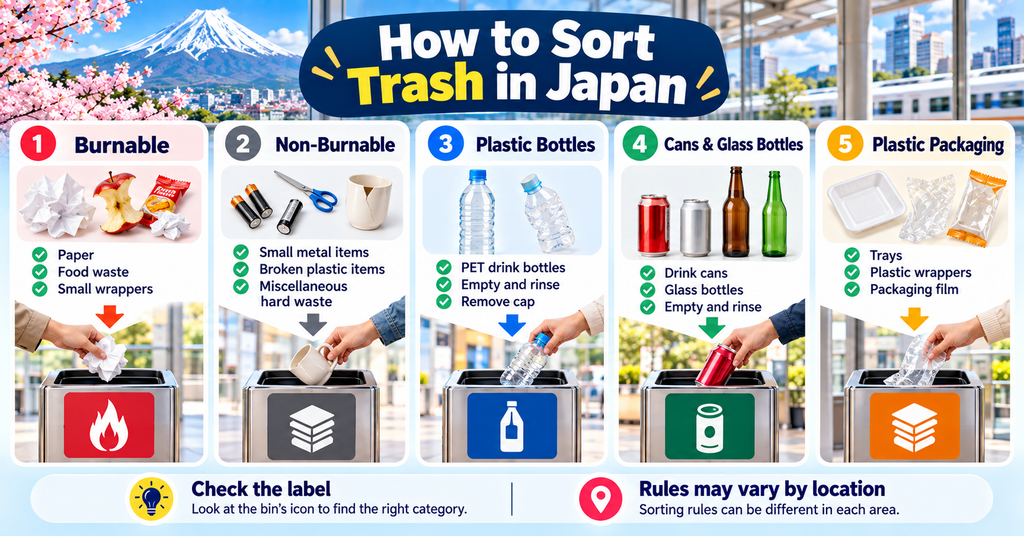
Trash sorting rules in Japan can vary by city and facility.
You may see separate bins for burnable trash, non-burnable trash, plastic bottles, cans, glass bottles, and other recyclables.
The labels and colors are not always the same everywhere.
For travelers, the easiest rule is to follow the signs on the bin.
If you are unsure, do not guess.
Keep the item with you until you find a bin with a clear label.
For an example of local trash etiquette, see GO TOKYO’s responsible traveler guide.
Burnable and Non-Burnable Trash
Some trash bins are divided into burnable and non-burnable waste.
Burnable trash may include paper, food scraps, and some packaging.
Non-burnable trash may include certain metal, glass, or other materials.
The exact rules can vary by location.
Always check the label on the bin before throwing something away.
Plastic Bottles, Cans, and Glass Bottles
Drink containers are commonly collected separately in Japan.
You may see bins for plastic bottles, cans, and glass bottles.
These bins are often found near vending machines, stations, and convenience stores.
Make sure the container is empty before putting it in the bin.
Do not put food waste or general trash into recycling bins for drink containers.
Plastic Packaging and Other Recyclables
Some facilities also separate plastic packaging and other recyclable materials.
The system can look different depending on the building or city.
You may see separate bins for plastic, paper, trays, or other items.
Do not rely only on the color of the bin.
Read the label or look at the pictures before throwing anything away.
What Should You Do If You Cannot Find a Trash Can?
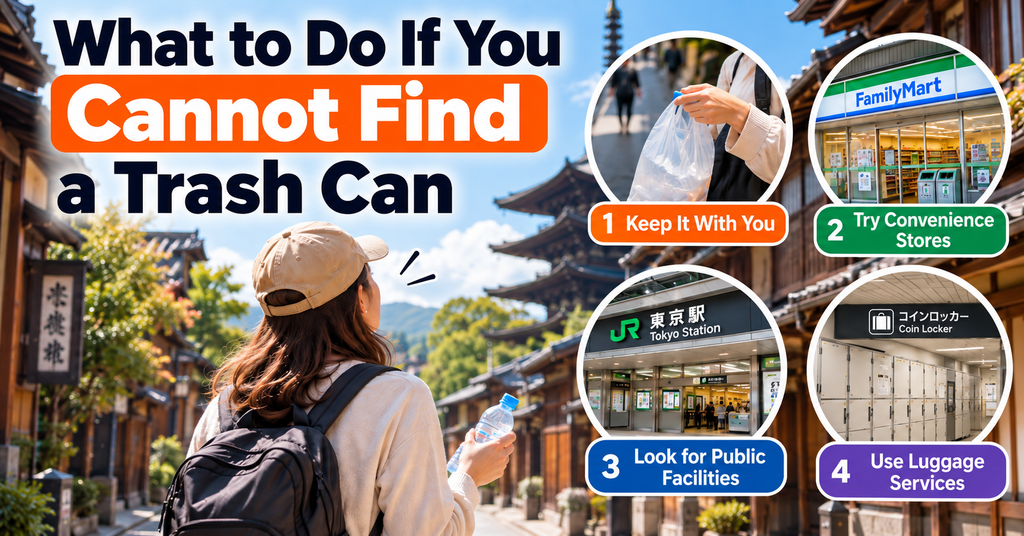
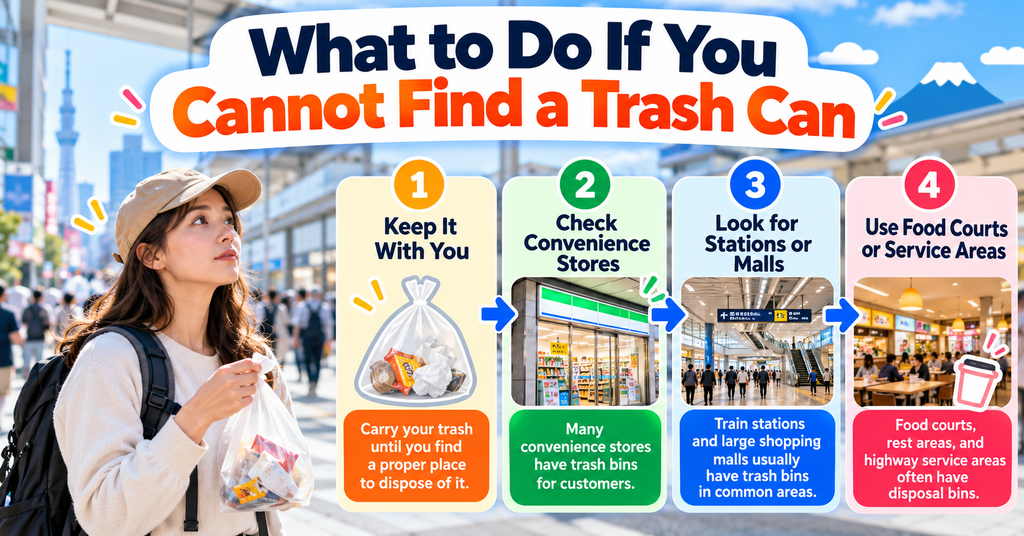
If you cannot find a trash can, keep your waste with you until you find a proper place to throw it away.
A small plastic bag can be useful for carrying wrappers, tissues, and other small items.
Check nearby convenience stores, train stations, shopping malls, or vending machine areas.
If the trash came from food or drinks you just bought, ask the shop or food stall whether they have a bin.
Do not leave trash on the street, on a bench, or next to a full trash can.
In Japan, carrying your trash for a while is normal.
When you finally find a bin, check the label and use the correct category.
For more travel etiquette tips, see the Japan Tourism Agency’s official responsible travel guide.
Can You Throw Away Trash at Convenience Stores?
Sometimes.
Some convenience stores in Japan have trash cans for customers.
However, not every store provides public bins.
The rules can also vary by location.
If a store has trash cans, they may be intended mainly for waste from products purchased there.
Do not bring large amounts of outside trash into a convenience store.
If you are unsure, check the signs or ask a staff member.
Buying a drink or snack before using the bin is also a polite choice.
Trash Rules at Train Stations and Vending Machines
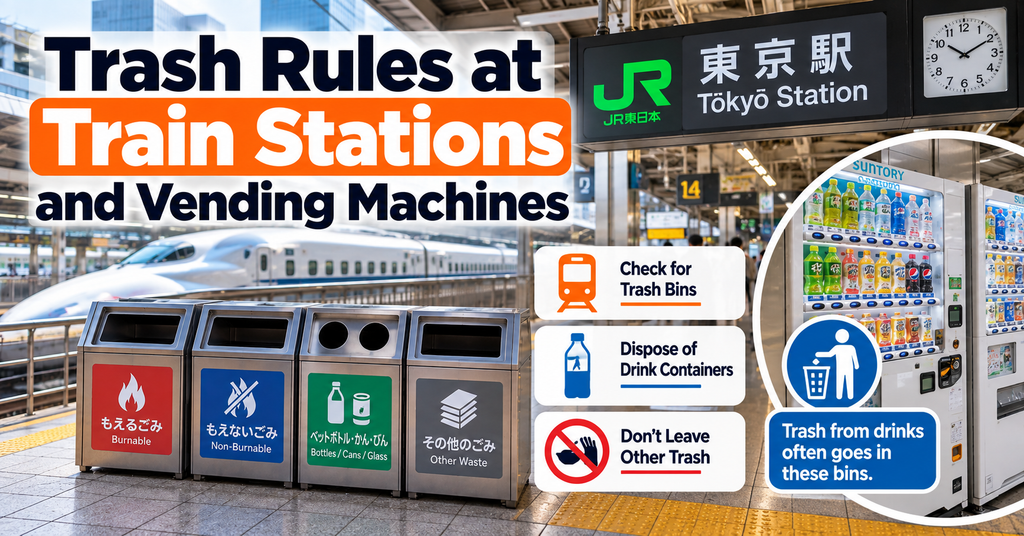
Train stations and vending machine areas often have trash or recycling bins.
However, these bins are usually meant for specific types of waste.
Vending machine bins are mainly for drink containers such as plastic bottles, cans, and glass bottles.
Do not put food waste, tissues, or general trash into these bins.
At train stations, you may see separate bins for newspapers, bottles, cans, or general waste.
The categories can vary by station and railway company.
Always check the label before throwing something away.
If there is no suitable bin, keep the trash with you until you find one.
What About Food and Drink Waste?
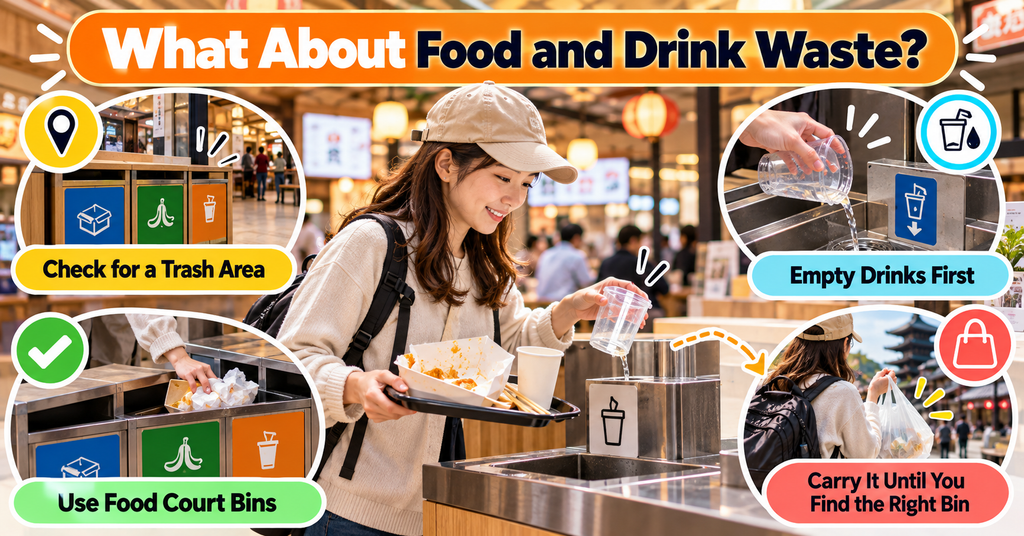
Food and drink waste can be harder to throw away than simple packaging.
If you buy food from a convenience store, food stall, or restaurant, check whether the shop has a trash area.
Food courts often have separate bins for leftover food, cups, trays, and other waste.
Drink containers should usually go into the correct recycling bin after they are empty.
Do not pour leftover drinks into a recycling bin.
Some facilities have a separate place to empty liquids before throwing away the container.
If you cannot find the correct bin, keep the waste with you until you find one.
Japanese Trash Etiquette for Tourists
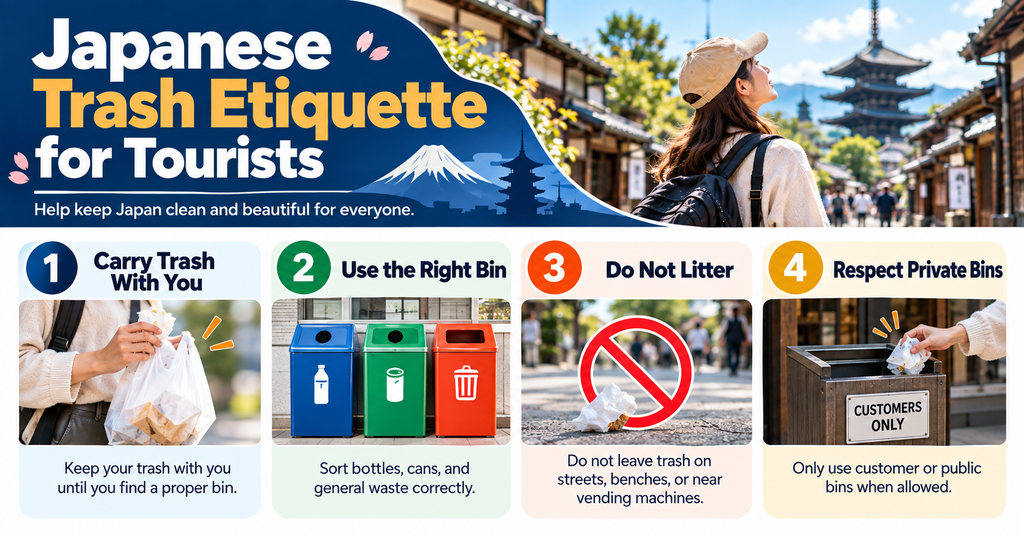
Trash etiquette in Japan is simple but important.
Do not leave waste on the street, on benches, or beside vending machines.
Use the correct bin whenever one is available.
If you cannot find a suitable bin, keep your trash with you.
You should also avoid using private trash bins unless they are clearly available for customers or visitors.
Following these basic rules helps keep public spaces clean.
For more everyday manners, see our guide to essential Japanese etiquette for tourists.
You can also check JNTO’s guide to Japanese customs and responsible travel.
Do Not Leave Trash on the Street
Do not leave trash on sidewalks, benches, walls, or the ground.
Even if a nearby bin is full, do not place waste beside it.
Carry the trash with you until you find another suitable bin.
This is common behavior in Japan.
Leaving trash in public areas is considered poor manners.
Do Not Use Private Trash Bins Without Permission
Some trash bins belong to private businesses, apartment buildings, or other facilities.
Do not use these bins unless they are clearly available to customers or visitors.
This includes bins behind shops or near residential buildings.
If you are unsure, ask a staff member before using the bin.
Use public or clearly marked customer bins whenever possible.
Keep Your Trash With You Until You Find a Bin
It is common to carry small amounts of trash until you find the right bin.
A small bag can make this easier.
Keep wrappers, tissues, receipts, and other waste together while you are walking.
When you find a trash can, check the label before using it.
This is one of the easiest ways to avoid throwing waste into the wrong bin.
Trash Cans in Japan FAQ
Here are some common questions travelers have about trash cans in Japan.
Trash bins are not always easy to find, but they are available in certain places.
The exact rules can vary depending on the location.
When in doubt, keep your trash with you and wait until you find the correct bin.
Why Does Japan Have So Few Public Trash Cans?
Japan has fewer public trash cans than many visitors expect.
There is no single reason for this.
Security concerns, maintenance, and local policies all affect where bins are placed.
Some businesses also provide bins mainly for their own customers.
As a result, travelers may need to carry their trash for a while.
Can I Throw Away Trash at a Convenience Store?
Sometimes.
Some convenience stores have trash cans for customers.
However, not every store allows public use.
The bins may also be intended mainly for waste from items bought at that store.
If you are unsure, check the signs or ask a staff member.
Are There Trash Cans at Train Stations?
Yes, many train stations have trash cans.
However, the number and location of bins vary.
You may find them near ticket gates, platforms, waiting areas, or vending machines.
Some stations have fewer bins than others.
Always check the labels before using them.
Where Do I Throw Away PET Bottles?
PET bottles should go into a recycling bin for plastic drink bottles.
These bins are often found near vending machines, train stations, and convenience stores.
Make sure the bottle is empty before throwing it away.
Do not put food waste or general trash into a PET bottle recycling bin.
What Should I Do With Trash From Takeout Food?
Check whether the shop, food stall, or food court has a trash area.
Some places provide bins for packaging, cups, and leftover food.
If there is no suitable bin, keep the trash with you.
Do not leave takeout containers on benches or beside vending machines.
Throw them away when you find the correct bin.
Final Tips for Dealing With Trash in Japan
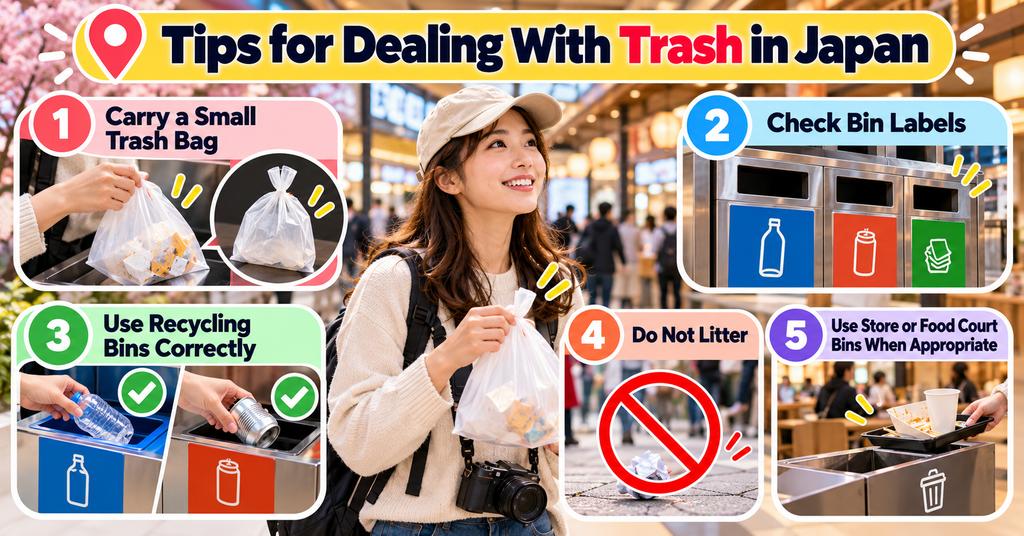
Trash cans in Japan can be harder to find than many travelers expect.
The easiest solution is to know where to look and be prepared to carry your trash for a while.
Convenience stores, train stations, vending machine areas, shopping malls, and highway rest stops are useful places to check.
Always read the labels before using a bin.
Do not put general trash into recycling bins for bottles or cans.
If you cannot find the correct bin, keep the waste with you.
A small plastic bag can be useful for carrying wrappers, tissues, and other small items.
Following these simple rules will make it easier to manage your trash while traveling in Japan.