Yokocho in Japan: A Guide to Japan’s Traditional Drinking Alleys
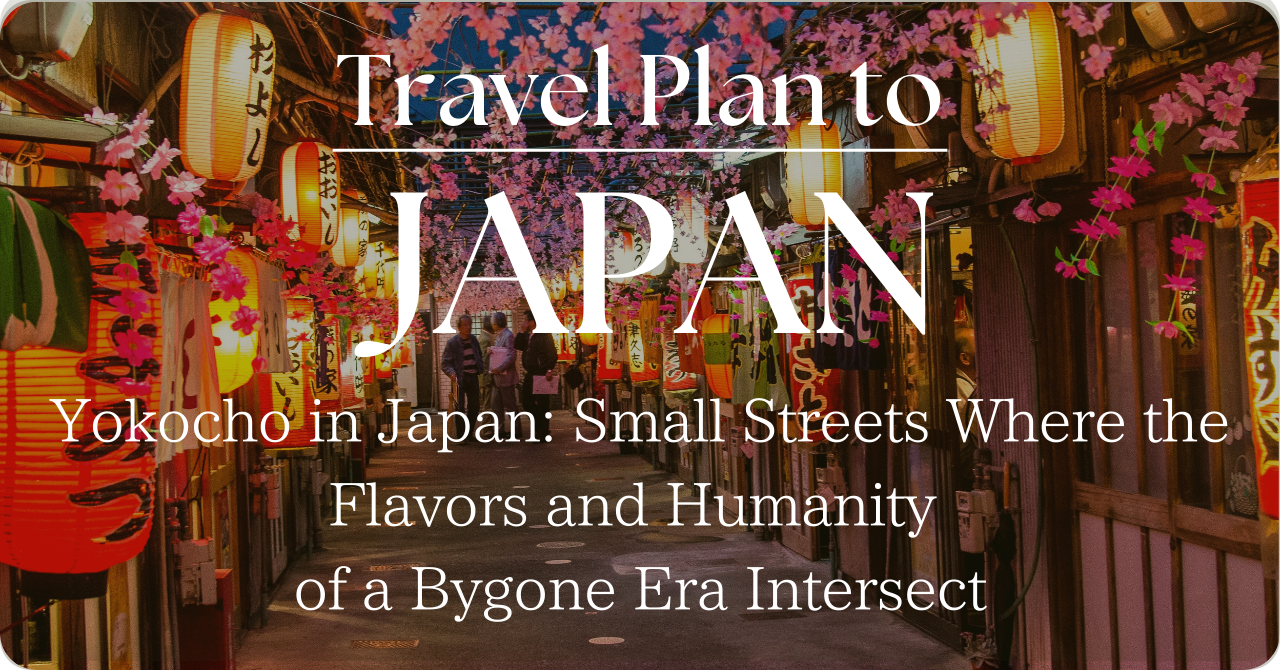
Yokocho (横丁) are narrow alleys and small streets lined with restaurants, izakayas, bars, and other local eateries.
For travelers, visiting a yokocho is a great way to experience a different side of Japan’s food culture. Many of these areas are filled with small establishments, counter seating, local specialties, and a lively atmosphere that feels very different from large restaurants or shopping centers.
Some yokocho have long histories, while others are modern dining areas inspired by the traditional alleyway style. The atmosphere, prices, payment methods, and house rules can vary greatly from one place to another.
In this guide, we’ll introduce the charm of yokocho in Japan, useful tips for first-time visitors, and popular areas in Tokyo, Osaka, and Fukuoka.
The Charm of Yokocho in Japan
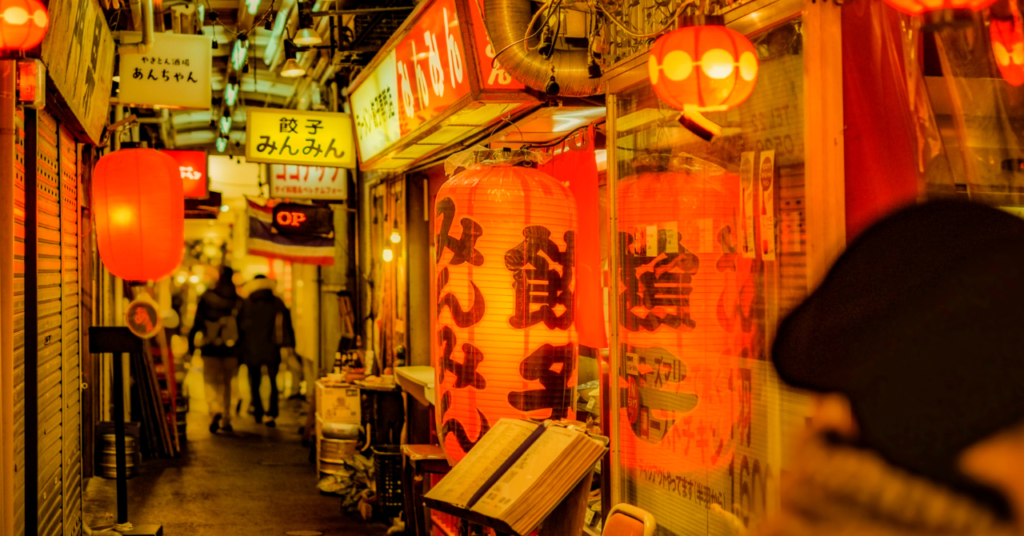
One of the biggest attractions of yokocho in Japan is the atmosphere.
Narrow alleys, small restaurants, glowing lanterns, counter seats, and the sounds of food being prepared create a dining experience that feels very different from large restaurants or modern shopping centers.
Because many establishments are small, you may sit close to the chef, staff, or other customers. However, you do not need to talk with strangers to enjoy the experience. Simply visiting a few small restaurants and trying different dishes is a great way to experience Japan’s casual dining culture.
Yokocho also vary greatly depending on the area. Some have a nostalgic atmosphere and a long history, while others are modern dining areas designed in a yokocho style.
What to Know Before Visiting a Yokocho in Japan
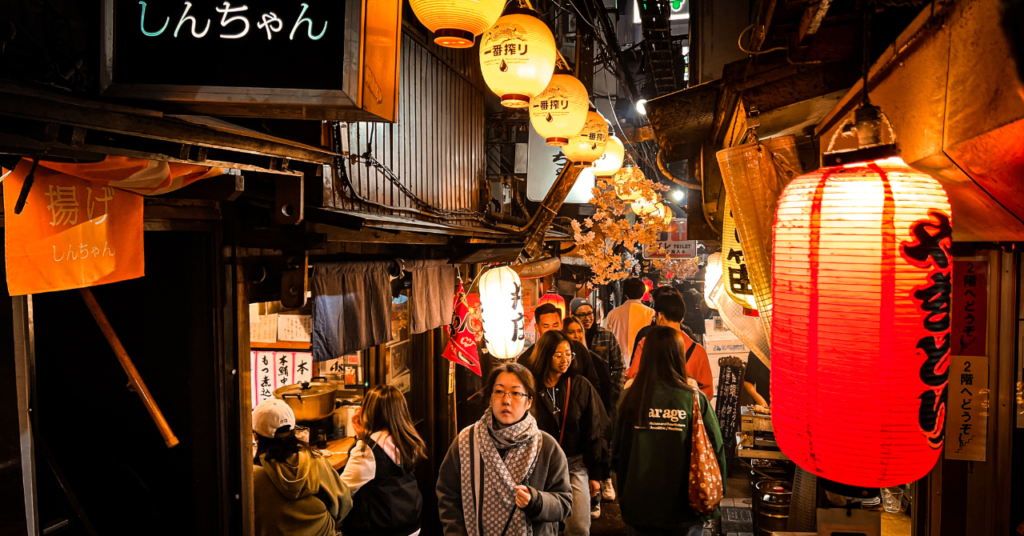
There are no universal rules that apply to every yokocho.
Each restaurant has its own system, so paying attention to signs and following the staff’s instructions is the most important thing.
Check the Restaurant’s Rules
Small restaurants in yokocho often have their own house rules. Depending on the establishment, there may be limited seating, time limits, minimum-order requirements, or rules about where to wait when the restaurant is full.
Check any signs or menu notes when you enter, and follow the staff’s instructions. If you are unsure about anything, a simple question before ordering can help avoid confusion.
Because each restaurant operates differently, do not assume that the rules from one yokocho shop will apply to another.
Yokocho in Osaka: Lively Alleys and Local Food
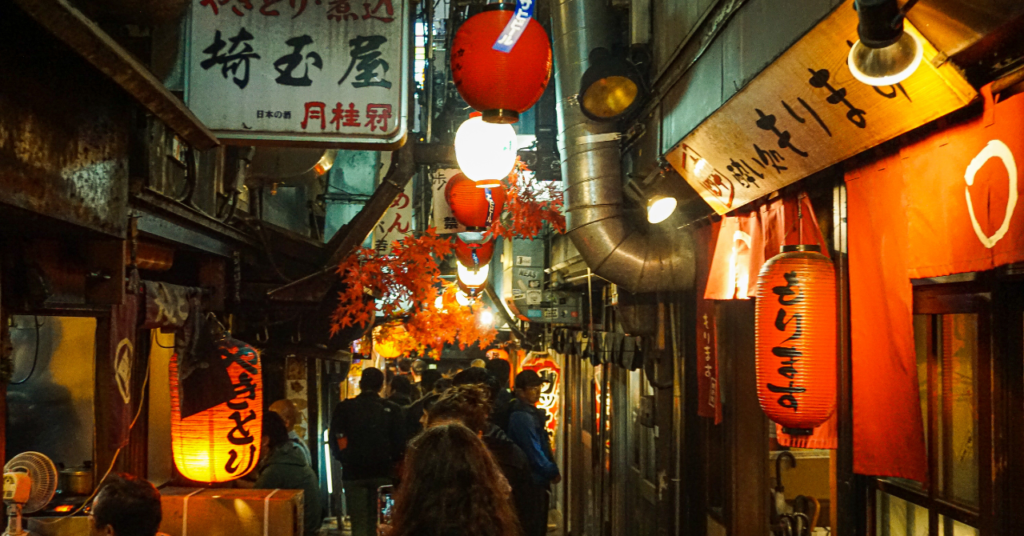
Osaka has many lively dining areas where visitors can enjoy local food, drinks, and a casual atmosphere.
From narrow alleys near Namba to long-established neighborhoods filled with izakayas and small restaurants, each area offers a different experience.
Here are several popular areas to explore when looking for yokocho-style dining in Osaka.
・Shinsekai & Janjan Yokocho
Shinsekai is one of Osaka’s best-known retro dining districts, with Tsutenkaku Tower standing at its center.
Within the area, Janjan Yokocho is a narrow shopping street lined with kushikatsu restaurants, izakayas, sushi shops, and other casual eateries. It is a great place to experience Osaka’s lively and nostalgic dining atmosphere.
・Hozenji Yokocho
Hozenji Yokocho is a narrow stone-paved alley in the Namba area, close to Dotonbori.
The atmospheric alley is lined with restaurants, including traditional Japanese restaurants, yakitori shops, sushi restaurants, and bars.
It is also next to Hozenji Temple and the moss-covered Mizukake Fudoson statue, making it easy to combine dining with a short sightseeing stop.
・Ura-Namba
Ura-Namba is a lively dining area near Namba known for its wide variety of small restaurants, izakayas, and standing bars.
The area has become especially popular for bar-hopping, making it easy to visit several establishments in one evening and try different foods and drinks.
Its casual atmosphere makes it a good option for travelers who want to explore Osaka’s nightlife beyond the main streets of Dotonbori.
・・Tenma & Ura-Tenma
The area around JR Tenma Station is known for its casual restaurants, izakayas, standing bars, and local shopping streets.
Nearby Ura-Tenma has a lively concentration of restaurants, while Tenjinbashisuji Shopping Street offers everything from traditional eateries to small food shops.
It is a good area for travelers who want to enjoy a more local dining atmosphere away from Osaka’s major tourist districts.
・Juso
Juso is a lively neighborhood centered around Juso Station, just across the Yodo River from central Osaka.
The area has many casual restaurants, izakayas, and standing bars, offering a different atmosphere from major tourist areas such as Namba and Dotonbori.
It is worth exploring if you want to experience a more local side of Osaka’s casual dining and nightlife.
These areas offer different ways to experience Osaka’s casual dining culture, from retro neighborhoods and traditional alleys to busy nightlife districts filled with small restaurants and bars.
Yokocho in Tokyo: Retro Alleys and Local Nightlife
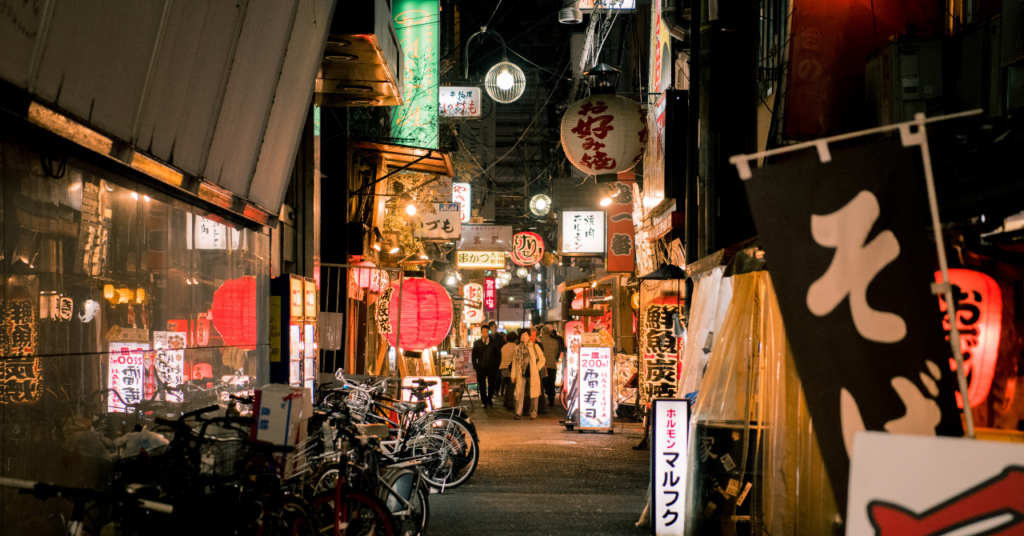
Tokyo has a wide variety of yokocho and retro drinking areas, from tiny bar alleys in Shinjuku to lively streets beneath railway tracks.
Some developed from postwar market districts, while others have evolved into modern nightlife areas. Each offers a different way to experience Tokyo’s casual dining and drinking culture.
・Shinjuku Golden Gai
Shinjuku Golden Gai is one of Tokyo’s best-known nightlife districts, with around 280 small bars packed into a compact network of narrow alleys.
Many bars have only a handful of seats, creating an intimate atmosphere that is very different from larger pubs or restaurants.
Some establishments are open to everyone, while others may have their own entry policies, cover charges, or house rules, so check before entering.
・Omoide Yokocho in Shinjuku
Omoide Yokocho is a narrow alley near the west side of Shinjuku Station, packed with small restaurants and izakayas.
Yakitori is one of the area’s best-known foods, and many establishments have only a few counter seats.
Its narrow lanes, lanterns, and compact eateries make it one of the easiest places for visitors to experience a classic Tokyo yokocho atmosphere.
・Asagaya Star Road
Asagaya Star Road is a local nightlife area immediately north of JR Asagaya Station.
The streets are lined with izakayas, small restaurants, music bars, karaoke bars, and other neighborhood drinking spots.
Compared with major nightlife districts such as Shinjuku, the area offers a more residential and local atmosphere.
・Ueno Ameyoko
Ameyoko is a busy shopping street stretching between Ueno and Okachimachi stations.
Although it is not a traditional yokocho, its narrow streets are packed with food stalls, shops, casual restaurants, and izakayas, creating a lively atmosphere that fits well with a Tokyo food-and-drink itinerary.
The area also has postwar market roots and remains one of Ueno’s most energetic places to explore.
・Yurakucho Gado-shita
The area beneath the railway tracks around Yurakucho is known for its izakayas, bars, and casual restaurants.
The combination of passing trains, compact eateries, and busy after-work crowds creates a distinctive Tokyo dining atmosphere.
It is a convenient place to stop for drinks or a casual meal while exploring the Ginza, Yurakucho, or Shimbashi areas.
From traditional yokocho to market streets and railway-arch restaurants, Tokyo offers many different ways to experience small-scale dining and nightlife beyond its larger restaurant districts.
Fukuoka Nightlife: Yatai Food Stalls and Local Dining
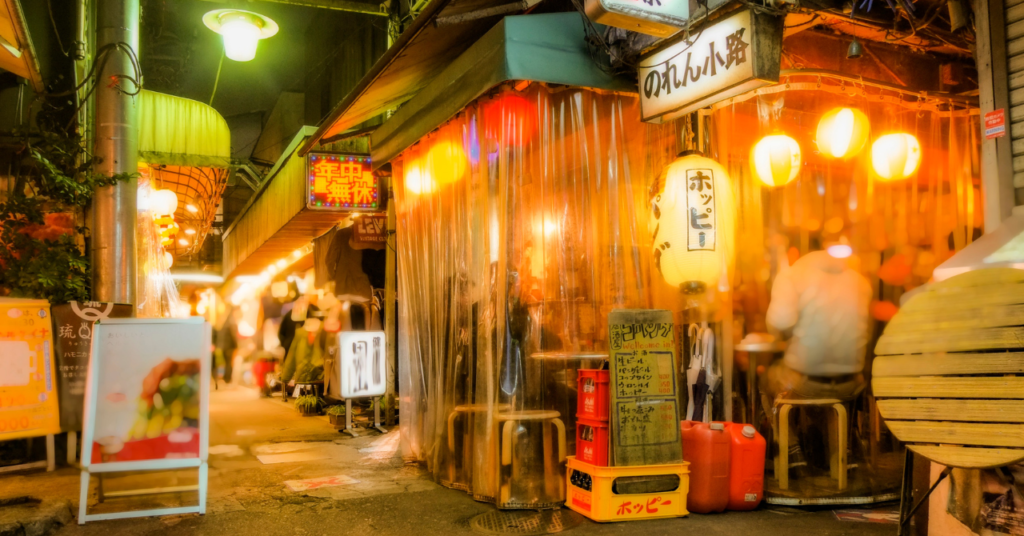
Fukuoka is better known for its yatai food stalls than for traditional yokocho.
Yatai are small, open-air food stalls that appear on the streets in the evening. Although they are different from yokocho, they offer a similarly casual and intimate way to enjoy local food and drinks.
The main yatai areas in Fukuoka City are Nakasu, Tenjin, and Nagahama, each offering a slightly different atmosphere.
・Nakasu
Nakasu is one of Fukuoka’s best-known nightlife districts and one of the city’s main yatai areas.
At night, food stalls appear near the Naka River, creating a lively atmosphere with both travelers and local diners.
Depending on the stall, you may find dishes such as tonkotsu ramen, yakitori, gyoza, oden, and other local specialties.
Rather than eating while walking, visitors usually sit at a stall, enjoy a few dishes and drinks, and then move on to another yatai if they want to try something different.
・Tenjin
Tenjin is another major yatai area in central Fukuoka.
Food stalls appear in several locations around the district in the evening, offering everything from classic ramen and yakitori to gyoza, oden, and more creative dishes.
The area is convenient for travelers because it is surrounded by shopping, hotels, restaurants, and public transportation, making it easy to include a yatai stop in an evening itinerary.
・Nagahama
Nagahama is another area associated with Fukuoka’s yatai culture and is especially well known for Nagahama ramen.
Nagahama ramen is famous for its thin noodles, and the area is closely associated with the kaedama system, which allows diners to order an extra serving of noodles for their remaining soup.
For travelers interested in Fukuoka’s ramen culture as well as its yatai experience, Nagahama is an interesting alternative to the busier Nakasu and Tenjin areas.
Fukuoka’s yatai are different from traditional yokocho, but both offer travelers the chance to enjoy food and drinks in small, casual spaces.
If you visit Fukuoka, trying a yatai in Nakasu, Tenjin, or Nagahama is one of the best ways to experience the city’s distinctive nightlife and food culture.
Tips for Enjoying Yokocho in Japan
・Consider the Timing
Popular yokocho can become crowded in the evening, especially on weekends and holidays.
If there is a particular restaurant you want to visit, check its opening hours and last-order time in advance. Arriving before the busiest hours may also make it easier to find a seat.
・Try More Than One Small Restaurant
One of the fun ways to enjoy a yokocho is to visit more than one small restaurant or bar during the evening.
You can enjoy a dish or drink at one establishment and then move on to another to try something different.
Rather than eating while walking, sit down and enjoy each restaurant while following its individual house rules.
・Try Local Drinks
Depending on the establishment, you may find sake, shochu, beer, highballs, and other drinks on the menu.
If you are unsure what to order, asking the staff for a recommendation can be a good way to discover a local or seasonal drink.
Non-alcoholic options are also available at many establishments, so drinking alcohol is not required to enjoy a yokocho.
・Visit Alone or in a Small Group
Many yokocho restaurants are small, with counter seating and limited tables.
Solo travelers can often enjoy these establishments comfortably, while small groups are usually easier to accommodate than large parties.
If you are traveling with a large group, check whether the restaurant can seat everyone before entering.
・Enjoy the Local Atmosphere
Every yokocho has its own atmosphere, shaped by the neighborhood, the restaurants, and the people who visit them.
Take time to enjoy the food, narrow streets, signs, lanterns, and everyday atmosphere around you.
You may have opportunities to speak with staff or other customers, but simply enjoying the surroundings respectfully is also part of the experience.
Conclusion
Yokocho offer a unique way to experience Japan’s casual dining culture, from narrow traditional alleys to modern areas inspired by the yokocho style.
Each area is different, so restaurant rules, payment methods, prices, and opening hours can vary. Checking these details in advance and following the staff’s instructions will help make your visit smoother.
Whether you explore a classic yokocho in Tokyo or Osaka, or try Fukuoka’s yatai food stalls, these small-scale dining areas can add a memorable and local feel to your trip to Japan.