Food Costs in Japan: 2026 Meal Prices & Daily Budget Guide
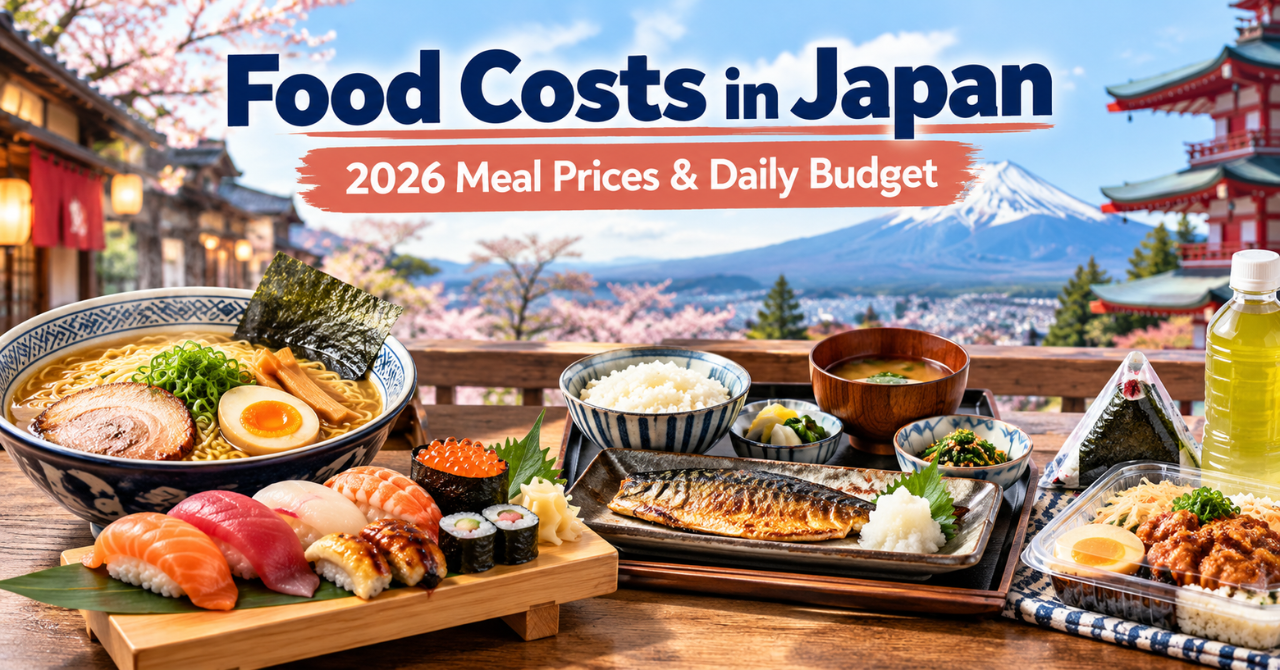
How much should you budget for food in Japan?
The good news is that eating in Japan does not have to be expensive.
You can enjoy a filling bowl of ramen, a set meal, convenience-store food, conveyor-belt sushi, or a casual restaurant meal without spending a huge amount of money. At the same time, Japan also has premium sushi, wagyu, kaiseki, and fine dining for travelers who want to spend more.
For many travelers, a practical food budget is around ¥5,000–¥8,000 per day. Budget travelers may be able to eat for around ¥2,500–¥4,000 per day, while travelers who want premium meals should consider ¥10,000 or more per day.
In this guide, we explain typical food costs in Japan in 2026, including convenience stores, ramen, sushi, teishoku, yakiniku, izakaya, fast food, cafés, and more.
All prices in this guide are approximate and shown in Japanese yen. Actual prices vary depending on the restaurant, city, location, menu, and season.
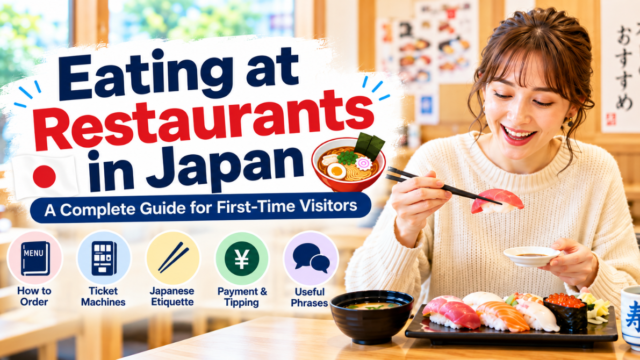
If this is your first time eating out in Japan, you may also want to read our complete guide to eating at restaurants in Japan.
From a Local Perspective: A realistic food budget in Japan depends more on restaurant style than on the city itself. Mixing convenience-store breakfasts, casual lunches, and one nicer dinner is an easy way to control costs without feeling restricted.
- Quick Answer: How Much Does Food Cost in Japan?
- Typical Meal Prices in Japan
- Convenience Stores: ¥500–¥1,000 Per Meal
- Breakfast and Cafés: ¥400–¥1,000
- Gyudon and Casual Rice Bowls: ¥500–¥1,000
- Udon and Soba: ¥500–¥1,200
- Ramen: ¥900–¥1,500
- Teishoku Set Meals: ¥800–¥1,500
- Sushi: ¥1,000 to ¥10,000+
- Izakaya: ¥2,500–¥5,000+ Per Person
- Yakiniku: ¥3,000–¥6,000+ Per Person
- Fast Food: ¥500–¥1,200
- Snacks, Desserts, and Drinks
- Do You Need to Tip at Restaurants in Japan?
- Sample Daily Food Budgets in Japan
- How to Save Money on Food in Japan
- Cash or Card for Food in Japan?
- What If You Have Food Allergies?
- Final Tips: How Much Should You Budget for Food in Japan?
Quick Answer: How Much Does Food Cost in Japan?
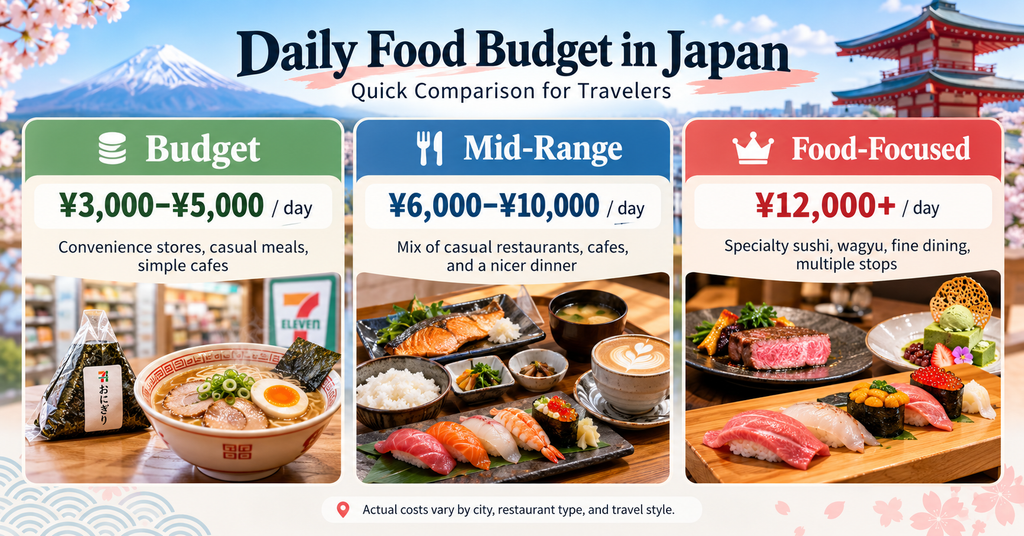
Here is a simple starting point for planning your daily food budget.
| Travel Style | Approximate Daily Food Budget | What It Can Include |
|---|---|---|
| Budget | ¥2,500–¥4,000 | Convenience stores, gyudon, noodles, fast food, casual meals |
| Typical Traveler | ¥5,000–¥8,000 | Cafés, teishoku, ramen, sushi, casual restaurants, snacks |
| Food-Focused Trip | ¥10,000+ | Premium sushi, yakiniku, wagyu, izakaya, specialty restaurants |
These are planning estimates rather than fixed amounts.
If breakfast is included with your hotel, for example, your daily food cost may be lower. Alcohol, premium restaurants, cafés, desserts, and multiple snacks can increase your budget quickly.
The Japan National Tourism Organization’s budget travel guide also notes that casual restaurants can be a good way to keep dining costs under control.
Typical Meal Prices in Japan
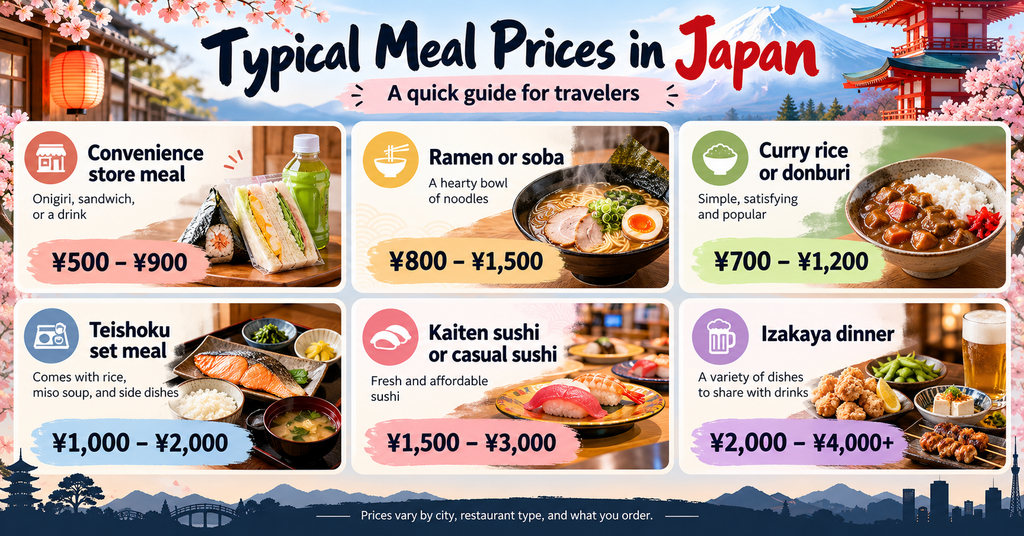
Japan offers food at almost every price level.
Here is a useful overview of what international travelers can expect to pay.
| Type of Food | Typical Price |
|---|---|
| Convenience store meal | ¥500–¥1,000 |
| Breakfast / café | ¥400–¥1,000 |
| Gyudon / casual rice bowl | ¥500–¥1,000 |
| Udon / soba | ¥500–¥1,200 |
| Ramen | ¥900–¥1,500 |
| Teishoku set meal | ¥800–¥1,500 |
| Conveyor-belt sushi | ¥1,000–¥3,000 |
| Casual sushi restaurant | ¥2,000–¥5,000 |
| Izakaya | ¥2,500–¥5,000+ |
| Casual yakiniku | ¥3,000–¥6,000+ |
| High-end sushi / fine dining | ¥10,000+ |
Restaurants near major tourist attractions, airports, luxury hotels, and central shopping districts may be more expensive than restaurants in ordinary residential or business areas.
Convenience Stores: ¥500–¥1,000 Per Meal
Japanese convenience stores are one of the easiest ways to keep your food budget under control.
Major chains such as 7-Eleven, FamilyMart, and Lawson sell much more than snacks. You can find complete meals, breakfast items, desserts, coffee, and drinks.
Common choices include:
- Onigiri: rice balls with fillings such as salmon, tuna mayonnaise, or pickled plum
- Sandwiches and bread: useful for breakfast or a light meal
- Bento: boxed meals with rice, meat, fish, or vegetables
- Pasta and noodles: often heated in the store
- Salads and side dishes
- Hot snacks: fried chicken, croquettes, and other small items
- Desserts: pudding, cakes, ice cream, and Japanese sweets
A light breakfast may cost only a few hundred yen, while a more complete convenience-store meal with a main dish, drink, and dessert may approach ¥1,000 or more.
Convenience stores are especially useful when you arrive late at night, have an early train, or simply want a quick meal between sightseeing stops.
Breakfast and Cafés: ¥400–¥1,000
Breakfast can be one of the easiest meals to keep inexpensive in Japan.
Many coffee shops and fast-food restaurants offer morning sets that include coffee with toast, eggs, sandwiches, or other breakfast items.
Convenience stores are another inexpensive option.
If you prefer a larger hotel breakfast or a specialty café in a popular tourist area, the price may be considerably higher.
A reasonable budget for a casual breakfast is around ¥400–¥1,000 per person.
Gyudon and Casual Rice Bowls: ¥500–¥1,000
Gyudon, or beef served over rice, is one of Japan’s classic low-cost meals.
Chains such as Yoshinoya, Sukiya, and Matsuya are common throughout Japan and are especially useful when you want something quick and filling.
Basic rice bowls are often available for around ¥500, while larger portions, toppings, side dishes, soup, and set meals increase the price.
This type of restaurant is a great option for travelers who want to save money without relying entirely on convenience-store meals.
Udon and Soba: ¥500–¥1,200
Udon and soba are often affordable alternatives to ramen.
A simple bowl of noodles can cost around ¥500–¥800 at casual shops, while larger portions, tempura, meat, or other toppings can push the total above ¥1,000.
Some restaurants use self-service systems where you choose your noodles, add tempura or side dishes, and pay at the end of the counter.
Japan’s official tourism site also highlights udon, soba, and teishoku as common everyday dining options. You can read more in the JNTO guide to dining in Japan.
Ramen: ¥900–¥1,500
Ramen remains one of the most popular meals for visitors to Japan.
For a standard bowl, budgeting around ¥900–¥1,500 is realistic in many places in 2026.
Prices vary depending on the restaurant, city, and toppings.
Adding chashu pork, an egg, extra noodles, rice, or additional toppings can easily add several hundred yen to your meal.
Some well-known ramen chains also charge different prices depending on the location. This is another reason to treat any price guide as an estimate rather than a fixed price.
If you want to check a specific restaurant before visiting, look at its latest official menu. For example, ICHIRAN publishes current prices for individual locations.
Teishoku Set Meals: ¥800–¥1,500
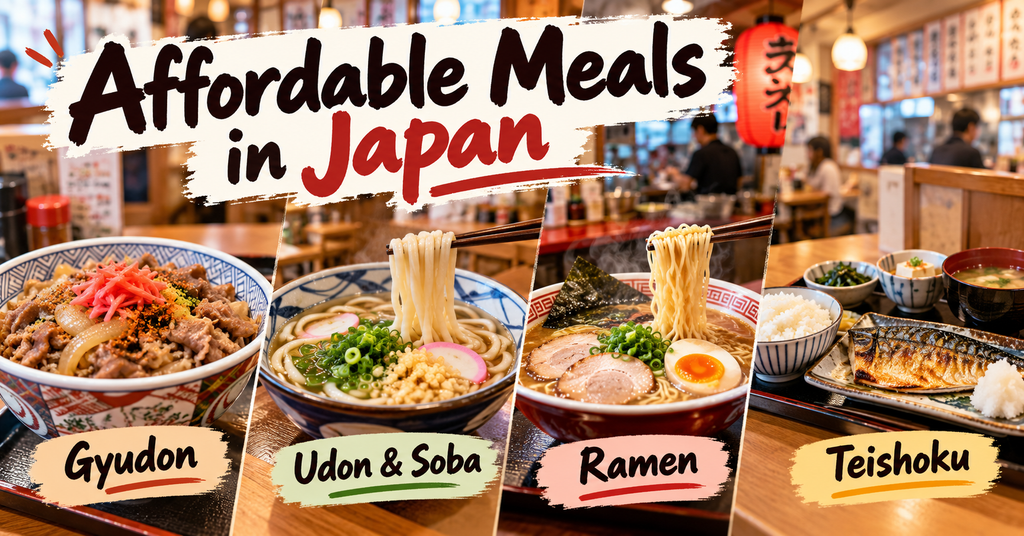
Teishoku is one of the best-value ways to eat a complete Japanese meal.
A typical set may include:
- Rice
- Miso soup
- A main dish such as grilled fish, fried chicken, pork, or another protein
- Pickles
- A small side dish
Many casual teishoku restaurants offer meals for roughly ¥800–¥1,500.
Lunch sets at independent restaurants can also provide excellent value compared with ordering individual dishes at dinner.
Sushi: ¥1,000 to ¥10,000+
Sushi prices in Japan vary enormously.
You can have an inexpensive conveyor-belt sushi meal or spend tens of thousands of yen on a premium omakase experience.
Conveyor-Belt Sushi: ¥1,000–¥3,000
Conveyor-belt sushi, or kaitenzushi, is one of the easiest ways for travelers to enjoy sushi on a budget.
Individual plates are usually priced according to the type of seafood. Premium tuna, sea urchin, seasonal fish, and special dishes generally cost more than standard items.
For many travelers, around ¥1,000–¥3,000 per person is a practical estimate for a casual meal.
Casual Sushi Restaurants: ¥2,000–¥5,000
At a traditional but casual sushi restaurant, expect prices to be higher than at conveyor-belt sushi.
Lunch sets may offer particularly good value.
High-End Sushi: ¥10,000+
Premium sushi and omakase can easily cost ¥10,000 or more per person, and famous restaurants can be much more expensive.
If a specific sushi restaurant is important to your trip, check the menu and reservation requirements before you go.
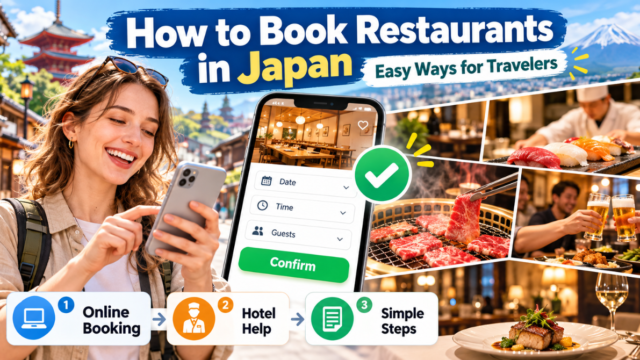
Our guide to booking restaurants in Japan explains several ways international travelers can make reservations without speaking Japanese.
Izakaya: ¥2,500–¥5,000+ Per Person
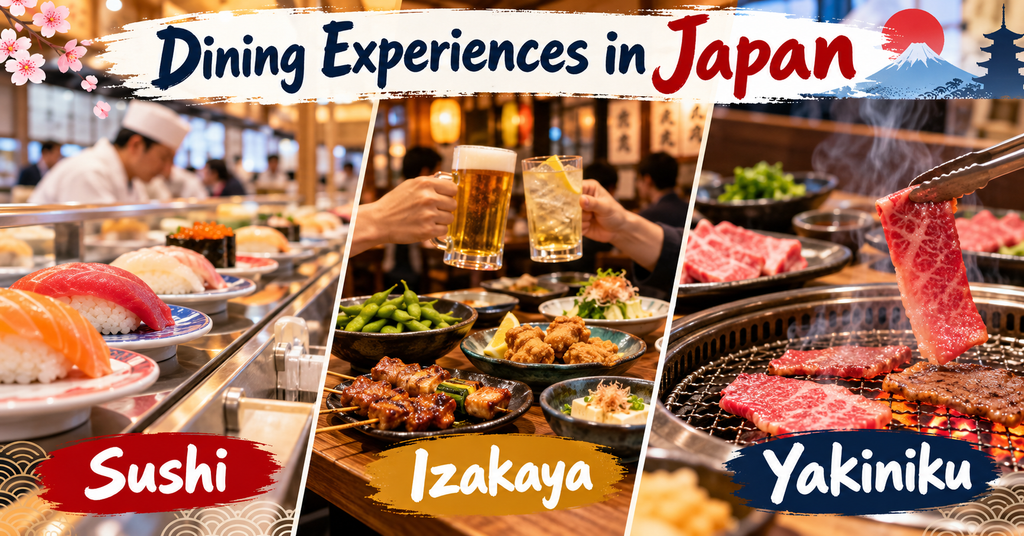
An izakaya is a casual Japanese pub where people order several small dishes to share, often together with beer, sake, or other drinks.
Your final bill depends heavily on how many dishes and drinks you order.
A casual visit may cost around ¥2,500–¥5,000 per person, while a long evening with several drinks can cost more.
Watch for Otoshi and Table Charges
One cost that can surprise first-time visitors is otoshi.
At some izakaya, a small appetizer is automatically brought to your table after you sit down. It is not always complimentary and may function as a table charge.
JNTO specifically notes that some Japanese restaurants, especially izakaya, may have table charges or automatically served appetizers. If you are unsure, check the menu or ask the staff before ordering.
You can learn more from JNTO’s official guide to Japanese customs and restaurant etiquette.
Yakiniku: ¥3,000–¥6,000+ Per Person
Yakiniku is Japanese-style grilled meat, usually cooked by diners at a grill built into the table.
Casual yakiniku restaurants may cost around ¥3,000–¥6,000 per person.
Premium wagyu, high-quality cuts, large amounts of meat, and alcohol can quickly increase the final bill.
All-you-can-eat courses can be useful if you want to know your food cost in advance, although drinks may be charged separately.
High-end wagyu restaurants can cost ¥10,000 or considerably more per person.
Fast Food: ¥500–¥1,200
Fast food is another inexpensive option in Japan.
Along with international chains such as McDonald’s and Burger King, Japan has domestic chains serving burgers, rice bowls, curry, noodles, and other quick meals.
A basic meal can start around ¥500, while larger sets and premium items may cost ¥1,000 or more.
For reference, McDonald’s Japan publishes its current menu and prices in English.
Prices may be higher at some airports, stations, tourist areas, and special-location restaurants.
Snacks, Desserts, and Drinks
Small purchases can add more to your daily food budget than you might expect.
You may want to budget extra for:
- Convenience-store desserts
- Japanese sweets
- Street food
- Specialty coffee
- Bubble tea or other drinks
- Ice cream
- Vending-machine drinks
- Beer or sake
A traveler who frequently stops at cafés and snack shops could easily spend an additional ¥500–¥1,500 or more per day.
Do You Need to Tip at Restaurants in Japan?
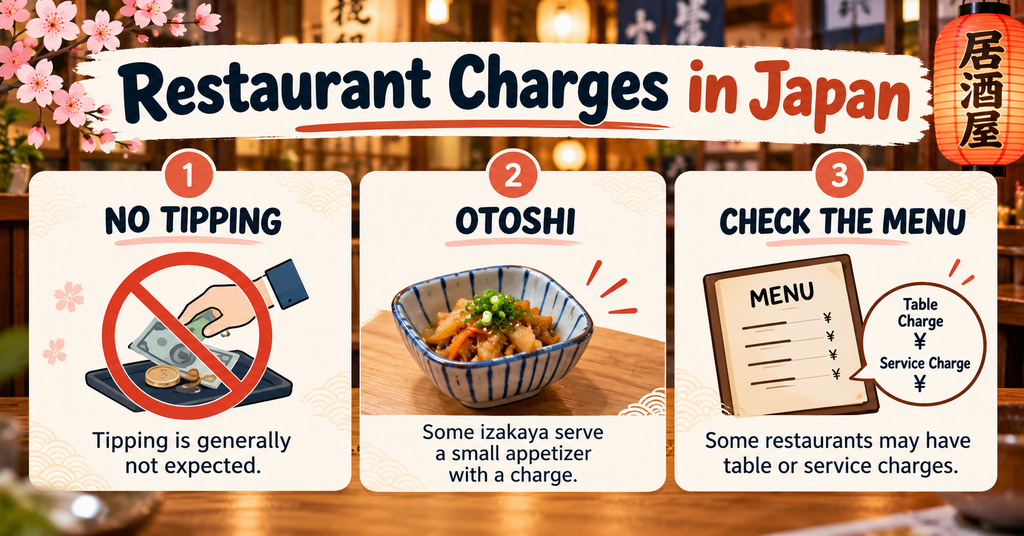
In most situations, you do not need to tip at restaurants in Japan.
You normally pay the amount shown on your bill without adding a percentage for service.
Trying to leave cash on the table may even cause confusion because staff may think you accidentally forgot your money.
JNTO also confirms that tipping is generally not customary at restaurants, cafés, taxis, and hotels in Japan. See the official JNTO tipping guide for more information.
For other dining customs, read our Japanese dining etiquette guide.
Sample Daily Food Budgets in Japan
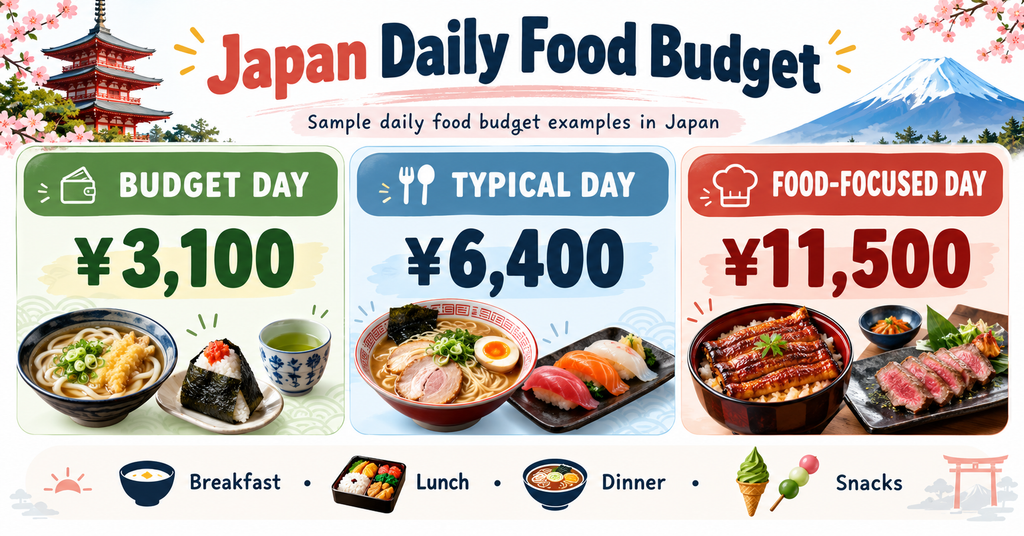
Looking at a full day can make these numbers easier to understand.
Budget Day: About ¥3,100
| Convenience-store breakfast | ¥600 |
| Udon or gyudon lunch | ¥800 |
| Ramen or casual dinner | ¥1,200 |
| Drinks and snacks | ¥500 |
| Total | ¥3,100 |
Typical Travel Day: About ¥6,400
| Café breakfast | ¥800 |
| Teishoku lunch | ¥1,300 |
| Izakaya dinner | ¥3,500 |
| Coffee, dessert, and drinks | ¥800 |
| Total | ¥6,400 |
Food-Focused Day: About ¥11,500
| Breakfast | ¥1,000 |
| Sushi lunch | ¥3,000 |
| Yakiniku or specialty dinner | ¥6,000 |
| Café, dessert, and snacks | ¥1,500 |
| Total | ¥11,500 |
These examples are only for planning. You can easily mix a cheap lunch with an expensive dinner, which is one of the best ways to enjoy Japan without overspending.
How to Save Money on Food in Japan
You do not need to eat convenience-store food for every meal to travel Japan on a budget.
There are several easy ways to save money while still enjoying Japanese food.
1. Look for Lunch Sets
Many restaurants offer lunch menus that are cheaper than their dinner options.
This can be a good way to try sushi, yakiniku, tonkatsu, or other restaurants at a lower price.
2. Use Convenience Stores and Supermarkets Strategically
Instead of eating every meal at a restaurant, use convenience stores for breakfast, drinks, snacks, or an occasional quick meal.
Supermarkets can also have a wide selection of bento, sushi, prepared dishes, and desserts.
3. Try Gyudon, Udon, Soba, and Teishoku
These everyday meals are often filling and inexpensive.
They are also a good way to experience the kinds of casual meals many people in Japan eat regularly.
4. Eat Away From the Busiest Tourist Streets
Restaurants directly beside famous tourist attractions may be more expensive.
Walking a few streets away from a major sightseeing area can sometimes give you more choices at lower prices.
5. Check Prices Before You Enter
Many Japanese restaurants display menus, food models, or prices near the entrance.
This makes it easier to check your budget before sitting down.
6. Decide Which Meals Are Worth Splurging On
If you really want to try premium sushi or wagyu, plan one special meal instead of trying to make every meal expensive.
For example:
Cheap breakfast → casual lunch → premium dinner
can give you a memorable food experience without making your entire daily budget expensive.
Cash or Card for Food in Japan?
Credit cards and cashless payments are widely accepted at many restaurants, convenience stores, cafés, and chains.
However, smaller restaurants and some ticket-vending-machine restaurants may still prefer or require cash.
It is a good idea to carry some Japanese yen even if you usually pay by card.
For more details, see our guide on how much cash you need in Japan.
What If You Have Food Allergies?
If you have a serious food allergy, price should not be your only consideration when choosing where to eat.
Ingredients such as soy, wheat, fish, shellfish, egg, milk, sesame, and nuts can appear in sauces, broths, seasonings, and prepared foods.
Always communicate your allergy clearly and confirm ingredients whenever possible.
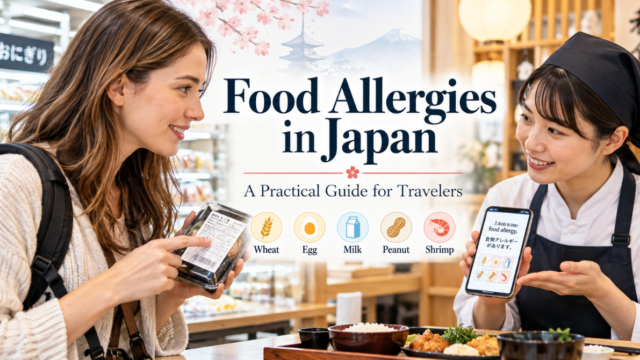
Read our complete guide to food allergies in Japan before your trip.
Final Tips: How Much Should You Budget for Food in Japan?
Japan can work with almost any food budget.
If your main goal is keeping costs low, around ¥2,500–¥4,000 per day can be possible by using convenience stores, noodle shops, rice-bowl chains, fast food, and other casual restaurants.
For most international travelers, around ¥5,000–¥8,000 per day gives you much more flexibility for restaurants, local dishes, cafés, snacks, and an occasional drink.
If food is one of the main reasons for your trip, consider budgeting ¥10,000 or more per day so you can enjoy sushi, yakiniku, wagyu, izakaya, and other special dining experiences without worrying too much about every meal.
The best strategy is often to mix inexpensive everyday meals with one or two special experiences.
Japan has excellent food at every price level, so you do not need a luxury budget to eat well.
Plan your food budget before your trip, keep some yen available, and leave a little extra room for the snacks and restaurants you discover along the way.
Enjoy eating your way through Japan!