Best Diving Spots in Japan: 3 Amazing Places to Explore
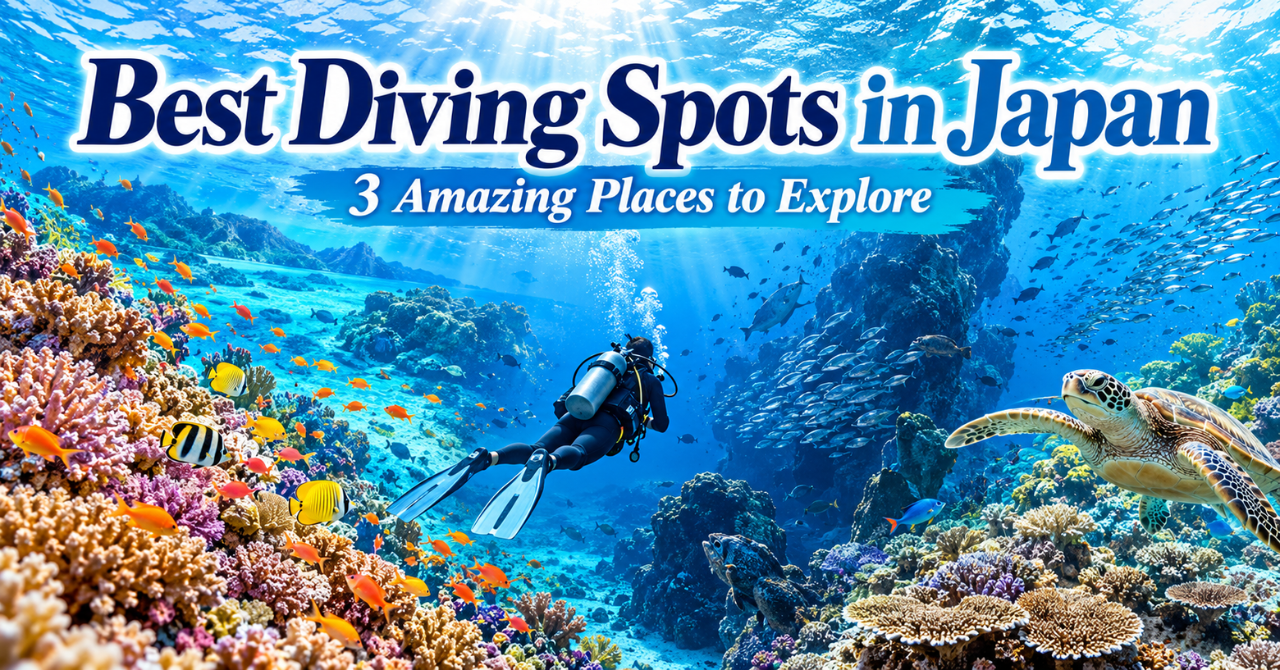
Japan may be famous for temples, cities, mountains, and food, but it is also an excellent destination for scuba diving.
The country stretches across several climate zones, creating very different underwater environments — from subtropical coral reefs in Okinawa and Amami to the rich marine ecosystems of the Izu Peninsula near Tokyo.
In this guide, we introduce three of the best diving spots in Japan: the Kerama Islands in Okinawa, Futo on the Izu Peninsula, and Amami Oshima in Kagoshima.
Each destination offers a different experience, whether you want crystal-clear tropical water, easy access from Tokyo, colorful marine life, or a longer island escape.
Important: Diving conditions depend on weather, waves, currents, visibility, season, and your experience level. Always follow the instructions of a qualified local dive operator and never enter unfamiliar dive sites without appropriate guidance.
Local Tip: Japan’s best diving season depends heavily on the region. Okinawa, the Izu area, and northern destinations can have very different water temperatures and seasonal conditions, so plan around the specific site rather than Japan as a whole.
- 3 Best Diving Spots in Japan at a Glance
- Do You Need a Diving Certification in Japan?
- Kerama Islands – Okinawa
- Futo – Izu Peninsula, Shizuoka
- Amami Oshima – Kagoshima
- Which Diving Spot Should You Choose?
- When Is the Best Time to Dive in Japan?
- Important Diving Safety Tips for Travelers
- Responsible Diving in Japan
- How to Choose a Dive Shop in Japan
- Final Tips
3 Best Diving Spots in Japan at a Glance
| Diving Area | Location | Best For | Travel Style |
|---|---|---|---|
| Kerama Islands | Okinawa | Clear water, coral reefs, tropical fish | Island stay or day trip from Naha |
| Futo | Izu Peninsula, Shizuoka | Marine life and easy access from Tokyo | Day trip or overnight trip |
| Amami Oshima | Kagoshima | Coral reefs, tropical marine life, island nature | Multi-day island trip |
Do You Need a Diving Certification in Japan?
It depends on the type of diving you want to do.
Certified divers can book regular recreational dives, often called fun diving in Japan, according to their certification level and experience.
If you have never been certified, many dive operators offer introductory scuba experiences under direct instructor supervision.
Do not book a certified-diver course or dive simply because the location looks beginner-friendly. Always tell the operator your certification level, number of logged dives, and when you last went diving.
If you are completely new to scuba diving, you can also learn more about introductory diving through the PADI guide to trying scuba diving without certification.
Kerama Islands – Okinawa
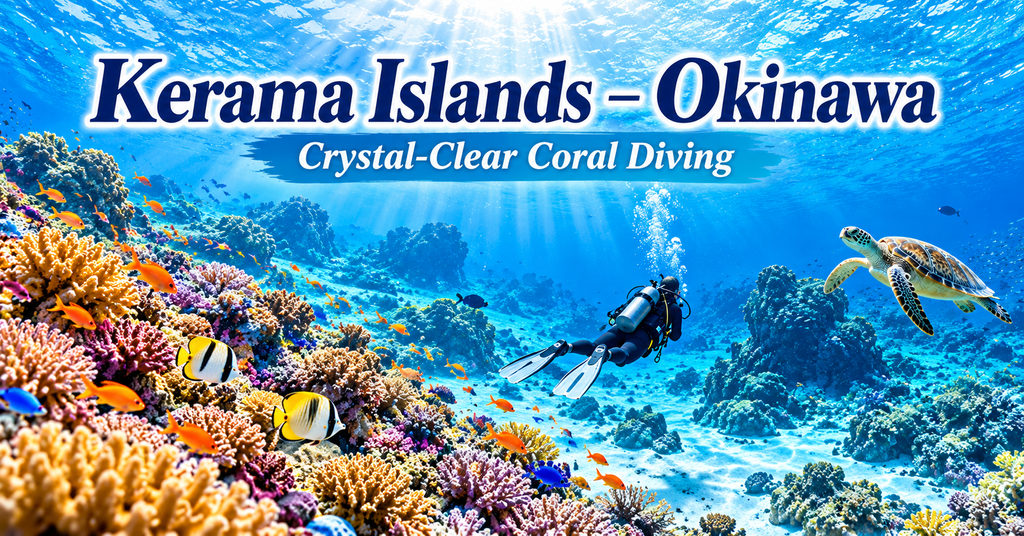
The Kerama Islands are located west of Okinawa Island and are one of Japan’s most famous tropical diving areas.
The archipelago includes inhabited islands such as Tokashiki, Zamami, Aka, and Geruma, along with many smaller uninhabited islands and reefs.
The surrounding sea is famous for its vivid blue color, commonly called Kerama Blue.
Keramashoto National Park was officially designated on March 5, 2014, and most of the national park area is marine environment.
Why Dive in the Kerama Islands?
The Kerama Islands offer exceptionally clear water, coral reefs, white sandy areas, tropical fish, and a wide variety of boat-diving sites.
JNTO describes the area as having close to 100 dive sites, with many suitable for less experienced divers because of generally calm and clear conditions.
Depending on the site and season, divers may encounter colorful reef fish, anemonefish, sea turtles, and many different coral species.
Wildlife sightings are never guaranteed, so choose the destination for the overall underwater environment rather than expecting one specific animal.
Who Is Kerama Best For?
- Travelers who want tropical coral diving
- Beginners diving with an instructor or guide
- Certified divers looking for multiple boat-dive options
- Underwater photographers
- Travelers already staying in Okinawa
How to Get There
Most international visitors first arrive at Naha Airport on Okinawa Island.
Ferries and high-speed boats depart from Tomari Port in Naha for islands such as Zamami, Aka, and Tokashiki.
Another option is to join a diving boat operating directly from the Naha area, allowing you to visit Kerama dive sites without staying overnight on the islands.
Schedules can change because of weather and sea conditions, so check transportation and your dive operator’s meeting point before traveling.
For official diving information, see the JNTO Okinawa Diving Guide.
You can also learn about the protected environment from the Ministry of the Environment’s Keramashoto National Park guide.
Protect the Coral Reefs
The coral reefs are part of what makes Kerama special, but they are also vulnerable to damage.
Avoid touching, standing on, or kicking coral with your fins. Maintain good buoyancy and follow local guides around sensitive areas.
The Ministry of the Environment specifically notes that damage from fin kicks is one of the pressures affecting coral reefs in the Kerama area.
Futo – Izu Peninsula, Shizuoka
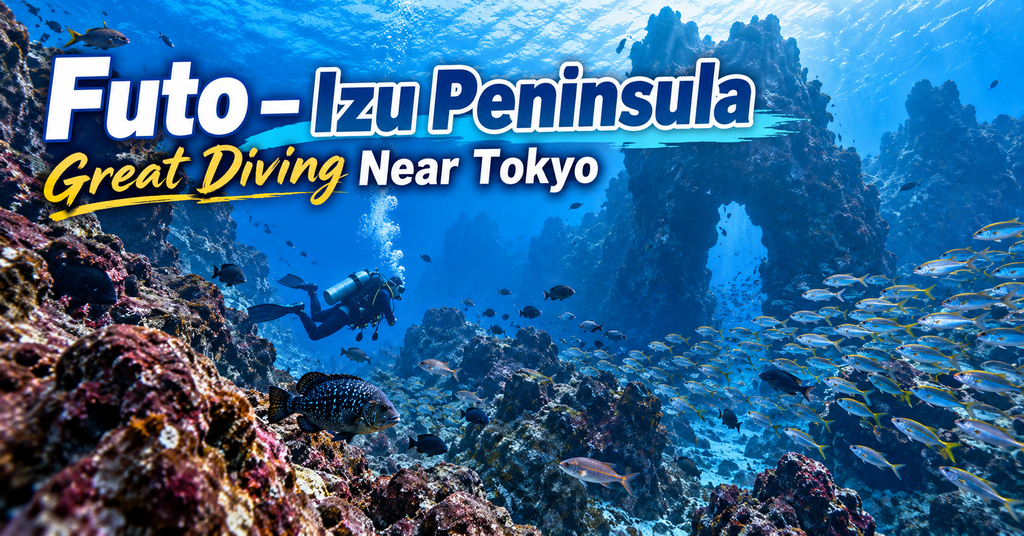
If you want to dive without flying to a remote island, Futo on the Izu Peninsula is an excellent option.
The Izu Peninsula is one of Japan’s best-known diving regions and is much easier to reach from Tokyo than Okinawa or Amami.
Futo offers both shore and boat diving and is known for its abundance of marine life.
What Makes Futo Special?
Futo is especially popular with divers interested in fish watching and underwater photography.
Its best-known shore diving area is Yokobama.
Marine life can include frogfish, gobies, rays, seasonal schools of fish, and many smaller creatures that appeal to macro photographers.
One distinctive feature is Futo Hole, a small underwater cavern within the Yokobama area that can create beautiful light effects under suitable sea conditions.
The site should only be entered when conditions and your experience level are appropriate and when your guide considers it safe.
Bigfin Reef Squid Season
One particularly interesting seasonal attraction is the spawning of bigfin reef squid.
JNTO notes that spawning activity can often be observed in shallow water from around June through August.
As with all wildlife encounters, timing and sightings vary according to natural conditions.
Access from Tokyo
Futo is located on the eastern side of the Izu Peninsula.
Depending on the dive shop, pickup services may be available from Futo Station, Jogasaki-Kaigan Station, or Izu-Kogen Station.
Because meeting arrangements differ between operators, confirm your pickup location before traveling rather than simply arriving at the nearest station.
If you plan to explore the Izu Peninsula beyond your dive site, renting a car can also be useful. See our complete guide to renting a car in Japan.
For more information about diving in the area, see the JNTO Shizuoka Diving Guide.
The official Ito tourism guide to the Futo Diving Area also provides local information.
Relax in an Onsen After Diving
One advantage of diving in Izu is that the region is also famous for hot springs.
Futo even has a distinctive facility called Onsen Maru, a fishing boat converted into an open-air hot spring bath where divers can warm up while still wearing swimwear.
If you plan to use a regular Japanese hot spring later in your trip, remember that normal onsen etiquette is very different from a swimsuit-friendly diving facility.
Amami Oshima – Kagoshima
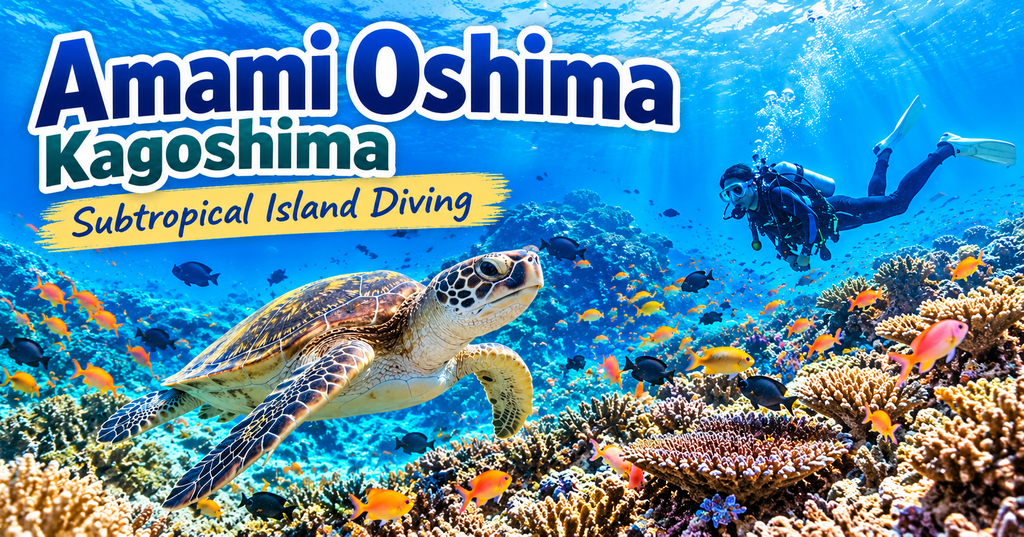
Amami Oshima lies between Kyushu and Okinawa and combines subtropical forests, coral reefs, mangroves, beaches, and clear ocean water.
It is part of the Amamigunto National Park and is one of Japan’s major island destinations for snorkeling and scuba diving.
Why Dive in Amami Oshima?
The island’s waters contain colorful coral reefs, tropical fish, sea turtles, reef environments, and a wide variety of smaller marine species.
Different areas around the island offer different underwater conditions, so local operators choose sites according to the weather, wind, experience level, and interests of their guests.
Amami is particularly attractive if you want a diving trip that also includes forests, mangroves, beaches, local culture, and island food rather than spending the entire trip underwater.
Is Amami Oshima a UNESCO World Heritage Site?
Part of Amami Oshima is included in the UNESCO World Natural Heritage property officially titled “Amami-Oshima Island, Tokunoshima Island, Northern part of Okinawa Island, and Iriomote Island.”
The property was inscribed in 2021 because of the extraordinary biodiversity and endemic wildlife found in its subtropical terrestrial ecosystems.
This does not mean that every beach, dive site, or surrounding marine area on Amami Oshima is itself part of the UNESCO World Heritage property.
For more background, see our guide to Japan’s World Natural Heritage Sites.
You can also check the official UNESCO World Heritage listing.
How to Get to Amami Oshima
Flying is the easiest option for most travelers.
Amami Airport has flights connecting the island with several Japanese cities, including Tokyo, Osaka, Kagoshima, and other regional destinations.
Ferry services also connect the Amami Islands with Kagoshima and Okinawa, but travel times are much longer.
See the official JNTO guide to Amami Oshima for transportation and island information.
Getting Around the Island
Amami Oshima is much larger than many travelers expect.
Buses operate on the island, but they may not reach every place you want to visit conveniently.
A rental car is useful if you plan to combine diving with beaches, mangrove kayaking, viewpoints, villages, and other natural attractions.
Before driving, see our rental car guide for international visitors.
Try Keihan After Diving
One of Amami Oshima’s best-known local dishes is keihan.
It typically combines rice with ingredients such as shredded chicken, egg, shiitake mushrooms, green onion, seaweed, and other toppings before hot chicken broth is poured over the bowl.
It makes a great introduction to Amami’s food culture after a day at the ocean.
Which Diving Spot Should You Choose?
| If You Want… | Best Choice |
|---|---|
| Tropical coral reefs and clear blue water | Kerama Islands |
| The easiest diving trip from Tokyo | Futo |
| Diving plus a longer island adventure | Amami Oshima |
| A beginner-friendly guided experience | Kerama or Futo |
| Marine life photography | Futo |
| Nature both above and below the water | Amami Oshima |
When Is the Best Time to Dive in Japan?
There is no single best diving season for all of Japan.
The country stretches across a large geographic area, so ocean conditions differ significantly between Okinawa, Izu, and Amami.
Kerama Islands
Diving is possible through much of the year, but water temperature, weather, wind, visibility, and marine life change seasonally.
Winter is also the main humpback whale season in the Kerama region, although whale watching and scuba diving are separate activities and encounters underwater should never be assumed.
Futo
Futo offers diving across the year, with different marine life appearing in different seasons.
Summer is known for bigfin reef squid spawning, while autumn and winter can offer excellent underwater visibility.
Amami Oshima
Amami’s subtropical climate allows marine activities throughout the year, although individual dive sites and conditions vary with seasonal winds and weather.
Rather than choosing only by month, contact a local dive operator and ask what conditions and marine life are typical during your travel dates.
Important Diving Safety Tips for Travelers
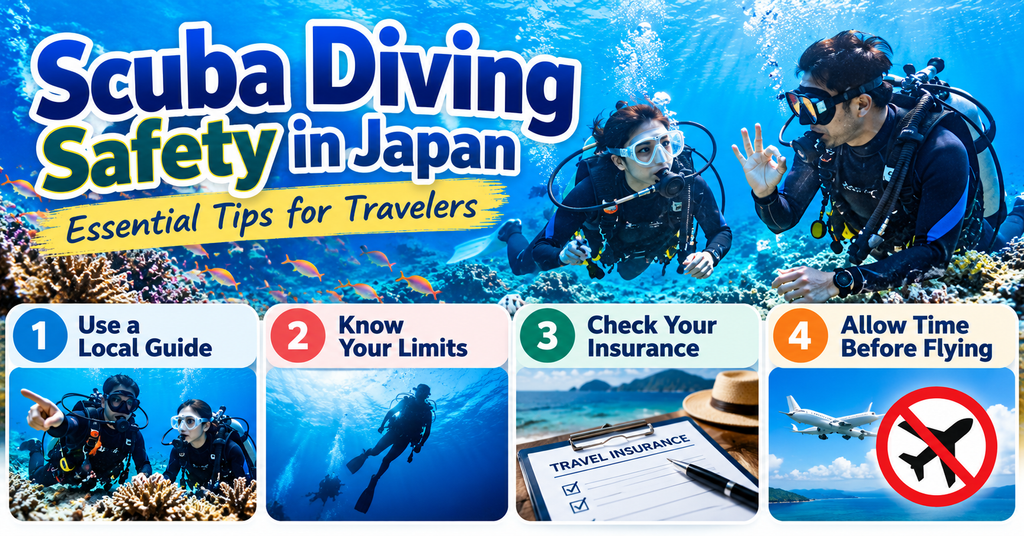
- Use a qualified local dive operator. Local guides understand currents, weather, entry points, and site-specific hazards.
- Be honest about your experience. Tell the operator your certification level and number of logged dives.
- Do not exaggerate your ability. A beautiful dive site is not worth exceeding your training or comfort level.
- Check your travel insurance. Standard travel insurance may not automatically cover scuba diving or certain depths.
- Follow medical guidance. Diving may not be appropriate with certain health conditions.
- Allow enough time before flying. Follow your training agency’s recommendations regarding surface intervals after diving.
- Do not touch marine life. Observe animals and coral without chasing, feeding, or handling them.
Responsible Diving in Japan
The best diving experiences depend on healthy marine ecosystems.
Good buoyancy control is one of the most important ways divers can avoid damaging coral and other fragile habitats.
- Do not stand on or hold coral.
- Keep fins away from the reef.
- Do not collect shells, coral, or marine animals.
- Do not chase sea turtles or other wildlife for photographs.
- Secure gauges, cameras, and other equipment so they do not drag across the seabed.
- Follow any local conservation rules explained by your dive operator.
Kerama is a particularly good example of why this matters. The Ministry of the Environment notes that coral reefs in the area face pressures including bleaching, crown-of-thorns starfish, and physical damage from scuba diving and snorkeling.
How to Choose a Dive Shop in Japan
Before booking, check whether the operator offers the type of diving appropriate for your experience.
Useful questions include:
- Do you offer English-language instruction or guiding?
- Is this an introductory dive or certified fun diving?
- What certification level is required?
- Is rental equipment included?
- How many divers are assigned to each guide?
- Where is the meeting point?
- What happens if the dive is canceled because of weather?
- What medical information is required?
Do not choose a dive operator based only on the lowest price. Clear safety information, communication, and appropriate supervision are more important.
Final Tips
Japan’s underwater environment is much more diverse than many first-time visitors expect.
The Kerama Islands offer tropical blue water and coral reefs, Futo provides excellent diving within reach of Tokyo, and Amami Oshima combines subtropical seas with a much wider island nature experience.
There is no single best destination for every diver.
Choose based on your certification, experience, travel route, season, budget, and the type of marine environment you want to explore.
Most importantly, use an experienced local operator, respect the ocean, and never sacrifice safety simply to reach a particular dive site or see a particular animal.
If this will be your first trip to Japan, see our 20 essential things to know before visiting Japan for more general travel preparation.